
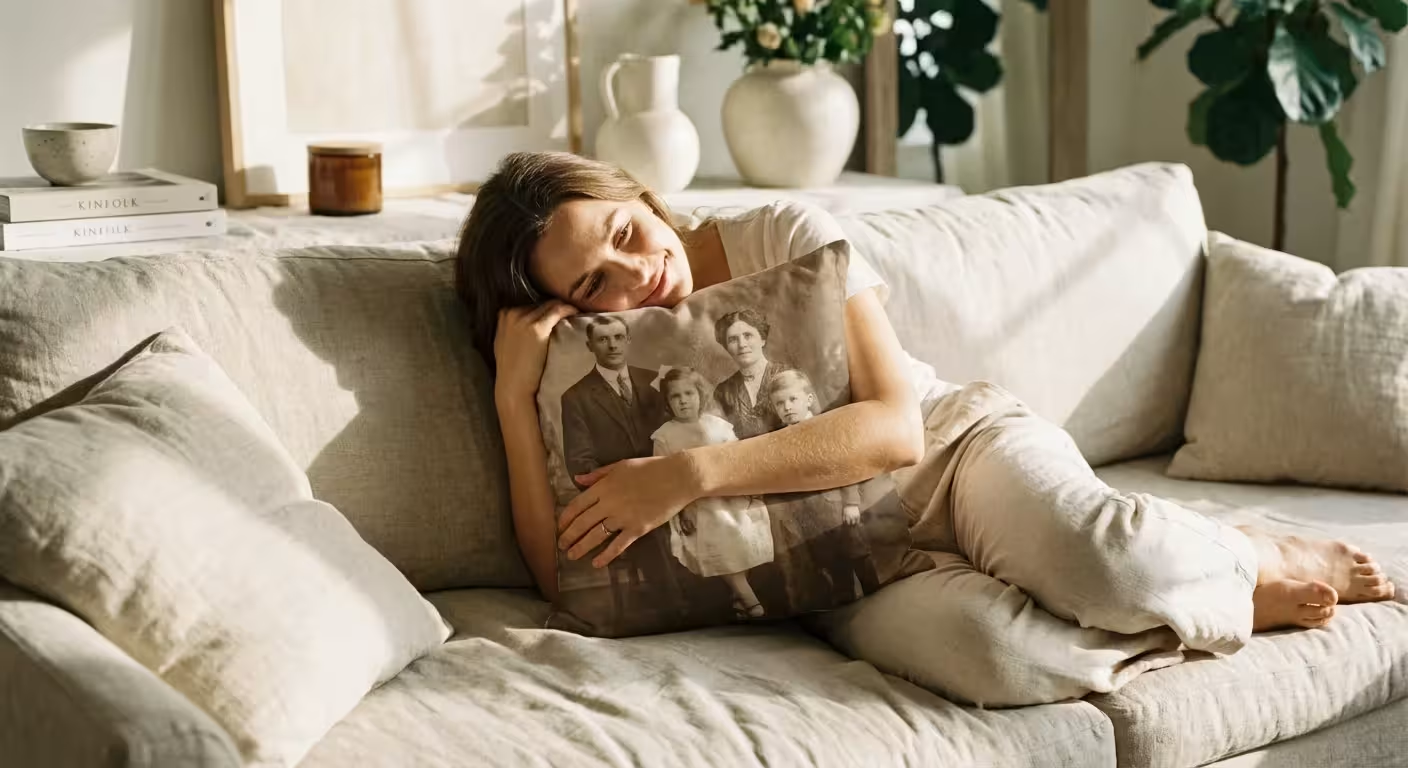
A photograph trapped on a hard drive or tucked away in a dusty shoebox loses its ability to spark daily joy. When you transfer those images onto fabric, you transform a two-dimensional memory into a tactile heirloom. Whether you want to assemble a multi-generational family quilt or gift a custom pillow featuring a beloved pet, the quality of the fabric and the printing method will determine if that item lasts for decades or fades after a single wash.
The industry for custom textile printing has expanded significantly over the last decade. You no longer have to rely on stiff, iron-on transfers that crack and peel. Modern professional services use sophisticated technologies like dye-sublimation and reactive printing to bond ink directly to fibers. This guide explores the premier services available today, compares their technical capabilities, and provides the practical steps you need to prepare your photos for a beautiful, long-lasting result.
Understanding Fabric Photo Printing Technologies
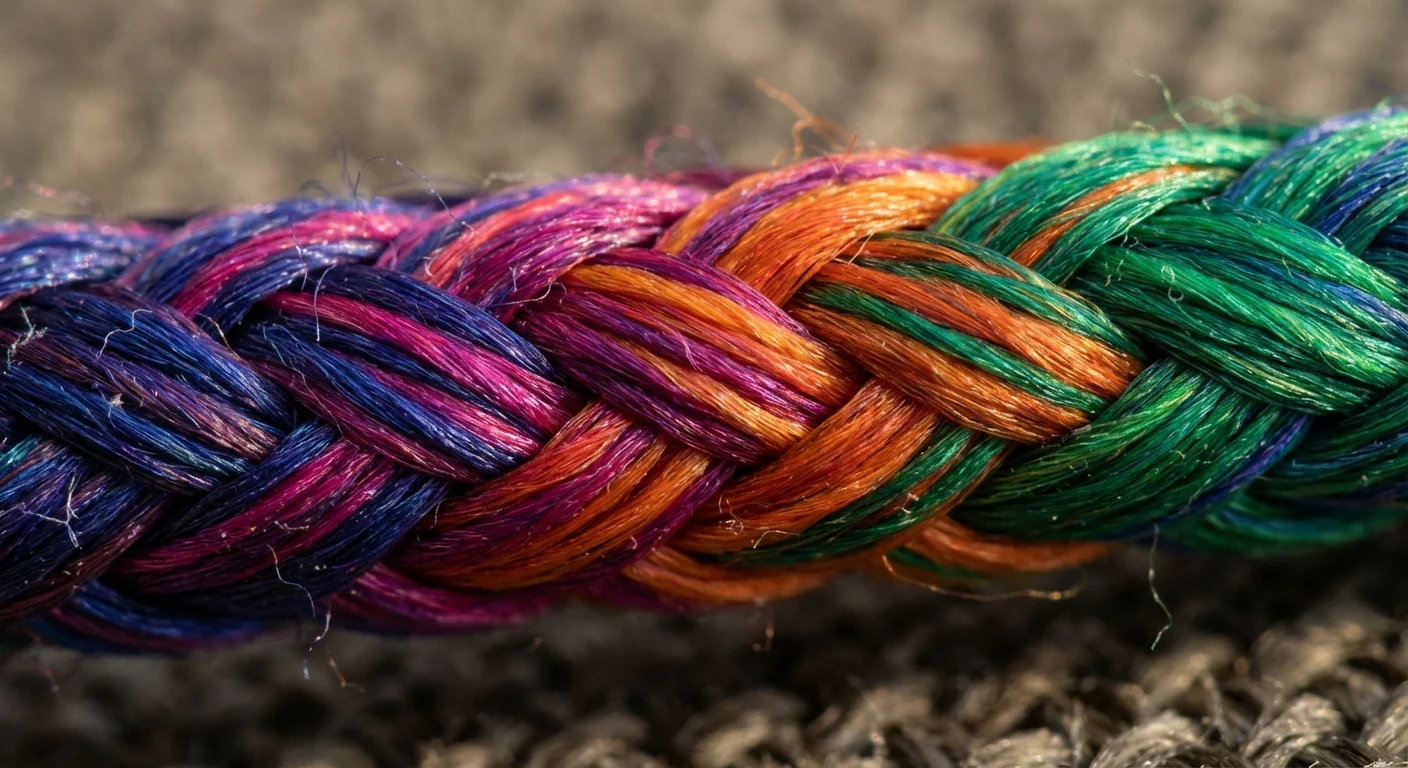
Before you upload your favorite vacation photo to a website, you should understand how that image becomes part of the fabric. Not all printing methods are equal; some prioritize color vibrancy, while others prioritize the “hand” or softness of the material. When you print photos on fabric, the service typically utilizes one of three primary methods.
Dye-Sublimation is the gold standard for polyester fabrics. In this process, the printer uses heat to turn ink into a gas, which then permeates the fibers and solidifies. Because the ink becomes part of the fiber rather than sitting on top of it, the print is incredibly durable. You can wash these items repeatedly without fear of the image fading or cracking. This method produces the most vibrant colors, making it ideal for high-contrast photography.
Direct-to-Garment (DTG) or Pigment Printing works much like your office inkjet printer but uses specialized textile inks. The printer sprays the ink directly onto the surface of the fabric. While this works beautifully on 100% cotton—a favorite for quilters—the image may feel slightly “stiff” initially. Over many washes, pigment prints can develop a vintage, slightly faded look, which some people prefer for heritage projects.
Reactive Printing is a multi-step industrial process where the ink creates a chemical bond with the fabric fibers. This requires pre-treatment and post-printing steaming and washing. It results in the softest fabric possible with high color fastness, but it is typically more expensive and offered by high-end boutique printers rather than big-box photo labs.
The longevity of a fabric print depends heavily on the chemical bond between the colorant and the substrate; high-quality reactive dyes and sublimation processes offer the best resistance to light and mechanical wear.
Top Services for Custom Photo Pillows and Quilts
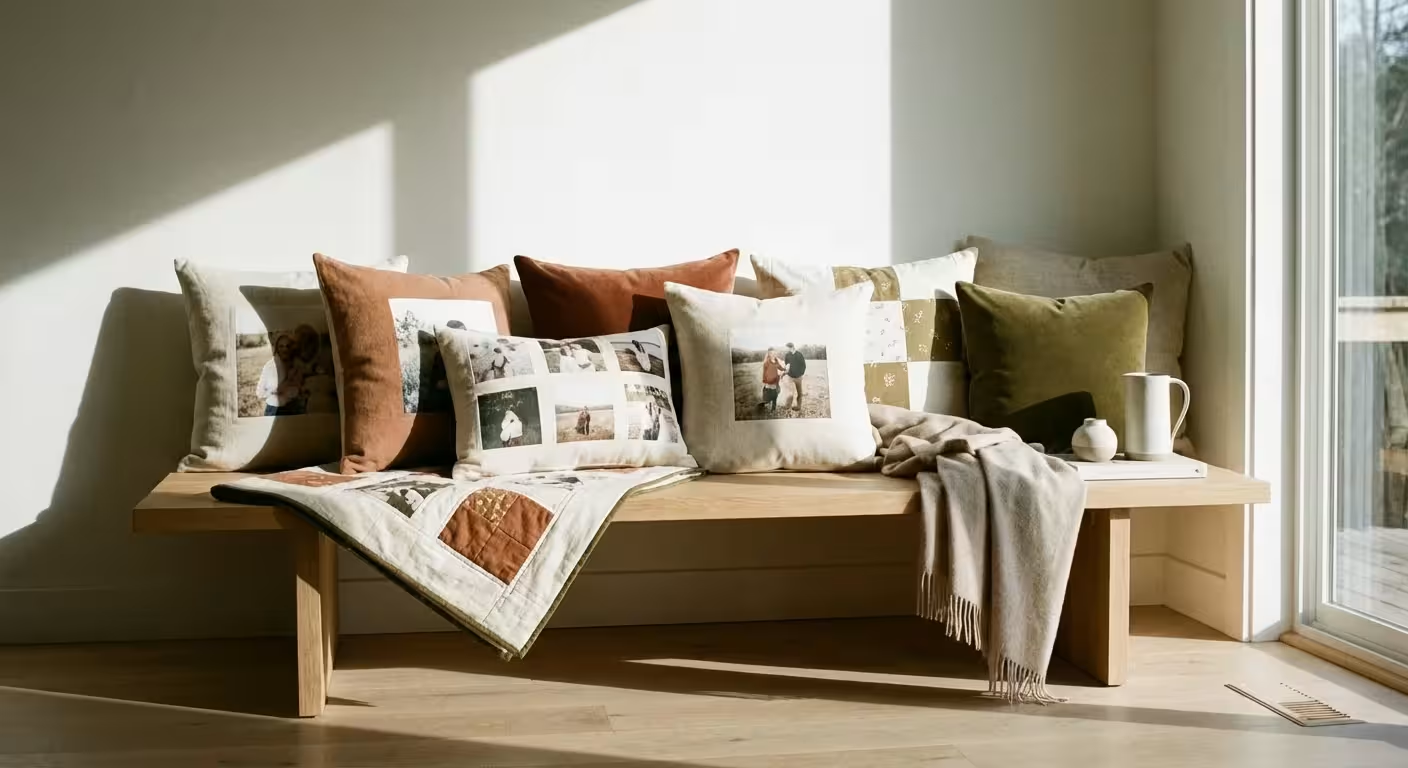
Selecting the right service depends on whether you are looking for a finished product, like a stuffed pillow, or raw materials, like custom photo quilt services that provide printed fabric squares for you to sew yourself. Below are the most reliable performers in the current market.
Before uploading, you might want to create photo collages to feature multiple memories on a single fabric panel.
| Service Name | Best For | Primary Fabrics | Customization Level |
|---|---|---|---|
| Spoonflower | Quilt Squares & Yardage | Cotton, Linen, Canvas, Jersey | High (Upload your own patterns) |
| Contrado | Premium Quality & Variety | Over 100 fabric types (Silk, Velvet, Cotton) | High (Professional grade) |
| Shutterfly | Quick Custom Pillows | Polyester, Canvas | Low (Template-based) |
| CanvasPop | High-End Decor Pillows | Linen/Cotton blends | Medium (Focus on aesthetics) |
Spoonflower is the undisputed leader for those who want to create a photo quilt. They allow you to upload a single photo and print it as a “fat quarter” or a full yard. You can also use their “fill-a-yard” feature to place different photos into a grid, which you can then cut out as individual quilt blocks. Their Kona Cotton is a favorite among quilters for its weight and ease of sewing. Because they use pigment-based inks, their fabrics are best washed on a delicate cycle with phosphate-free detergent.
Contrado offers a more sophisticated experience for those who want luxury. If you want a photo printed on real silk or heavy crushed velvet for a high-end accent pillow, Contrado is your best bet. They use reactive and sublimation printing, ensuring deep blacks and rich colors. They are based in the UK but ship globally with impressive speed. Their interface allows you to see a 3D preview of your pillow, which helps you avoid placing critical parts of your photo (like a person’s face) too close to the seams.
Shutterfly and Snapfish serve the gift-giving market. These services are excellent for custom photo pillows when you need a quick, affordable gift. They typically use polyester fabrics and sublimation printing. While the fabric might not feel as “natural” as cotton, the photos remain crisp and bright. These platforms use templates, making them very user-friendly for people who aren’t comfortable with graphic design software.
Choosing the Right Fabric for Your Project
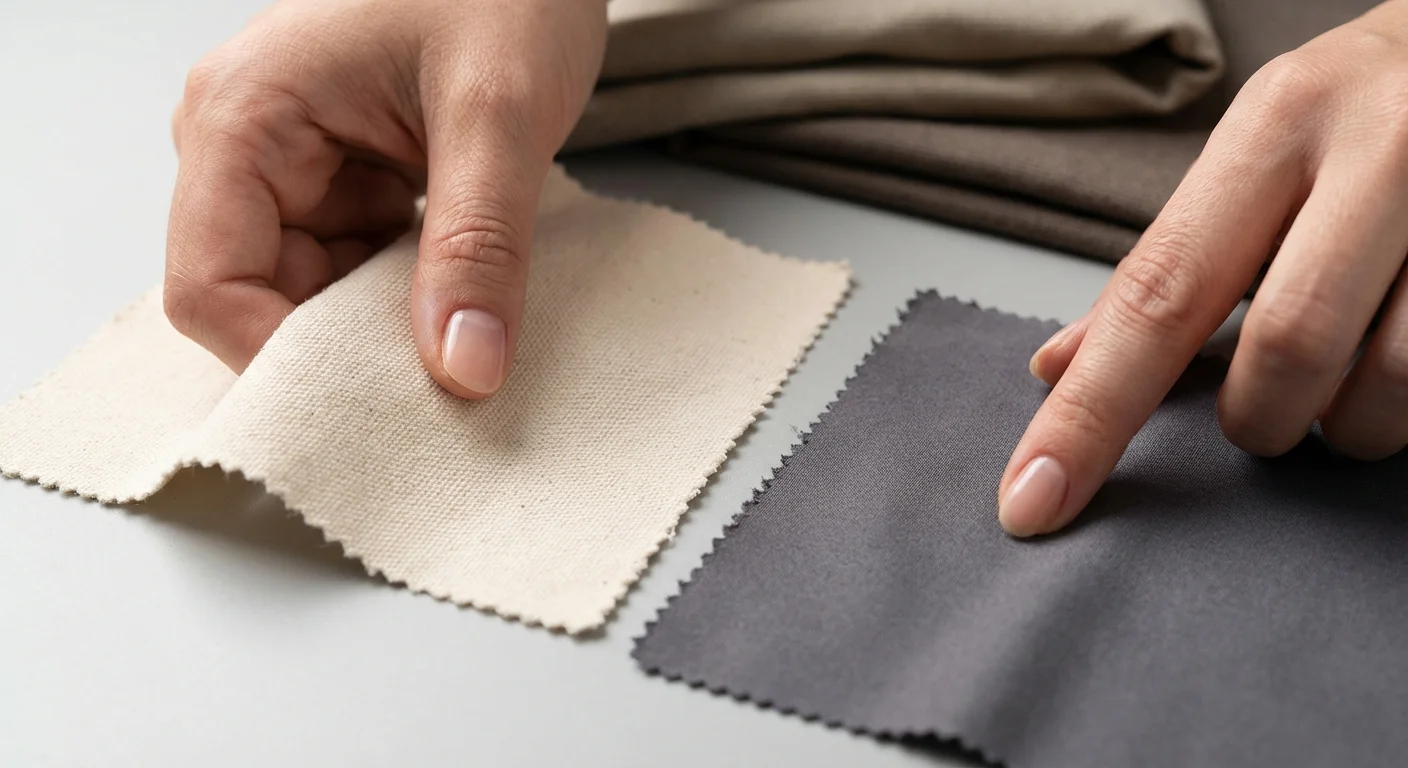
The texture and weight of the fabric will drastically change the look of your photo. You must match the material to the intended use of the item. A pillow that sits on a sofa and gets leaned on every day needs more durability than a wall-hanging quilt.
For photo quilt services, look for 100% cotton with a high thread count. Cotton poplin is a versatile choice because it has a smooth surface that allows for fine detail in the printing. If you are making a “memory quilt” from old clothing, you might want to print your photos on a fabric that matches the weight of the surrounding blocks. Avoid stretchy fabrics like jersey for quilting unless you plan to use a stabilizer on the back.
For custom photo pillows, consider the “hand” of the fabric. Linen-cotton blends offer a classic, sophisticated look that fits well in modern living rooms. If you want the colors in your photo to pop with maximum intensity, a polyester “minky” or “fleece” fabric will provide a soft touch and deep color saturation. However, be aware that high-pile fabrics (like fleece) can distort the image if the fibers are brushed the wrong direction.
Canvas is a rugged option, perfect for outdoor pillows or high-traffic areas. It holds up well to wear and tear, though the coarse weave may obscure very fine details in your photographs. If you are printing a portrait with small facial features, stick to smoother weaves like sateen or poplin.
Preparing Your Digital Files for Textile Printing
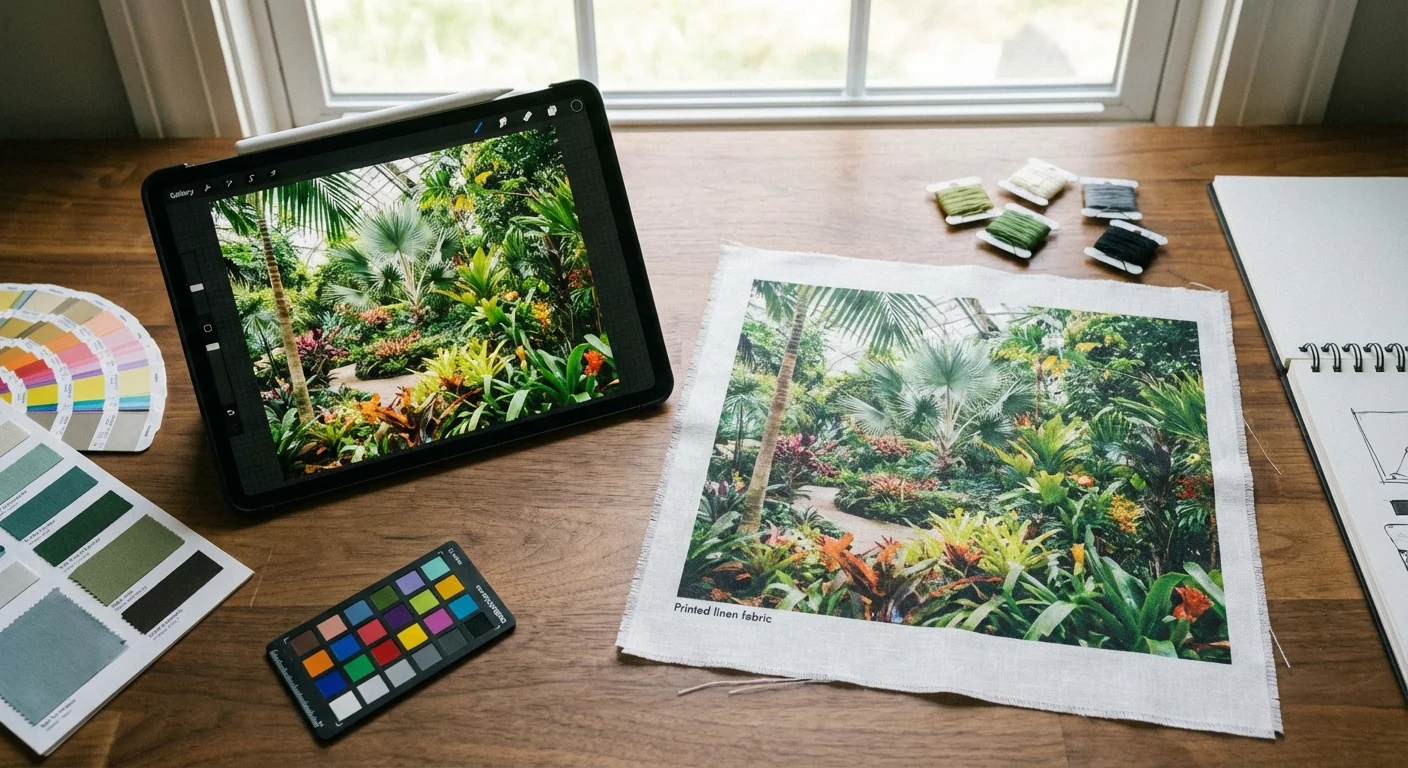
The biggest mistake people make when ordering fabric prints is using low-resolution images. Fabric is a porous and textured medium; it naturally “softens” an image. If your file is pixelated to begin with, the result on fabric will look blurry and unprofessional. To ensure your custom photo pillows and quilts look their best, follow these technical guidelines.
Alternatively, you can follow a tutorial on how to scan old photos at home to optimize your settings for the texture of cotton or canvas.
If your original images are physical prints that require high-resolution capture, professional photo scanning services can ensure you have the best starting point for a large-scale project.
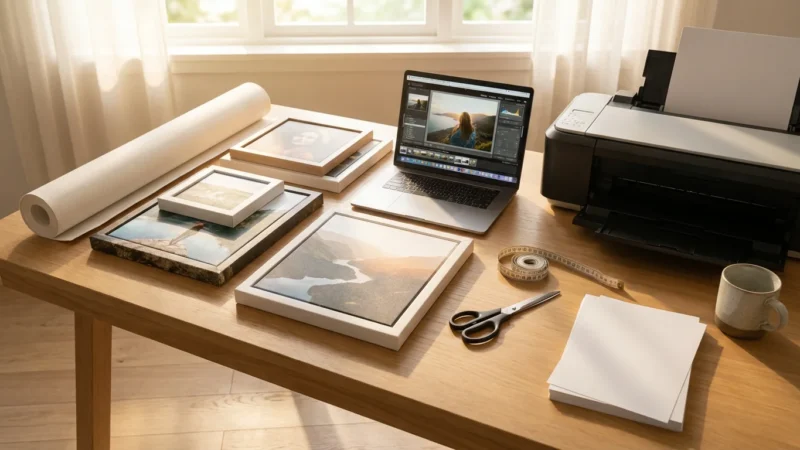
Aim for a resolution of 150 to 300 DPI (dots per inch) at the final print size. If you want a 12-inch quilt square, your digital image should be at least 1,800 pixels wide (12 inches multiplied by 150 DPI). If you are scanning an old physical photograph, scan it at 600 or 1,200 DPI to give yourself enough data to enlarge the image without losing quality. You can find excellent resources on digitizing standards at the Smithsonian Archives, which provides insights into preserving the integrity of historical images.
Pay attention to your color profile. Most online fabric printers expect files in sRGB. If you upload a file in CMYK (standard for paper printing), the colors may shift unexpectedly during the transition to fabric. Additionally, increase the contrast and brightness of your photo by about 10% before uploading. Fabric tends to absorb light, making the final print appear slightly darker than it looks on your backlit computer screen.
Consider the “bleed” area. When a service makes a pillow, they sew the edges together, which “consumes” about half an inch of the image on all sides. Keep important subjects—like heads and text—at least one inch away from the edge of your image file. This prevents a family member’s face from being lost in the seam of your custom pillow.
DIY Fabric Printing vs. Professional Services
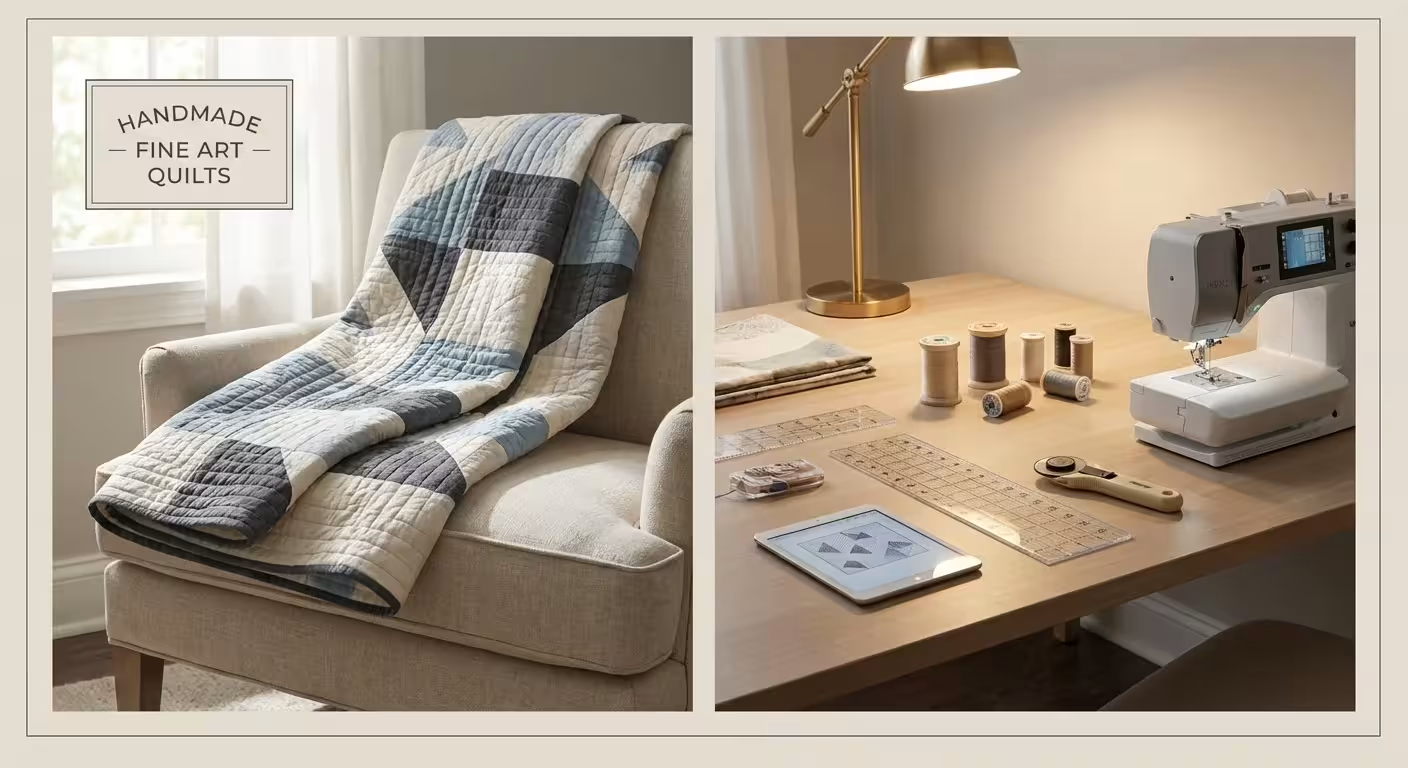
You may be tempted to try printing photos on fabric at home using your desktop printer and specially treated fabric sheets. While this is a fun project for small-scale crafts, it rarely matches the quality of professional services for larger items like quilts and pillows.
Fabric projects are just the beginning; there are many other DIY photo gifts you can create to celebrate special milestones.
Home-printed fabric sheets are often stiff and require a backing to be removed. The ink is usually not “set” as deeply as it is in a commercial facility. This makes home-printed squares more susceptible to water damage and fading. If you are creating a “legacy quilt” meant to be passed down through generations, the professional route is almost always better. Professional printers use wide-format machines and industrial curing processes that ensure the ink won’t run if the baby spills juice on the quilt or the dog jumps on the pillow.
However, DIY methods are excellent for adding small labels or “signatures” to the back of a quilt. If you only need a 2-inch by 4-inch tag with a date and a name, a home printer is perfectly adequate. For the main photographic elements, rely on the consistency and color-matching capabilities of a dedicated textile lab.
Care and Preservation Tips for Photo Fabrics
Once you receive your custom fabric project, you must treat it with care to prevent the image from degrading over time. Light is the primary enemy of any photograph, whether it is printed on paper or silk. According to the Image Permanence Institute, exposure to ultraviolet (UV) light causes irreversible chemical changes in dyes and pigments.
Once your project is complete, you can incorporate your textile creations into broader photo wall ideas to create a textured, multi-dimensional display.
To preserve your photo pillows and quilts, keep them out of direct sunlight. If your custom pillow sits in a sun-drenched window, the side facing the glass will fade significantly within a year. Rotate your pillows frequently and consider closing the blinds during the brightest parts of the day. For quilts, if they are used as wall hangings, avoid placing them opposite large windows.
When it comes to washing, less is more. For pillows, use a removable cover that can be turned inside out before laundering. Use cold water and a mild, pH-neutral detergent. Avoid bleach or “brightening” agents, as these chemicals can strip the ink from the fibers. Air drying is the safest method, but if you must use a dryer, use the lowest heat setting possible. High heat can damage the bond of dye-sublimation prints and cause synthetic fabrics to lose their softness.
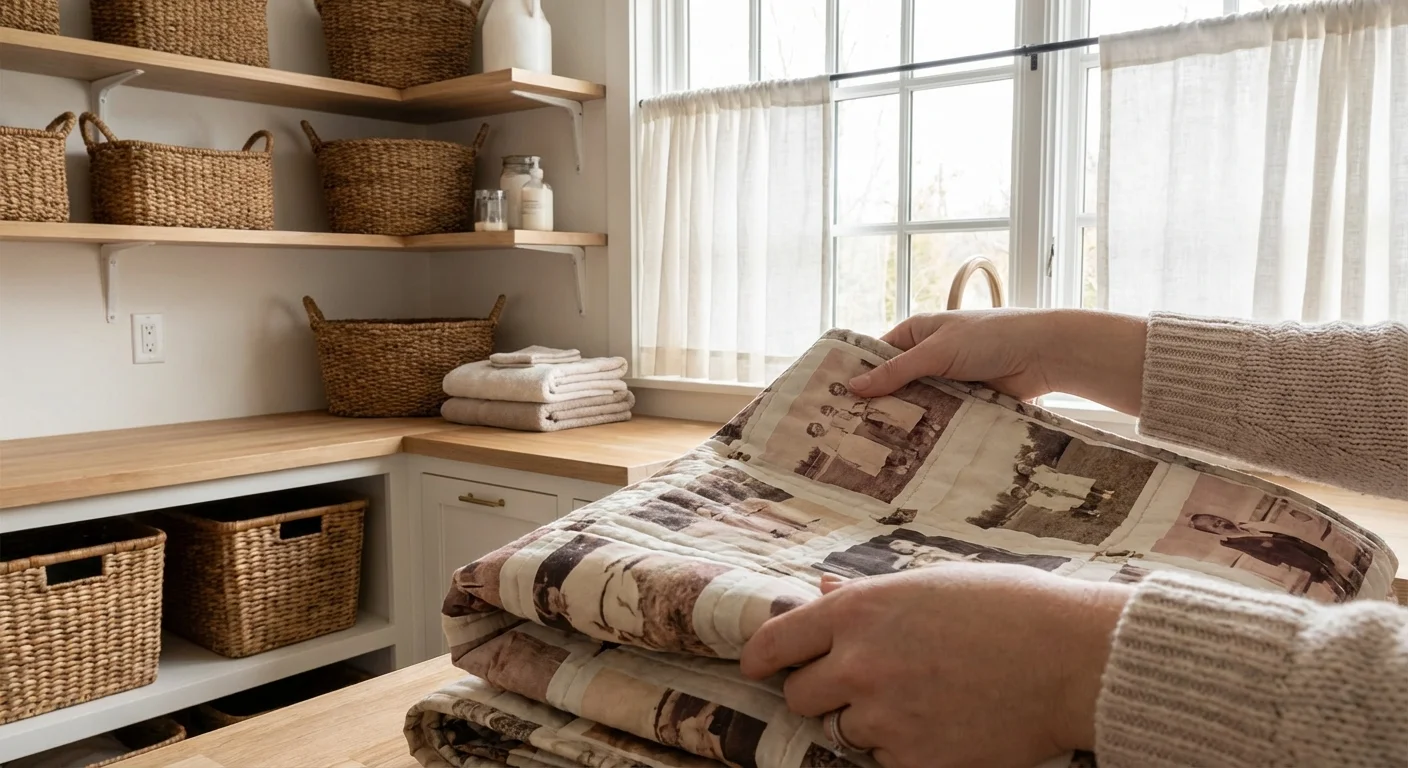
If you are storing a photo quilt for the long term, do not wrap it in plastic. Instead, use an acid-free textile box or wrap it in a clean, white cotton sheet. This allows the fabric to “breathe” and prevents moisture from being trapped, which could lead to mold or mildew—enemies of both fabric and photography.
Frequently Asked Questions
Can I use old, scanned photos for fabric printing?
Yes, you can use scanned photos successfully. For the best results, scan your original photo at a high resolution (at least 600 DPI). If the original is very small, like a 2×3 inch portrait, you may need a professional scan to ensure it looks clear when enlarged for a pillow or quilt square.
Will the photos on my custom pillow fade in the wash?
Modern professional printing methods like dye-sublimation are highly resistant to fading. However, pigment-based prints (common on 100% cotton) will naturally soften and fade slightly over many washes, giving them a more “lived-in” appearance. Always wash in cold water to minimize color loss.
What is the best fabric for a photo quilt?
100% cotton is the preferred choice for quilters because it is easy to sew and breathes well. Specifically, look for cotton sateen or poplin, as the smooth surface of these weaves provides the best clarity for photographic details compared to coarser fabrics.
Do I need to be a designer to use these services?
No, most services like Shutterfly or Spoonflower offer intuitive “drag-and-drop” tools. You simply upload your photo, and their software helps you position it correctly on the product. Some even offer automatic warnings if your image resolution is too low for the selected size.
Disclaimer: This article is for informational purposes only. When handling valuable or irreplaceable photographs, consider consulting a professional conservator. Always test preservation methods on non-valuable items first.


Leave a Reply