
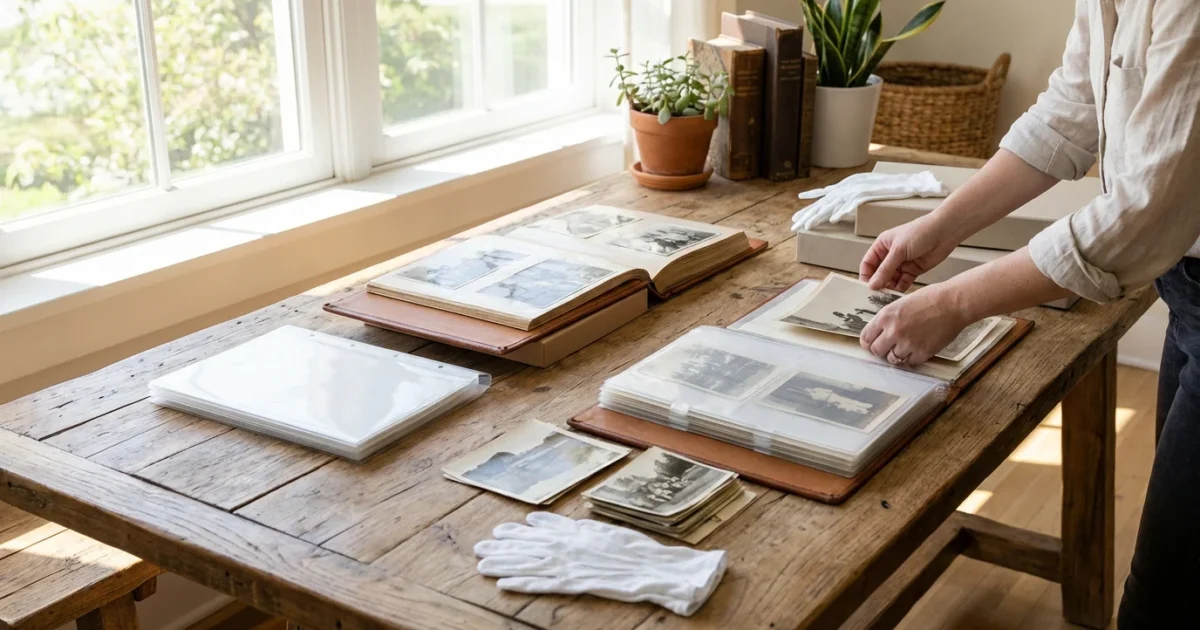
Your family photographs hold priceless stories. They connect generations, evoke laughter, and bring forgotten moments back to life. These tangible links to your past deserve more than a shoebox or a flimsy, chemical-laden album. You need to protect them from the silent enemies of time: acid, light, and environmental damage. This guide empowers you to choose the right tools for the job, ensuring your photographic heritage endures for future generations.
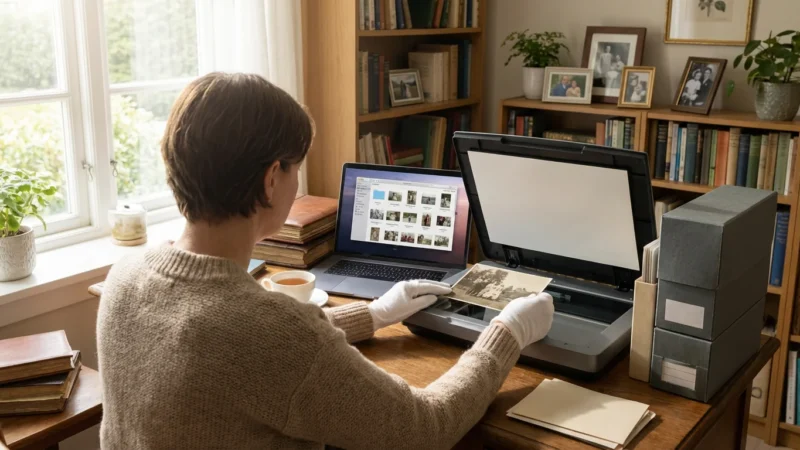
While physical preservation is your first line of defense, don’t overlook the importance of backing up physical photos digitally to ensure your stories are never lost.
The Lifeline of Your Memories: Why Archival Storage is Non-Negotiable
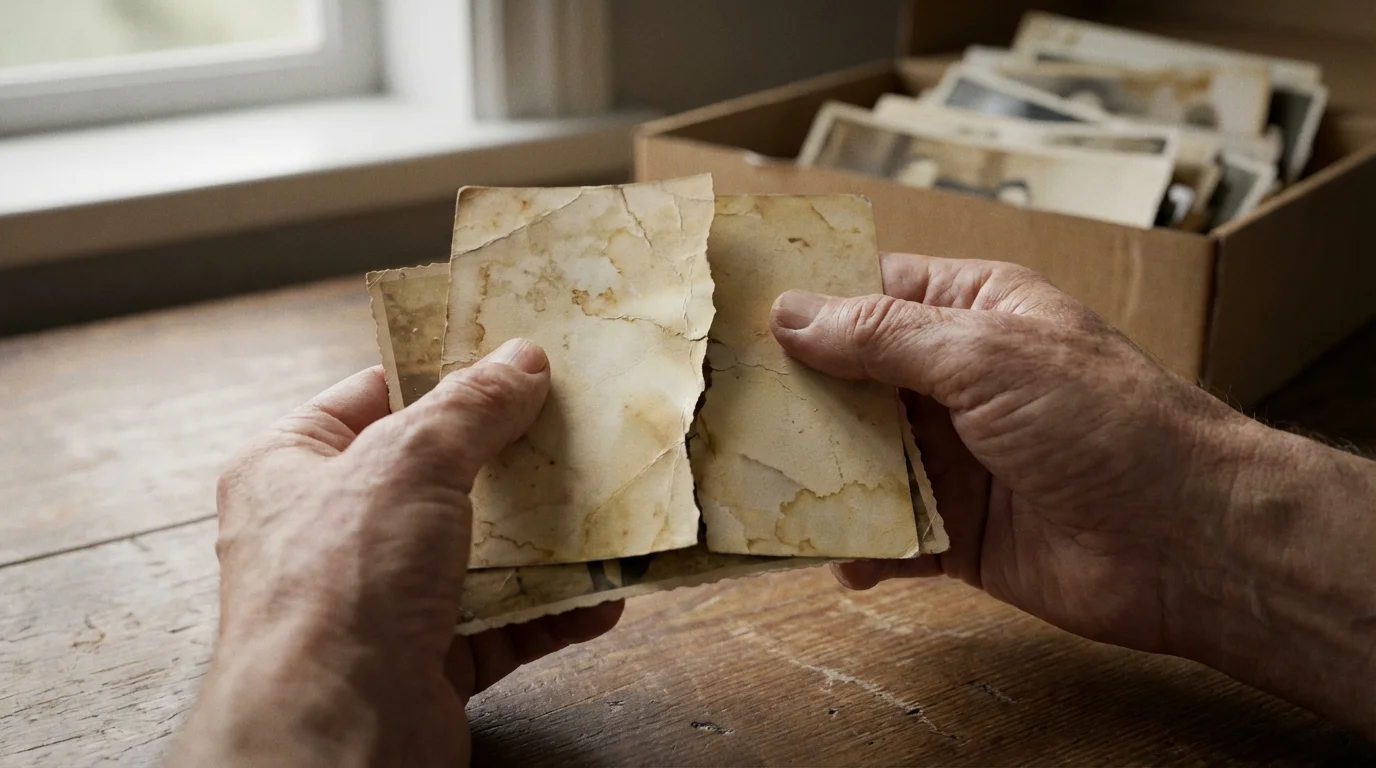
Imagine discovering a box of old family photos, only to find them faded, brittle, and stuck together. This heartbreaking scenario is common, often caused by improper storage. Your photographs are vulnerable to a variety of threats that degrade them over time. Understanding these enemies helps you appreciate the critical role of archival preservation.
Beyond choosing the right album, establishing a formal system for creating a home photo archive will help you manage your entire collection systematically.
The primary culprits include:
- Acid: Many paper products, including traditional photo albums and cardboard boxes, contain acids that break down photographic emulsions and paper fibers. This process, called “acid decay,” causes yellowing, brittleness, and eventual disintegration.
- Lignin: A natural polymer found in wood pulp, lignin degrades over time, producing acids that damage photographs. Even if a product claims to be “acid-free,” it might still contain lignin, making it unsuitable for long-term storage.
- PVC (Polyvinyl Chloride): This plastic, commonly used in cheap photo album pages, off-gases chemicals that react with photographic emulsions. PVC can cause images to stick to the plastic, warp, fade, and develop an unpleasant odor.
- Light: Exposure to ultraviolet (UV) light, whether from sunlight or fluorescent bulbs, causes dyes to fade and paper to yellow. This damage is irreversible.
- Humidity and Temperature Fluctuations: High humidity encourages mold growth, while low humidity makes paper brittle. Extreme temperature swings cause materials to expand and contract, leading to physical damage and increased chemical degradation.
You invest emotionally in your photographs. You spend time creating them, recalling the stories they tell, and passing them down. Protecting this investment requires choosing materials specifically designed to counteract these destructive forces. Archival albums and photo sleeves create a stable, inert environment for your prints, safeguarding them against chemical and environmental decay. You gain peace of mind knowing your family’s visual history will survive.
Decoding Archival: What Makes a Product Truly Safe?
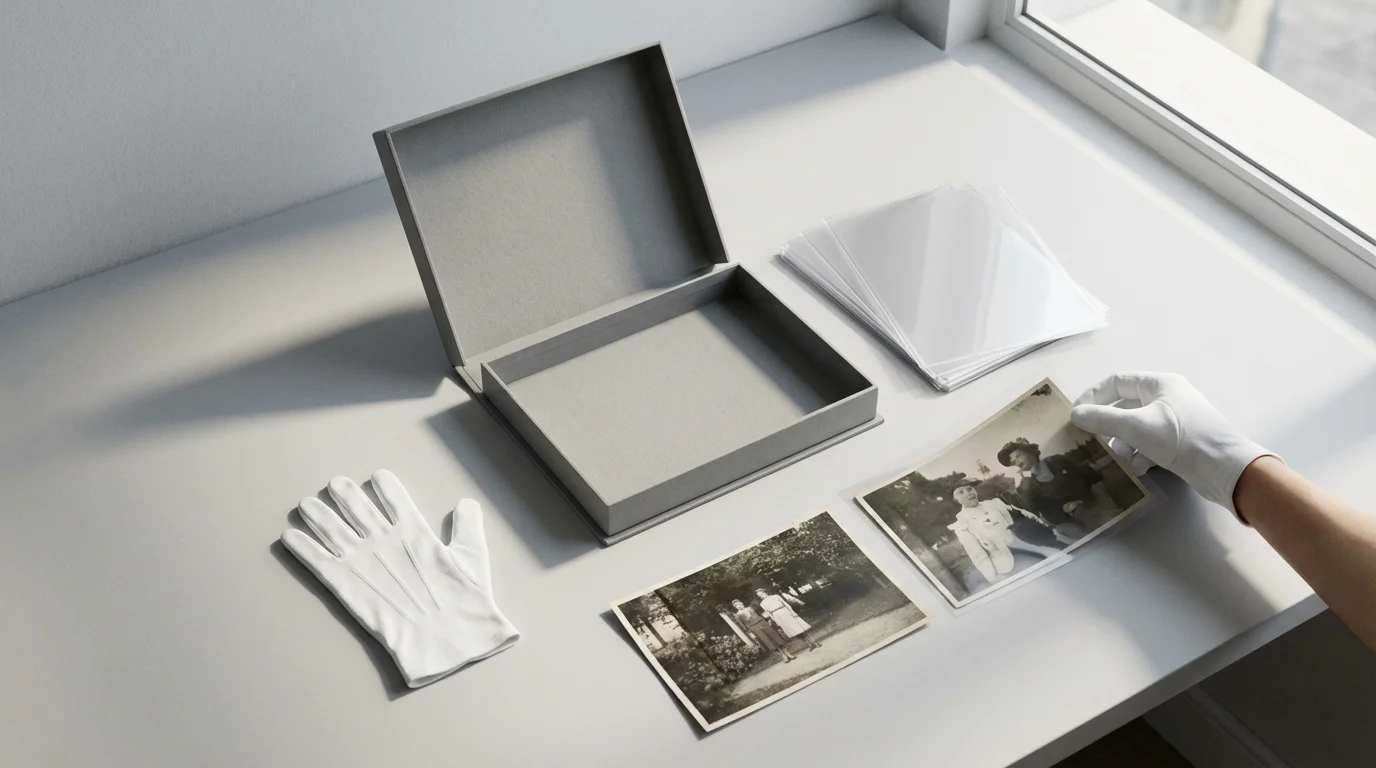
The term “archival” gets thrown around frequently, but it has a specific meaning in preservation. You must understand these key terms to make informed choices for your photos.
When you see a product labeled “archival,” it should meet several criteria:
- Acid-Free: This means the material has a pH level of 7.0 or higher. Many archival products are buffered, meaning they contain an alkaline reserve (like calcium carbonate) to neutralize any acids absorbed from the environment or migrating from the photos themselves. This buffering capability extends the life of the stored items.
- Lignin-Free: Lignin is a component of wood pulp that breaks down to form acids. A truly archival paper product must be lignin-free to prevent this internal source of acid degradation.
- PAT Certified (Photographic Activity Test): This is the gold standard for archival safety. The Image Permanence Institute developed the PAT, an international standard (ISO 18916) that determines if a material will react adversely with photographic emulsions. If a product passes the PAT, it means it will not damage your photographs. Always look for this certification on sleeves, album pages, and mounting materials. You find detailed information about the PAT from organizations like the Image Permanence Institute. https://www.imagepermanenceinstitute.org
- Chemically Stable Plastics: For plastic sleeves, “archival” means using stable plastics like polypropylene, polyethylene, or polyester (Mylar D). These plastics do not contain plasticizers or other additives that can off-gas and harm photographs. Avoid PVC at all costs.
- Light-Blocking (for Covers): Album covers should be opaque and provide a barrier against light exposure. Materials like buckram cloth, fine-grain leather, or sturdy board covers help shield prints from damaging UV rays.
Manufacturers often use buzzwords like “photo-safe” or “acid-neutral,” but these terms are less reliable than “archival quality” or “PAT certified.” Always check the product specifications for pH levels, lignin content, and PAT certification to ensure you purchase truly safe materials.
Choosing Your Guardian: A Deep Dive into Archival Photo Albums
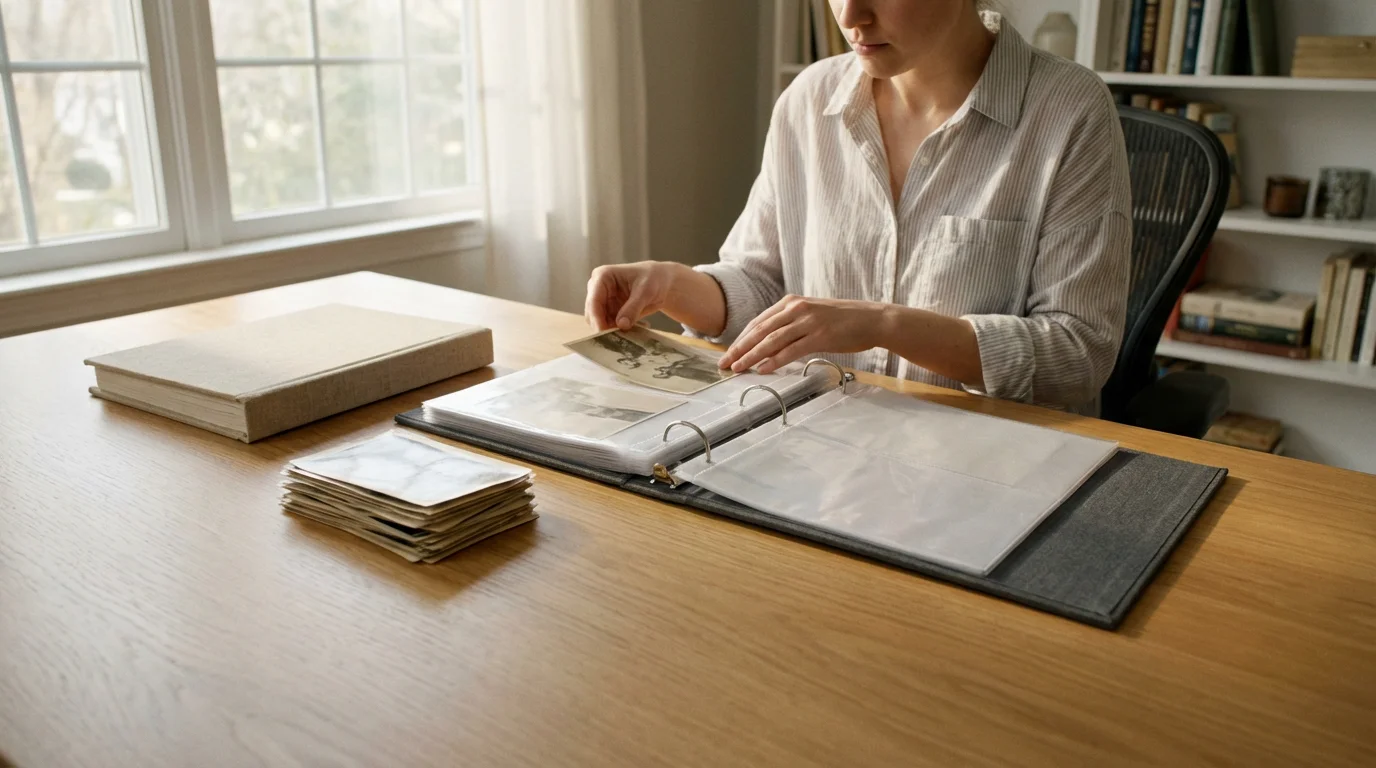
Selecting the right archival photo album involves more than just aesthetics. You need to consider the construction, materials, and ease of use to ensure long-term safety and enjoyment of your prints. Here, we compare the most common types of archival albums.
Ring-Binder Albums with Archival Pages
These albums resemble standard three-ring binders, but they feature archival-quality rings and come with specialized pages. You often find them with D-rings or O-rings.
- Pros:
- Flexibility: You easily add, remove, and rearrange pages, allowing for ongoing organization and expansion.
- Variety of Pages: Manufacturers offer a wide range of page styles, including clear pocket pages for various print sizes, self-adhesive pages (when clearly marked archival), and blank cardstock pages for mounting with photo corners.
- Ease of Use: The ring mechanism simplifies page management.
- Affordability: Generally more economical than post-bound albums, especially for expanding collections.
- Cons:
- Ring Stress: Pages can tear around the holes if the album gets too full or if you handle it roughly.
- Spine Gap: When fully loaded, the pages might not lie perfectly flat, creating a gap in the spine that could allow dust in.
- Aesthetics: Some consider them less formal than post-bound albums.
- Key Consideration: Ensure both the binder and the refill pages are PAT certified, acid-free, and lignin-free. Pay attention to the plastic sleeves if using pocket pages; they must be polypropylene, polyethylene, or polyester.
Post-Bound Albums
Post-bound albums feature a screw-post system along the spine. These albums often have a more elegant, traditional appearance.
- Pros:
- Durability: The screw-post binding is very strong and provides robust support for many pages.
- Flat Opening: Pages lie completely flat when the album is open, making viewing and scanning easier.
- Professional Look: Often used for formal presentations or cherished family heirlooms due to their sturdy and elegant design.
- Expandability: You can add extension posts to accommodate more pages, though adding pages involves unscrewing the posts.
- Cons:
- Less Flexible: Adding or removing pages is more time-consuming than with a ring-binder, as it requires unscrewing and re-screwing posts.
- Weight: These albums can become quite heavy when full.
- Cost: Often more expensive than ring-binder options.
- Key Consideration: Verify that the album’s cover materials (e.g., bonded leather, buckram), page inserts, and any included sleeves are all archival quality.
Scrapbook Albums (with Caution)
Traditional scrapbooks often use a D-ring or post-bound mechanism, but the key difference lies in the pages and decorative elements.
- Pros:
- Creative Freedom: You combine photos with memorabilia, journaling, and decorative elements.
- Personalization: Offers a unique way to tell stories alongside your photos.
- Cons:
- Risk of Non-Archival Materials: Many scrapbook supplies (papers, adhesives, embellishments) are not archival quality and can damage photos over time. You must exercise extreme diligence.
- Bulk: Adding too many layers and embellishments can create bulk, putting stress on the binding and potentially damaging photos.
- Cost: High-quality archival scrapbook supplies can be expensive.
- Key Consideration: If you choose to scrapbook, ensure every single material—paper, adhesive, pen, embellishment, and page protector—is acid-free, lignin-free, and PAT certified. When in doubt, leave it out.
The Protective Barrier: Selecting the Best Archival Photo Sleeves
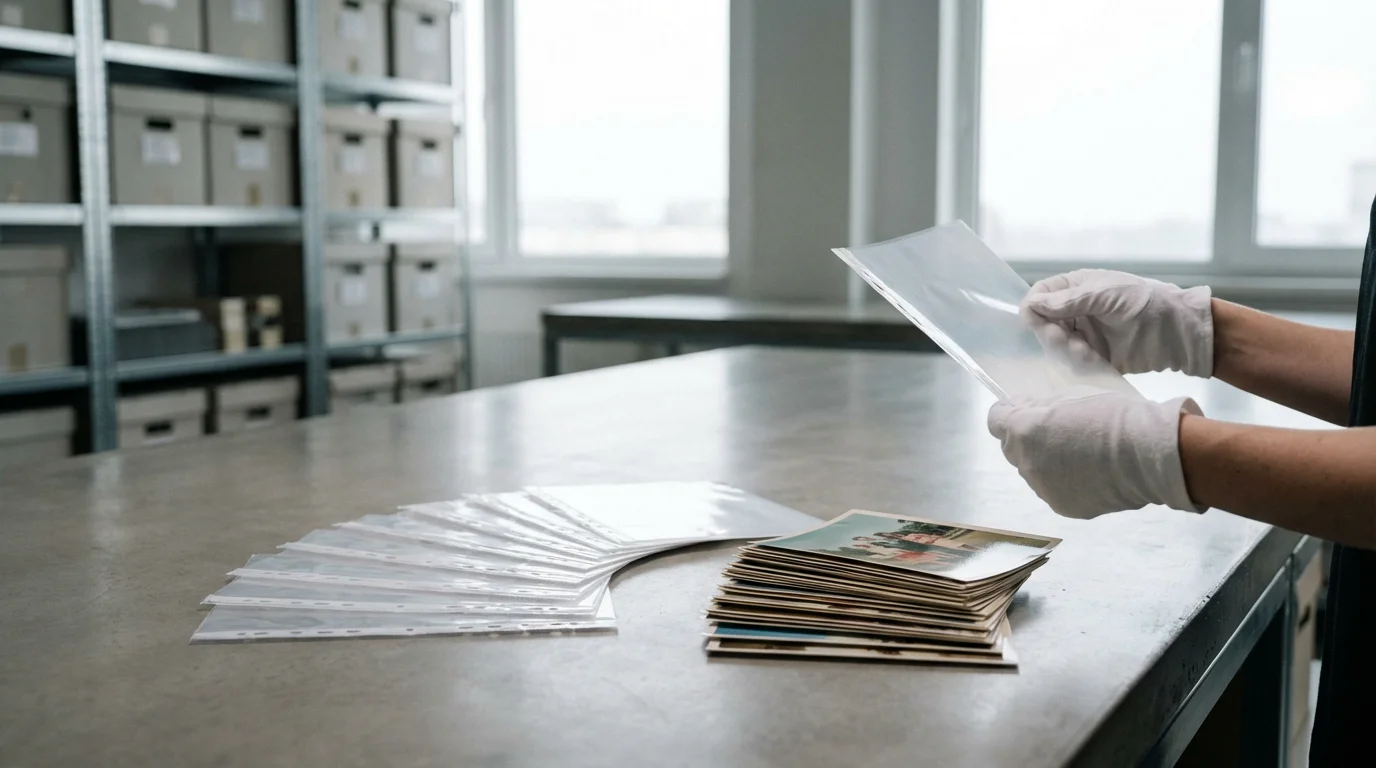
Archival photo sleeves provide an individual protective layer for each print, safeguarding it from fingerprints, dust, and environmental pollutants. They are crucial for both standalone storage and for use within albums.
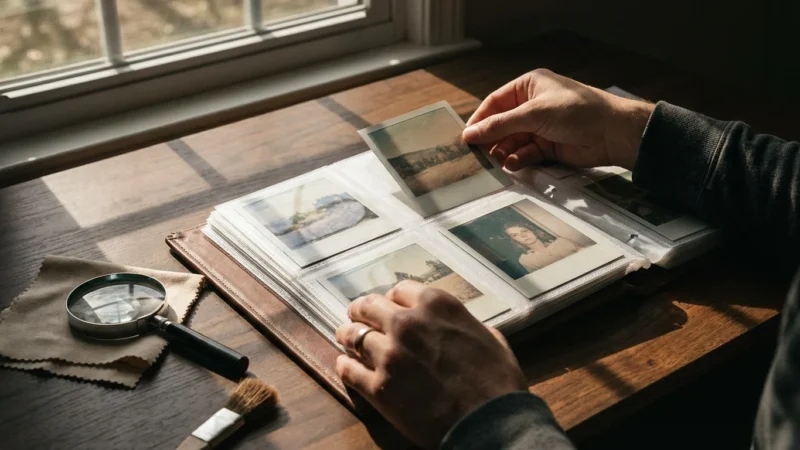
When choosing sleeves for instant film, specialized care is required for protecting Polaroid photos from deterioration due to their unique chemical layers.
You need to choose sleeves made from stable, inert plastics. Here are the approved types:
Polypropylene (PP)
Polypropylene is a widely used archival plastic for photo sleeves and pages. It is clear, lightweight, and does not off-gas harmful chemicals.
- Types:
- BOPP (Biaxially Oriented Polypropylene): This type is clear, crisp, and often very thin, making it excellent for individual print protection. It offers good transparency.
- OPP (Oriented Polypropylene): Similar to BOPP, it provides good clarity and strength.
- Cast Polypropylene: This type is softer and more flexible, with slightly less clarity than BOPP. It works well for larger prints or negatives.
- Pros:
- Affordable: Generally the most cost-effective archival option.
- Chemically Inert: Does not react with photographic emulsions.
- Widely Available: Easy to find in various sizes and configurations (e.g., top-loading, side-loading, multi-pocket pages).
- Cons:
- Static: Can generate static electricity, which attracts dust.
- Scratch Resistance: Less scratch-resistant than polyester.
Polyester (PET, commonly known as Mylar D)
Polyester is often considered the premium choice for archival storage. Mylar D is a specific brand of biaxially oriented polyethylene terephthalate (BoPET) film.
- Pros:
- Exceptional Clarity: Offers superior transparency, making prints look vibrant through the sleeve.
- Strength and Durability: Highly resistant to tearing, creasing, and scratching.
- Chemically Inert: Extremely stable and safe for long-term contact with photos.
- Less Static: Tends to generate less static electricity than polypropylene.
- Cons:
- Higher Cost: Significantly more expensive than polypropylene.
- Less Flexible: The rigidity can be a factor for very large or unusually shaped items.
Polyethylene (PE)
Polyethylene is another safe plastic for archival storage, though less common for photo sleeves than polypropylene or polyester. It is generally softer and more flexible.
- Pros:
- Chemically Inert: Safe for long-term contact with photographs.
- Soft and Flexible: Less prone to scratching photos during insertion or removal.
- Cons:
- Less Clear: Often appears slightly milky or hazy compared to polypropylene or polyester.
- Less Rigid: May not offer the same structural support as other plastics.
Plastics to AVOID at All Costs: PVC (Polyvinyl Chloride)
You absolutely must avoid PVC sleeves, often found in older “magnetic” or “sticky” albums, and many cheap modern albums. PVC is identifiable by its distinct chemical smell and often a bluish tint. It contains plasticizers that off-gas and migrate, causing irreversible damage to your photographs. This includes sticking, fading, chemical stains, and a general degradation of the image. Always check product labels to ensure “PVC-free” or “acid-free plastic.”
“The Library of Congress strongly advises against using albums made with sticky plastic pages or those containing polyvinyl chloride (PVC), as these materials can cause irreversible damage to photographs over time. Prioritize inert, acid-free materials for any long-term storage.”
Beyond the Album: Archival Mounting and Handling Techniques
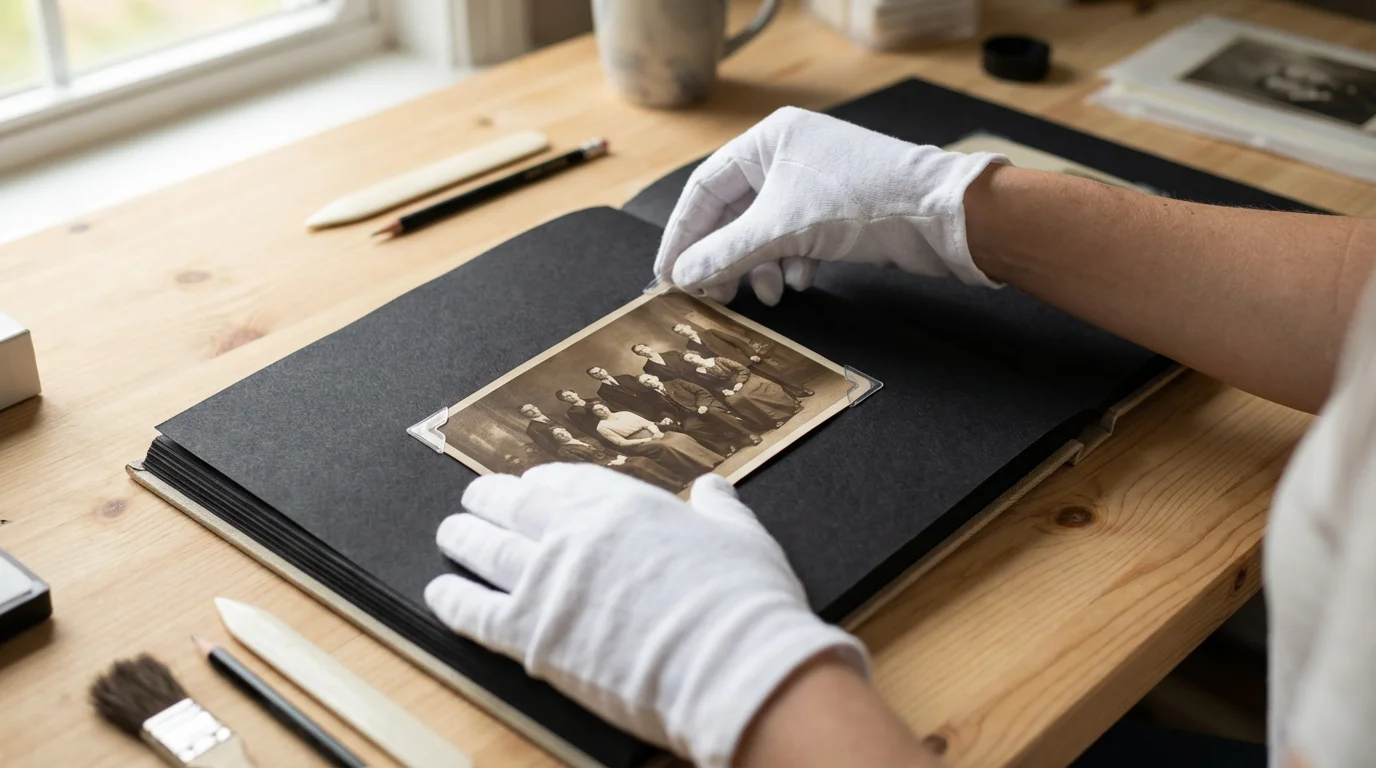
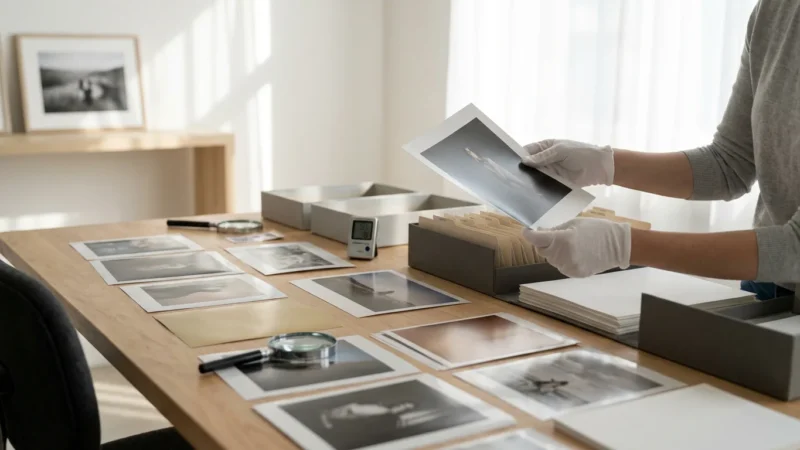
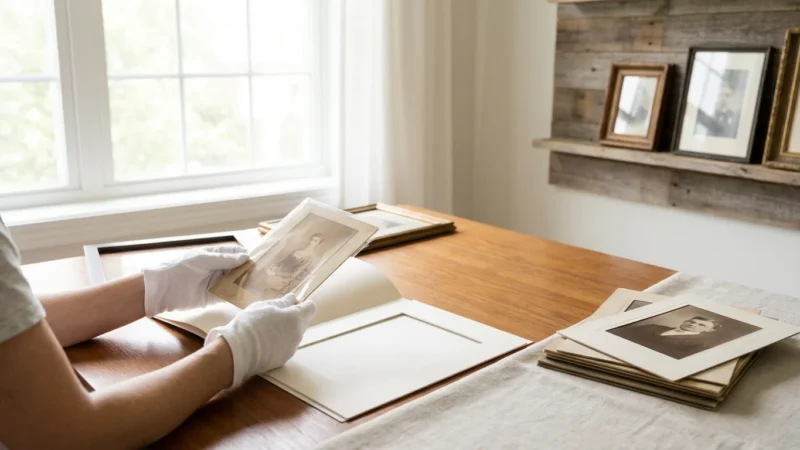
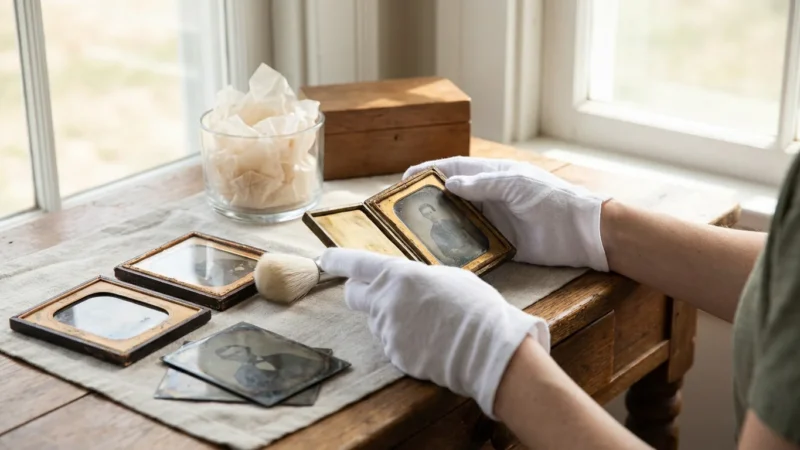
Once you select your archival albums and sleeves, you need to know how to properly place your photos within them. Incorrect mounting can negate the benefits of archival materials. Always handle photographs by their edges or wear clean cotton gloves to avoid transferring oils and dirt from your skin.
For those working with very old family heirlooms, it is also helpful to learn how to handle and display antique photographs safely without causing accidental tears or stains.
Reversible Mounting Methods are Key
The cardinal rule of photo preservation is reversibility. Whatever method you use to secure a photo, you must be able to remove it later without causing any damage.
- Archival Photo Corners: These are triangular pockets, made from acid-free and lignin-free paper or polypropylene, that hold the corners of a photograph.
- Pros: Completely reversible, no adhesive touches the photo, available in various sizes and colors.
- Cons: Can sometimes lift if not properly secured to the page, corners can become exposed.
- Archival Mounting Strips: These are narrow, clear strips of polyester or polypropylene with an archival adhesive on one side. You attach them to the back of the photo and then to the album page.
- Pros: Less visible than photo corners, provides a secure hold, allows the photo to be easily removed.
- Cons: Requires careful placement, adhesive is on the back of the photo (but it is archival).
- Archival Adhesives (Spray or Dots): Only use adhesives explicitly labeled “archival,” “acid-free,” and “photo-safe.” Look for glues that claim to be reversible or repositionable.
- Pros: Strong hold, clean appearance.
- Cons: Less reversible than corners or strips, always test on a non-valuable photo first. Many professional conservators advise against direct adhesive application to photos whenever possible.
What to AVOID When Mounting
- Regular Tape: Scotch tape, masking tape, and office tape contain acids and will yellow, become brittle, and stain your photos permanently. The adhesive also degrades and loses its stickiness, sometimes migrating into the photo itself.
- Rubber Cement or School Glue: These products are highly acidic and will cause immediate and long-term damage, leading to yellowing, discoloration, and brittleness.
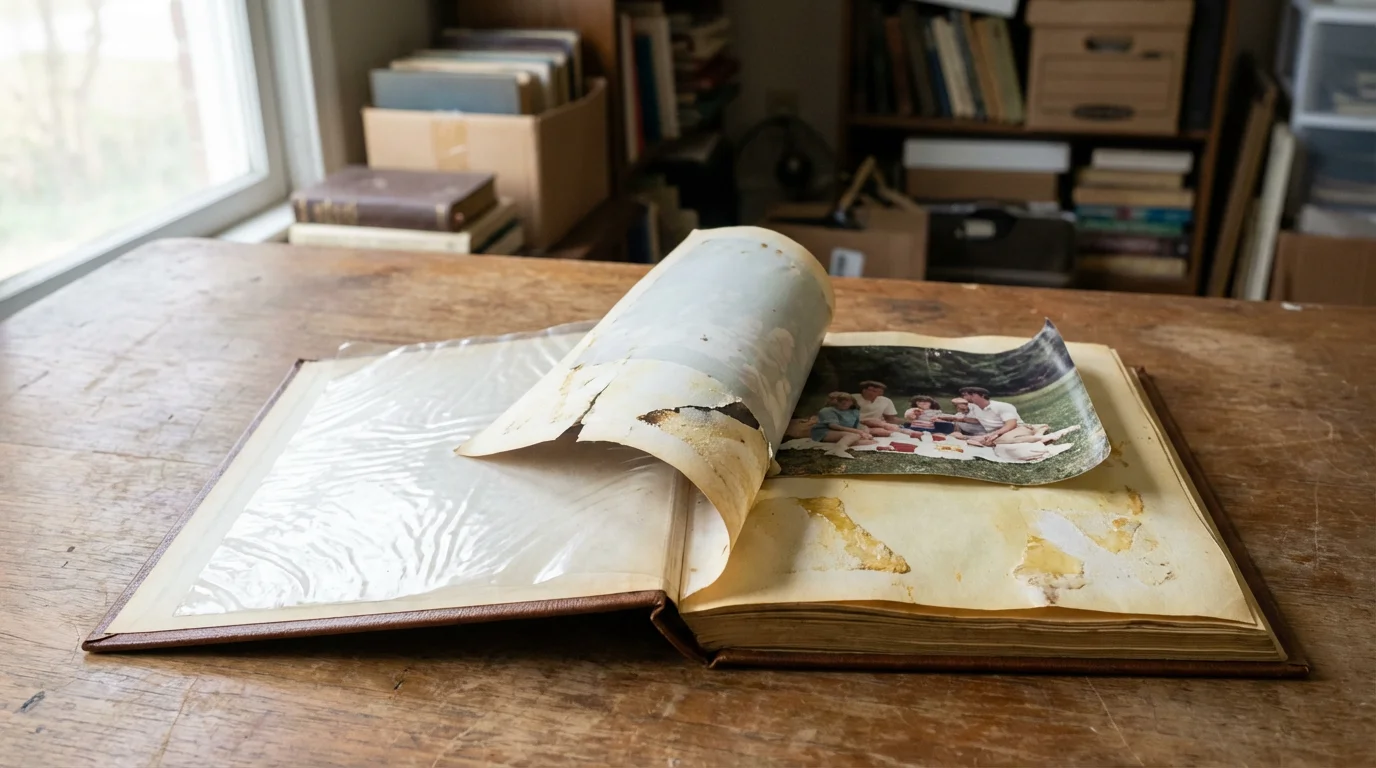
- “Sticky” or “Magnetic” Pages: These albums, often from the 1970s and 80s, use a low-quality adhesive on cardboard pages covered with a PVC plastic sheet. Photos become stuck, stained, and degrade rapidly. You must remove photos from these albums carefully.
When you place photos in pocket pages, slide them in gently to avoid bending or scratching. If a photo is too large for a pocket, do not force it. Instead, find a larger sleeve or consider scanning and printing a smaller version to fit, while storing the original safely elsewhere.
Creating the Perfect Environment: Storing Your Treasured Albums
Even with the best archival albums and sleeves, improper environmental conditions can still lead to degradation. Your goal is to create a stable, moderate environment for your treasured photo albums.
If your collection exceeds the capacity of your albums, consider using the best archival boxes for long-term photo storage to keep loose prints organized.
Temperature and Humidity Control
The ideal environment for photographic materials is cool, dry, and stable.
- Temperature: Aim for a consistent temperature below 70°F (21°C). Cooler temperatures slow down chemical reactions that cause fading and degradation. While refrigerator or freezer storage is best for highly unstable media like color negatives, it is impractical for albums.
- Humidity: Maintain relative humidity between 30% and 50%. High humidity (above 60%) promotes mold growth, attracts insects, and causes emulsion layers to become sticky. Low humidity (below 20-30%) can make paper brittle and prone to cracking.
- Consistency: Avoid fluctuations in temperature and humidity, which cause materials to expand and contract, putting stress on photographs. Attics, basements, and garages are usually the worst places for photo storage due to their unstable environments.
Light Exposure
Light, especially UV light, is a major enemy of photographs. It causes dyes to fade and paper to yellow.
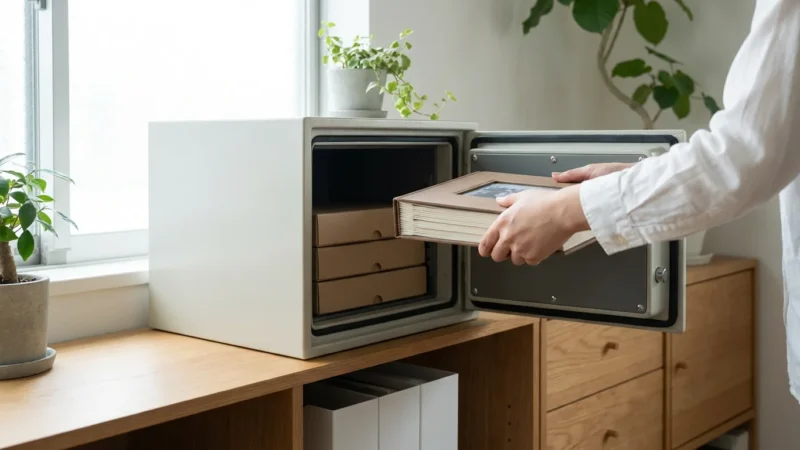
- Store in Darkness: Always store your archival albums in closed boxes or cabinets, away from direct sunlight and artificial light sources.
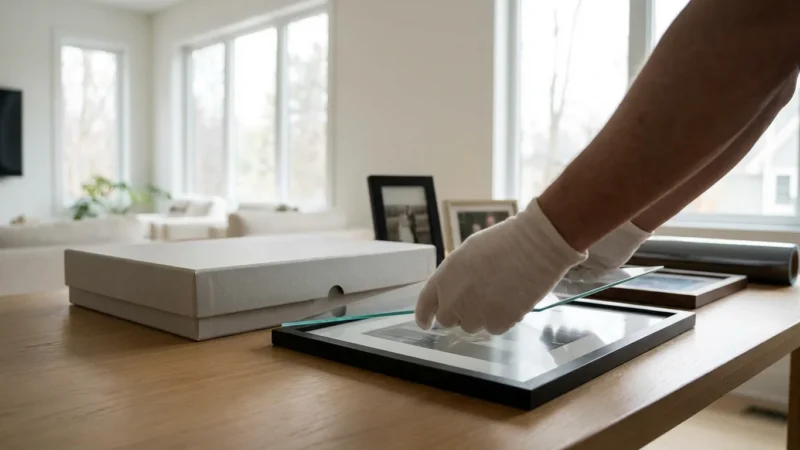
- UV Filtering: If you display photos, ensure frames have UV-filtering glass or acrylic. Rotate displayed prints frequently to minimize exposure to any single print.
Protection from Pests and Pollutants
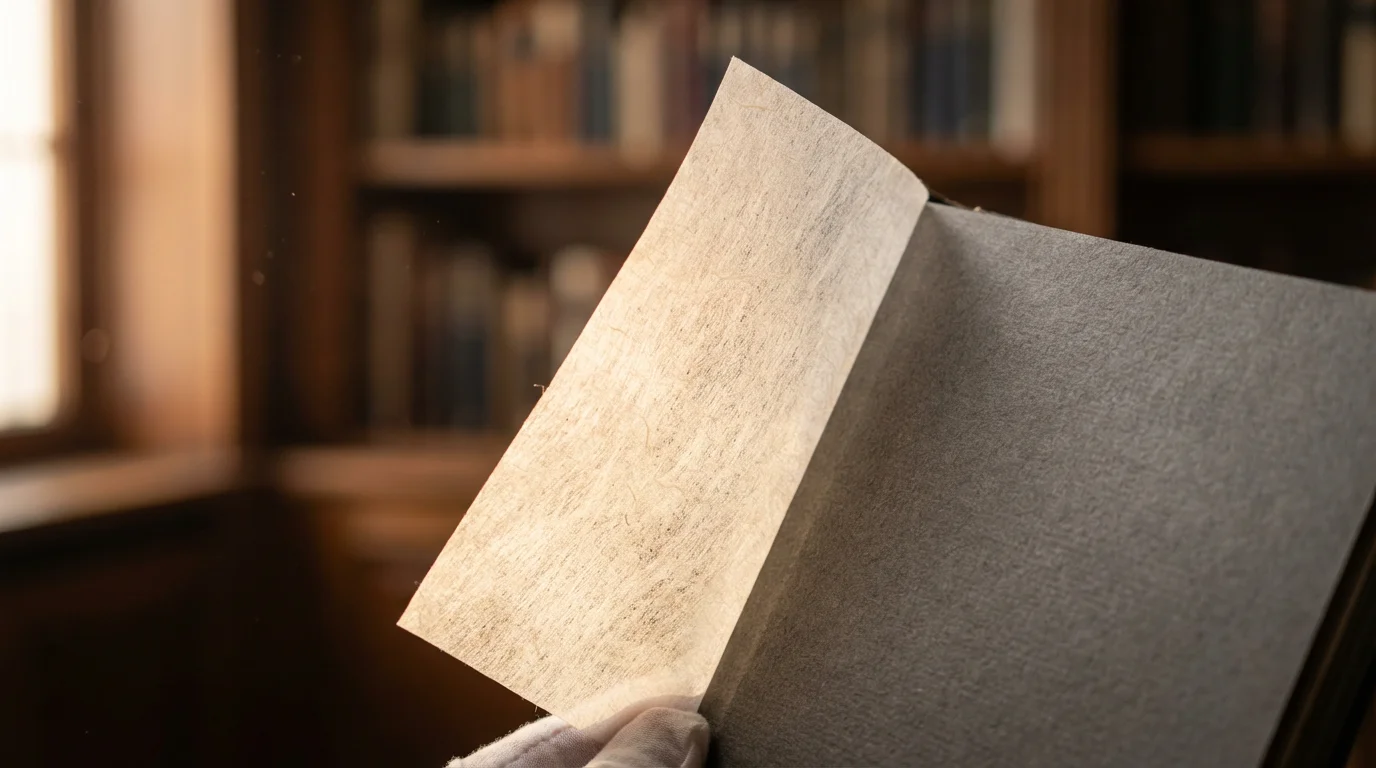
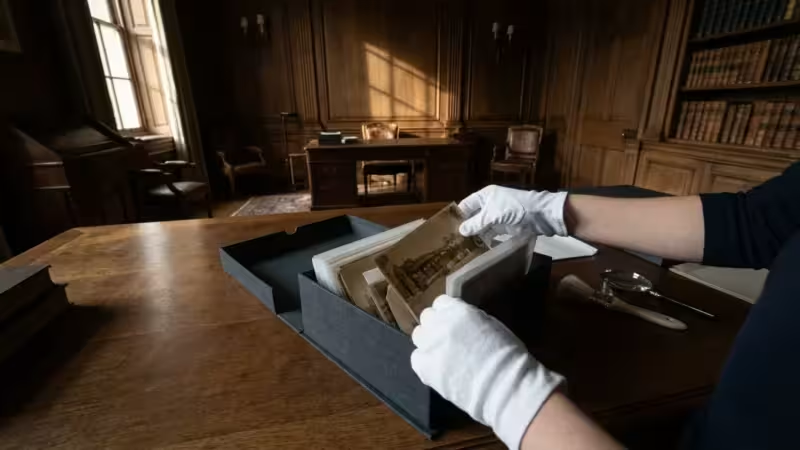
- Enclosed Storage: Store albums in archival storage boxes or cabinets to protect them from dust, dirt, and insect pests. Archival storage boxes are made from acid-free and lignin-free corrugated board.
- Avoid Off-gassing Materials: Do not store albums near fresh paint, new carpets, or other materials that can off-gas volatile organic compounds (VOCs). These chemicals can react with photographs.
- Keep Away from Water Sources: Store albums off the floor to protect against potential water damage from leaks or floods.
You do not need a museum-quality vault. By simply choosing a stable interior room in your home, avoiding attics and basements, and storing albums in proper containers, you significantly extend the life of your precious memories.
Navigating Pitfalls: Common Mistakes in Photo Preservation
Even with the best intentions, people often make mistakes that unknowingly jeopardize their photo collections. By understanding these common pitfalls, you equip yourself to protect your memories effectively.
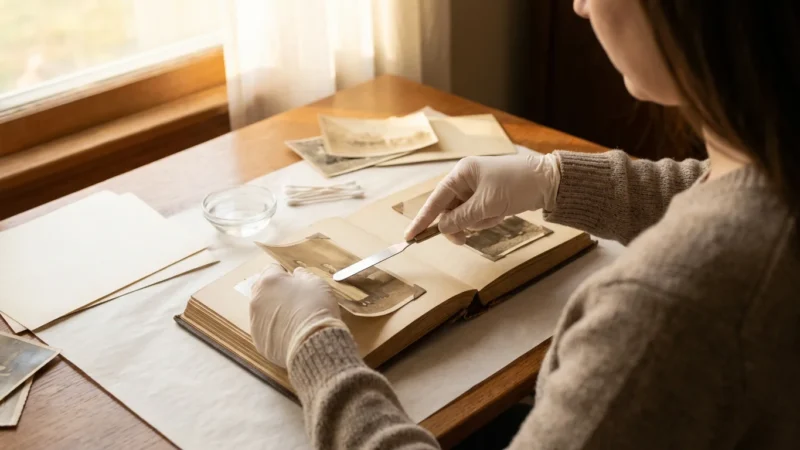
- Using “Magnetic” or “Sticky” Albums: This is perhaps the most egregious error. As discussed, these albums from past decades use highly damaging PVC sheets and acidic adhesives. If you own these, gently remove the photos and transfer them to archival storage. You may need to use dental floss to carefully separate stuck prints.
- Overcrowding Albums: Stuffing too many photos into an album, or overloading pages, puts immense pressure on prints. This can cause bending, creasing, and sticking. Give your photos room to breathe. Use additional albums or sleeves as your collection grows.
- Storing Photos in Cardboard Boxes Without Protection: While you might intend to sort them later, plain cardboard boxes are highly acidic and offer no protection against dust, light, or environmental fluctuations. Use archival storage boxes with individual archival sleeves for loose prints.
- Writing Directly on the Back of Photos with Ballpoint Pens: The ink from many pens can bleed through the photo emulsion over time, and the pressure of writing can create impressions on the front of the image. Always use a soft-lead pencil (2B or softer) or an archival-quality marker (acid-free, pigment-based) on the back, writing gently on the border or a non-image area.
- Laminating Original Photographs: Lamination is an irreversible process that encases a photo in plastic using heat and adhesive. The heat can damage the emulsion, and the plastic can off-gas chemicals, trapping any degradation products against the print. Laminating destroys the archival value of an original photograph. Instead, digitize the photo and laminate the copy if you need a durable version.
- Exposing Photos to Direct Sunlight or Fluorescent Lights: Displaying original photographs in direct light, even for short periods, accelerates fading. Use copies for display, or ensure originals are behind UV-filtering glass and rotated regularly.
- Assuming All “Photo Albums” are Safe: The term “photo album” does not automatically imply archival quality. Many commercially available albums contain non-archival materials. You must actively seek out products labeled as “acid-free,” “lignin-free,” and “PAT certified.”
You take significant steps toward safeguarding your photographic heritage by avoiding these common mistakes. Prioritize the long-term health of your photos over convenience or perceived cost savings in the short term. Remember, preserving memories is a gradual process, and every correct decision protects your legacy.
Frequently Asked Questions
What does “PAT certified” mean, and why is it important?
PAT certified means the product has passed the Photographic Activity Test, an international standard (ISO 18916) developed by the Image Permanence Institute. This test determines if a material will chemically interact with and damage photographic emulsions over time. A PAT-certified product guarantees it is safe for direct contact with your photos, preventing issues like fading, staining, or sticking. Always look for this label on archival sleeves, pages, and mounting materials.
Can I use old photo albums if I replace the pages with archival ones?
It depends on the album’s construction. If the album uses a ring-binder or post-bound mechanism and the cover itself is sturdy and not off-gassing, you can often replace old, damaging pages with new archival-quality refills. However, if the album features “sticky” pages or is made from materials like PVC that can contaminate the environment, it is best to avoid using the album entirely. The cover materials must also be stable and acid-free.
Where can I buy reliable archival photo albums and sleeves?
You can find reliable archival supplies from specialty archival product suppliers, reputable museum supply stores, and online retailers that focus on preservation. Look for brands that explicitly state their products are acid-free, lignin-free, and PAT certified. Avoid general craft stores or discount stores, as their “photo-safe” claims often lack true archival standards.
Is it better to store photos in albums or individual sleeves?
Both methods offer benefits, and you can combine them. Individual archival sleeves provide the best protection against fingerprints, dust, and handling damage for each photo. Placing these sleeved photos into an archival album offers additional structural support, organization, and protection from light. For very valuable or delicate prints, individual sleeving before placing into an album or archival box is ideal. For larger collections, well-chosen archival albums with integrated pocket pages provide excellent protection.
How do I remove photos that are stuck to old “magnetic” album pages?
This process requires patience and extreme care to avoid tearing the photo. First, try gently peeling the plastic overlay back. If the photo is stuck, do not pull forcefully. You can sometimes carefully slide a piece of un-waxed dental floss or a very thin spatula under a corner and slowly work your way across. Some people use a small amount of Ronsonol lighter fluid (naphtha) on a cotton swab applied to the back of the page, which can loosen the adhesive, but this is a last resort and requires excellent ventilation and caution. If the photos are truly irreplaceable, consult a professional conservator.
The journey of preserving your photographic heritage begins with informed choices. By understanding the principles of archival storage and investing in the right archival albums and photo sleeves, you empower yourself to protect these irreplaceable fragments of your past. Start small, choose quality materials, and take satisfaction in safeguarding your family’s stories for countless years to come. Your future self, and future generations, will thank you.
Disclaimer: This article is for informational purposes only. When handling valuable or irreplaceable photographs, consider consulting a professional conservator. Always test preservation methods on non-valuable items first.
Leave a Reply