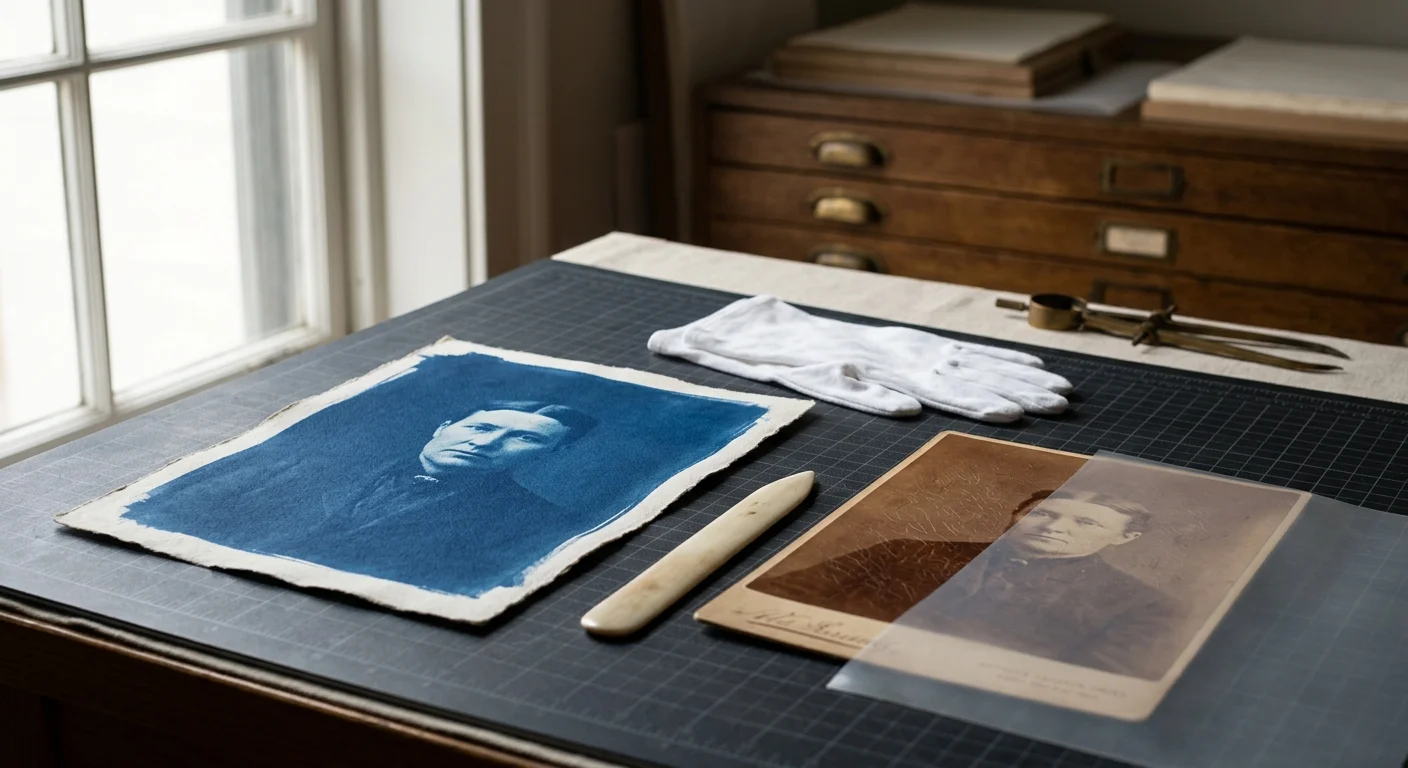
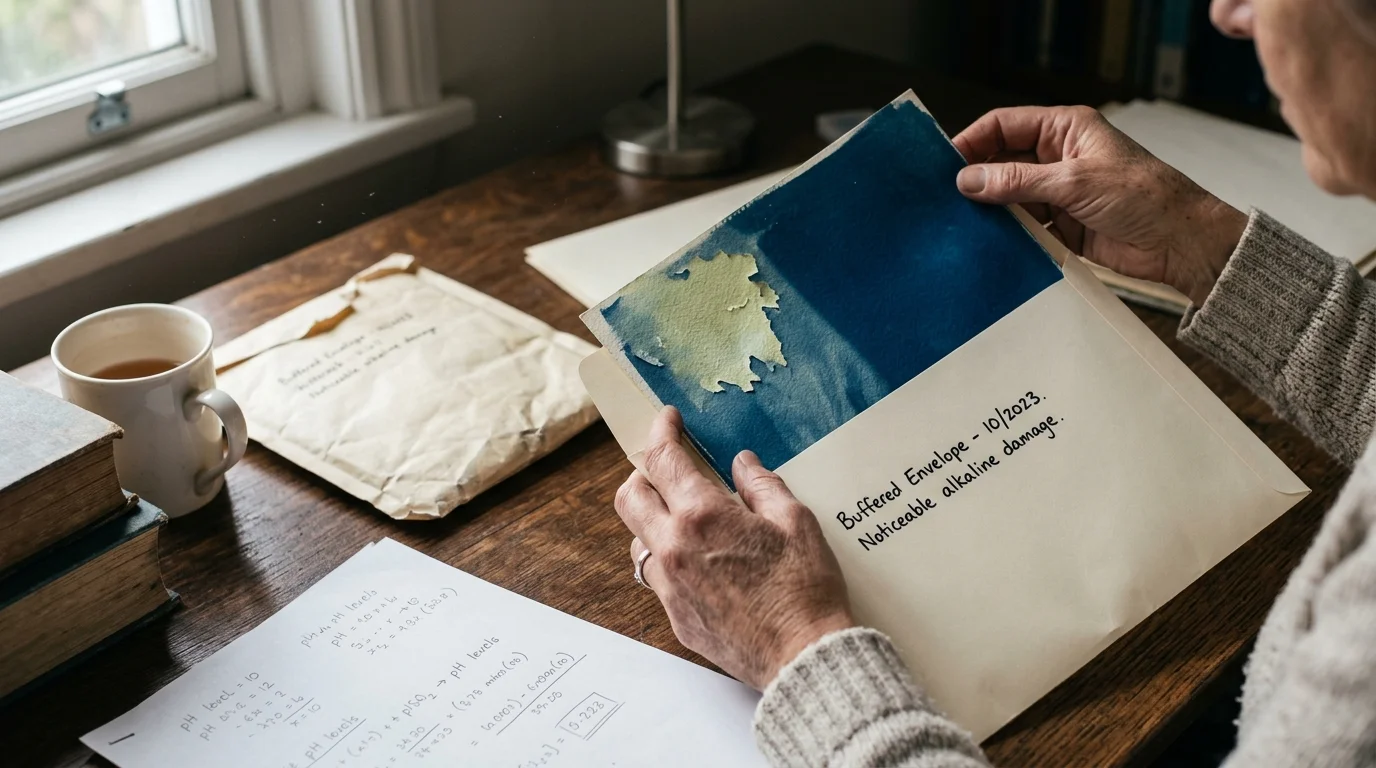
If you inherited an 1890s family album, standard archival envelopes will irreversibly destroy your Prussian blue cyanotype portraits while protecting the neighboring albumen prints. This happens because standard enclosures use calcium carbonate buffering that chemically bleaches cyanotypes into pale yellow stains.
Most genealogical guides recommend buffered paper for everything photographic. That advice fails when 19th-century cyanotypes share page space with silver or albumen prints.
To preserve both photographic processes under one roof, you need a dual-housing strategy that isolates different chemical vulnerabilities without dismantling your family heirlooms.
The Chemistry of Prussian Blue and Alkaline Sensitivity
Sir John Herschel invented the cyanotype process in 1842. A year later, botanist Anna Atkins used the medium to create Photographs of British Algae: Cyanotype Impressions, cementing cyanotype as photography’s first durable book-illustration method.
Unlike silver-based prints, cyanotypes do not suspend metallic silver in gelatin or albumen binders. Instead, the image material resides directly inside the paper fibers as insoluble ferric ferrocyanide, historically known as Prussian blue.
Prussian blue exhibits remarkable chemical stability when you expose it to light and acidic environments. In fact, mild acidity actually reinforces the molecular lattice of the pigment.
The iron complex collapses, however, when it encounters alkaline substances. Hydroxyl ions attack the ferric ferrocyanide molecule, splitting the iron atoms away from the cyanide ligands.
Alkaline hydrolysis strips iron ions from ferric ferrocyanide, converting insoluble Prussian blue into amorphous yellow-brown ferric hydroxide.
This reaction permanently strips the vibrant Prussian blue tone from the paper. It leaves behind an illegible, light-brown stain of ferric hydroxide across your ancestor’s portrait.
Because the pigment embeds directly in the paper matrix, you cannot reverse this chemical decomposition once it occurs. Prevention remains your only defense.
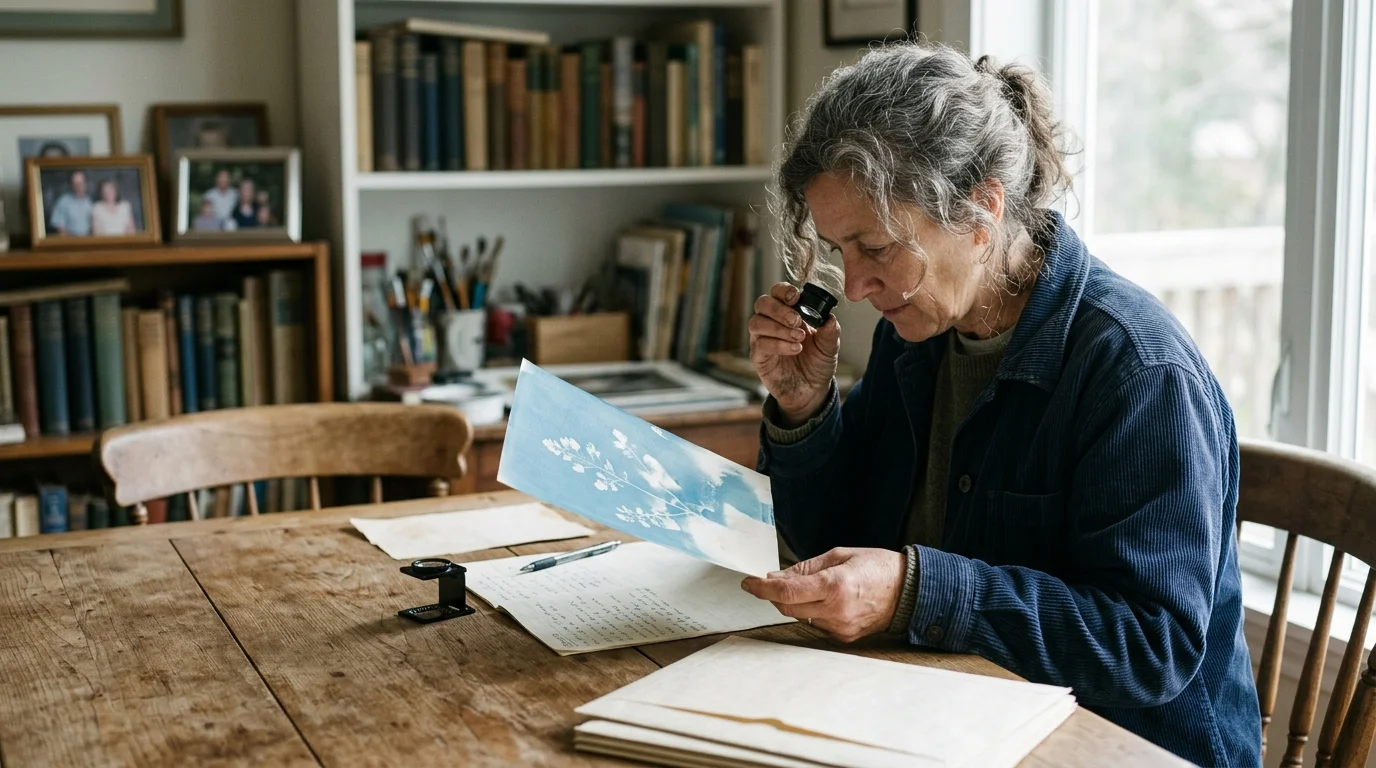
The Buffered Paper Trap: Why CaCO3 Bleaches Cyanotypes
When you shop for archival supplies to store antique cyanotypes, nearly every standard catalog promotes buffered paper. Manufacturers add a 2% to 3% alkaline reserve of calcium carbonate to these enclosures.
This calcium carbonate buffer raises the paper’s pH to an alkaline range between 7.5 and 9.5. Commercial archives favor this alkalinity because it neutralizes airborne sulfuric acids and acid migration from aging wood furniture.
Acidic decay destroys ordinary cellulose documents, but that same protective alkaline shield acts as a corrosive poison to Prussian blue. Direct contact with buffered paper forces alkaline ions into the cyanotype’s cellulose fibers.
Many collectors assume an enclosure is safe because it passed the standard Photographic Activity Test. Standard testing procedures under ISO 18916 evaluate silver image fading and colloidal staining, not cyanotype stability.
A paper enclosure can pass ISO 18916 with exceptional scores while actively destroying ferric ferrocyanide. The test simply does not measure alkaline sensitivity in non-silver processes.
Leading conservation institutions mandate unbuffered, acid-free enclosures with a neutral pH between 6.5 and 7.5. Both the Image Permanence Institute and the Library of Congress enforce this strict unbuffered standard for all iron-based prints.
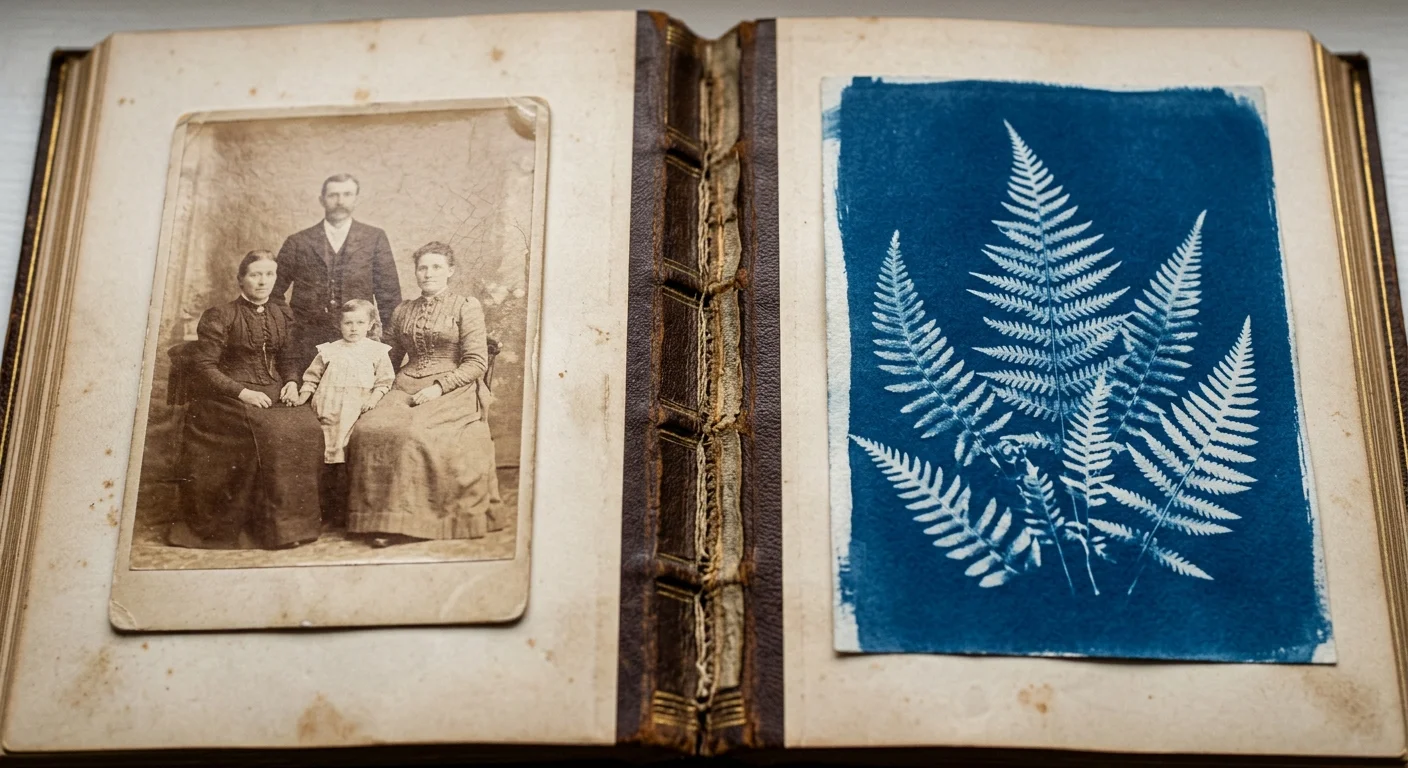
The 1890s Album Conflict: Albumen Prints Versus Cyanotypes
Between 1885 and 1905, amateur photography exploded following George Eastman’s introduction of flexible roll film. Commercial print shops produced albumen cabinet cards, while families printed snapshot negatives at home using inexpensive blueprint paper kits.
Just as with mixed albums, learning how to identify and care for other early photographic formats like tintypes and daguerreotypes requires understanding their unique material vulnerabilities.
Your inherited 1890s album likely houses these two radically different printing methods bound onto identical black or gray construction paper leaves. This pairing creates an archival dilemma.
Albumen prints utilize salted egg whites to bind metallic silver to a paper base. Over time, environmental acids crack the egg albumen binder and turn the silver image into a faded yellow tone.
Albumen prints thrive in alkaline-buffered enclosures with a pH near 8.5 because the calcium carbonate neutralizes destructive sulfur compounds. In contrast, that exact alkalinity destroys the cyanotypes mounted right next to them.
If you insert standard buffered tissue paper between album pages, you protect the albumen prints while initiating alkaline hydrolysis on the facing cyanotypes. You cannot treat mixed-process albums with a single off-the-shelf paper enclosure.
Separating the pages with scissors destroys the historical provenance of your family heirloom. You must resolve this conflict by creating physical, chemical barriers between opposing print chemistries on the existing leaves.
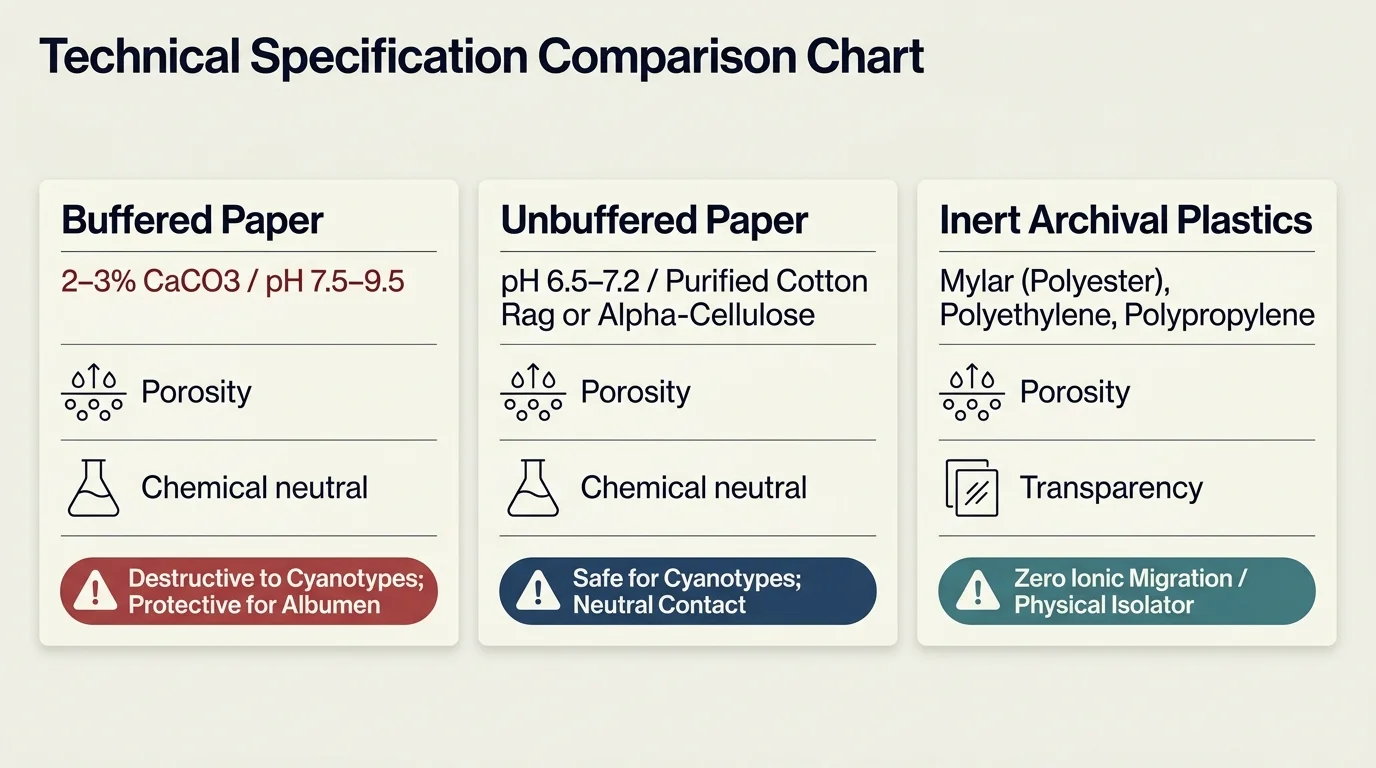
Enclosure Specifications: Buffered vs Unbuffered vs Inert Plastics
Choosing enclosure materials requires understanding how different barriers handle pH, atmospheric gas, and relative humidity. You must weigh buffered vs unbuffered enclosures against inert plastic sleeves before assembling a storage system.
Standard paper products allow atmospheric breathability, which prevents moisture trapping. Plastic sleeves offer physical barriers that block chemical migration between adjacent pages.
Review the technical specifications in the following comparison table before buying preservation supplies for your collection.
| Enclosure Material | Effective pH Range | Moisture Permeability | Prussian Blue Safety | Albumen Print Safety |
|---|---|---|---|---|
| Standard Buffered Alpha-Cellulose | 7.5 – 9.5 (2% CaCO3) | High (porous paper fibers) | Dangerous (induces hydrolysis) | Optimal (neutralizes acid) |
| Unbuffered 100% Cotton Rag Paper | 6.5 – 7.5 (neutral) | High (porous paper fibers) | Optimal (safe neutral housing) | Acceptable (lacks acid reserve) |
| Biaxially-Oriented Polyester (Melinex 516) | 7.0 (chemically inert) | Zero (impermeable barrier) | Optimal (prevents ion transfer) | Optimal (physically stable) |
| Virgin Polypropylene Film | 7.0 (chemically inert) | Very Low (mild barrier) | Optimal (no plasticizers) | Optimal (smooth surface) |
Unbuffered cotton rag paper remains the gold standard for separating loose cyanotypes. It absorbs ambient pollutants without off-gassing or altering the neutral pH of the image.
Inert plastic films provide an impermeable chemical shield that prevents alkaline ions on one page from reaching a cyanotype on the facing page. You should use virgin polyester film, sold commercially as Melinex 516 or Mylar D.
Avoid polyvinyl chloride, commonly labeled as PVC. PVC contains unstable plasticizers that degrade into hydrochloric acid, which will destroy both cyanotypes and albumen prints within years.
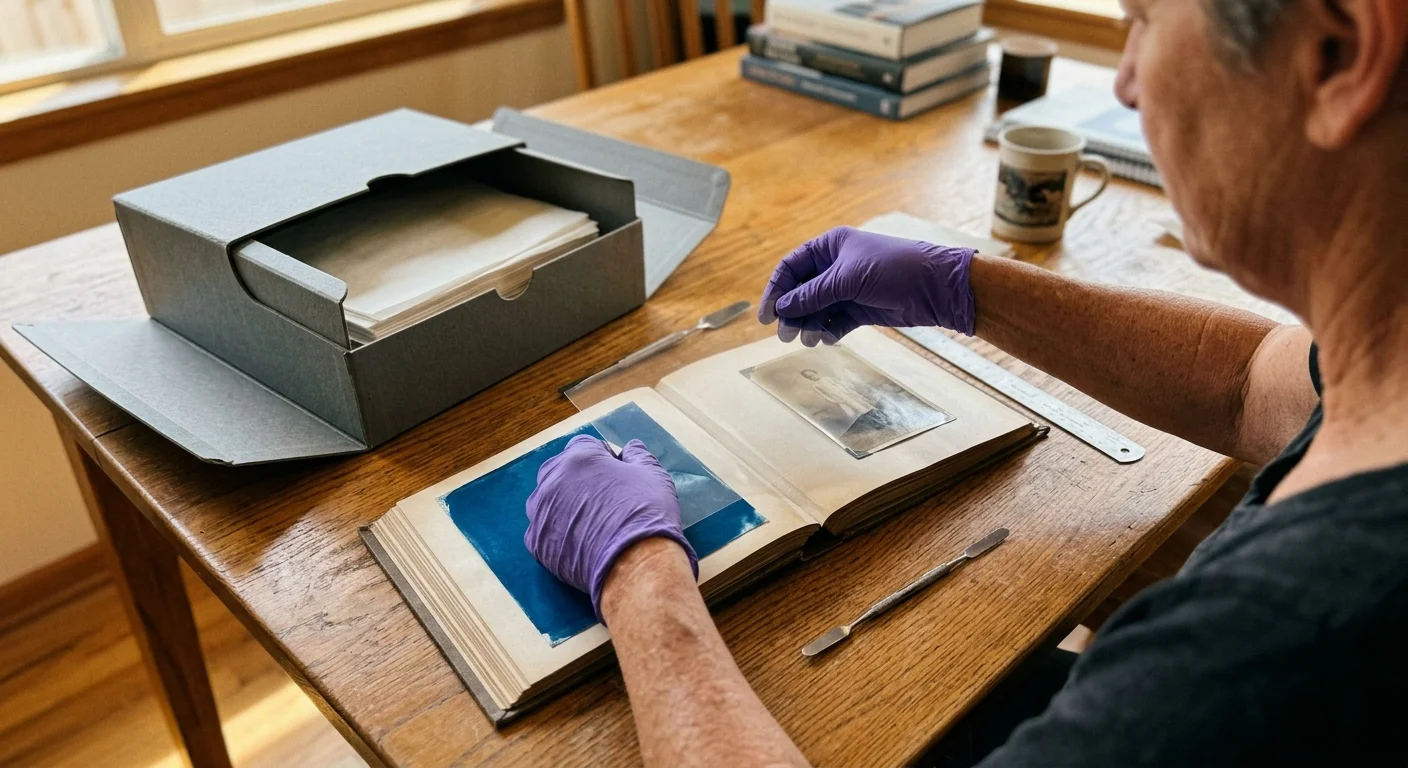
Worked Example: Building a Dual-Storage System for an Inherited 1890s Album
To understand how this dual-housing system works in practice, examine this worked scenario for an actual family heirloom. This example details the rehousing of an 1894 family album originating from Bucks County, Pennsylvania.
The album measures 10.5 by 12 inches and contains 20 leaves. It holds 24 studio albumen cabinet portraits mounted alongside 16 amateur snapshot cyanotypes measuring 3.5 by 3.5 inches.
To preserve this mixed-process album, you will need the specific archival items listed below.
- One drop-front box measuring 11.5 by 13.5 by 3 inches, constructed from unbuffered 0.040-inch blue-gray barrier board: $38.50.
- One 50-sheet pack of unbuffered 100% cotton tissue measuring 10 by 12 inches (pH 6.8 to 7.2): $19.50.
- One 25-pack of 3-mil Melinex 516 polyester L-sleeves measuring 4 by 6 inches: $21.00.
- Total materials budget: $79.00. Total assembly time: 110 minutes across two evenings.
Begin your preservation workflow by conducting an item inventory. Note every leaf where a cyanotype shares an opening with an albumen print.
Next, isolate any loose or partially detached cyanotype snapshots. Slide each loose print into an open-sided 3-mil Melinex 516 L-sleeve to create an impermeable, neutral envelope.
For cyanotypes pasted firmly onto album leaves, cut an unbuffered cotton tissue sheet to match the leaf dimensions. Place this neutral sheet over the page, then place a Melinex sheet directly over the tissue.
The unbuffered tissue buffers moisture while the polyester sheet stops alkaline migration from adjacent buffered leaves. Secure the interleaving sheets using acid-free photo-mounting corners fixed to the outer page margin.
Never apply liquid adhesives, tapes, or pressure-sensitive glues to the original album pages. Interleaving must remain 100% reversible to protect the historical artifact.
Finally, place the interleaved album into the unbuffered drop-front box. The rigid box shields the pages from ambient light, dust, and physical pressure.
Environmental Controls: Stopping Alkaline Migration Through Relative Humidity
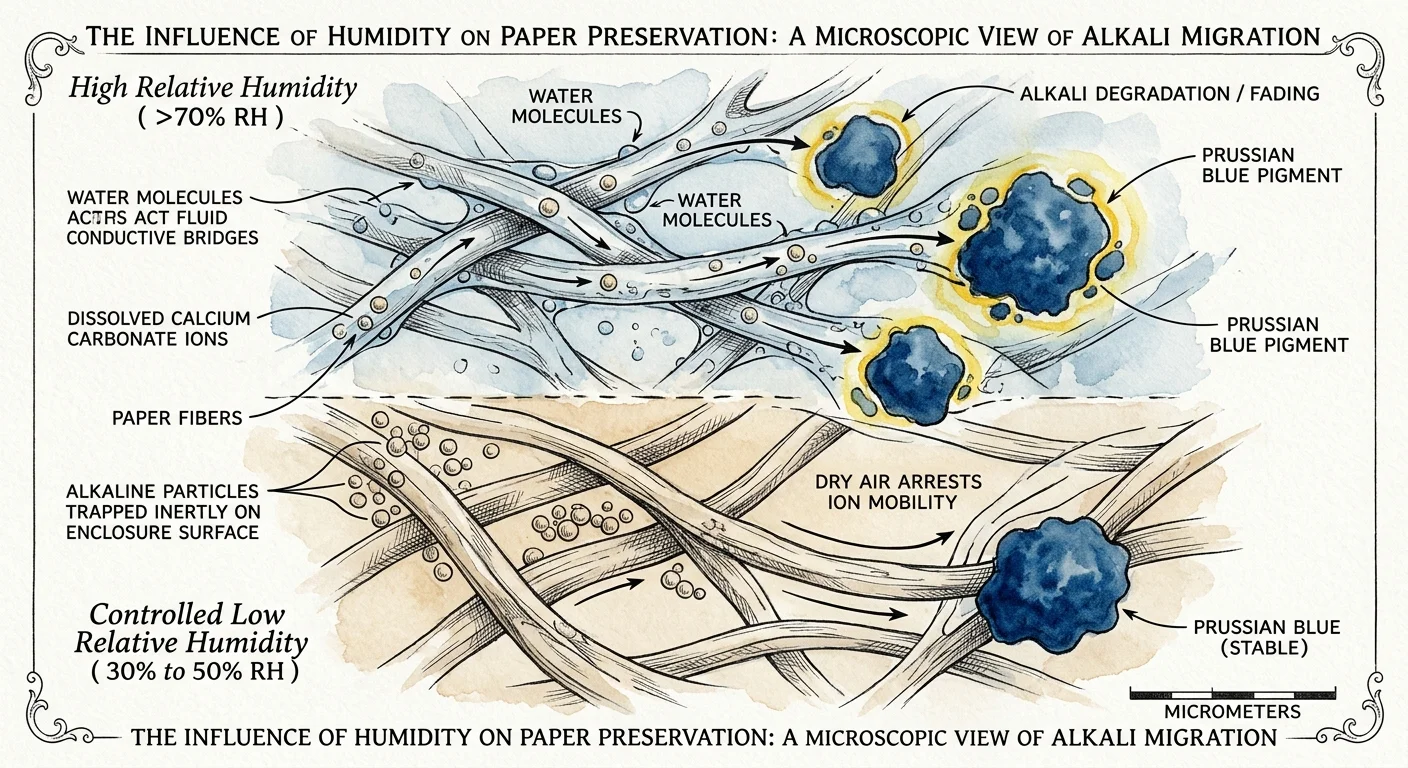
Ambient moisture acts as the transport vehicle for alkaline degradation. When relative humidity climbs, water vapor dissolves calcium carbonate ions from buffered paper and carries them into adjacent cyanotypes.
Establishing strict climate boundaries is one of the essential steps in preventing print fading across your entire photo archive.
Conservation guidelines published by the American Institute for Conservation stress that chemical reactions double in rate with every 10% jump in humidity. Storing photos in humid conditions accelerates Prussian blue fading.
Maintain your storage area between 30% and 50% relative humidity. Never allow ambient humidity to exceed 55%, as capillary action in paper fibers activates chemical migration at this threshold.
Keep ambient temperatures consistently below 21°C (70°F). Elevated room temperatures provide the thermal energy needed to drive hydrolysis forward.
Store your archival boxes on interior closet shelves rather than unconditioned basements or attics. Basements foster dampness that initiates chemical bleaching, while attics subject prints to seasonal heat spikes.
Place a reusable, indicating silica gel cassette inside your outer storage cabinet to regulate ambient swings. Avoid placing loose desiccant packets directly against original cyanotype prints.
Handling and Digitization Protocols for Mixed 19th-Century Albums
Preserving your 1890s album requires clean handling habits. White cotton gloves, while traditional, pose an unseen hazard to cyanotypes.
Cotton gloves easily accumulate calcium carbonate dust from handling buffered storage boxes. When you touch a cyanotype with those contaminated gloves, you deposit alkaline particles directly onto the image surface.
Wear clean, powder-free nitrile gloves when handling prints, or wash your hands thoroughly with plain soap and water. Dry your hands completely before touching album leaves.
Before putting your album away in archival housing, digitize the leaves to create a permanent visual record. Scanning allows family members to view your photographs without subjecting fragile originals to physical wear.
Avoid high-heat flatbed scanners when digitizing cyanotypes. Prolonged exposure to intense scanner lamps triggers reversible photoreduction, temporarily fading Prussian blue into a pale gray-blue state.
While Prussian blue can slowly regain color through atmospheric oxidation, repeated photoreduction permanently weakens the chemical image. Overhead camera scanning provides a safer alternative.
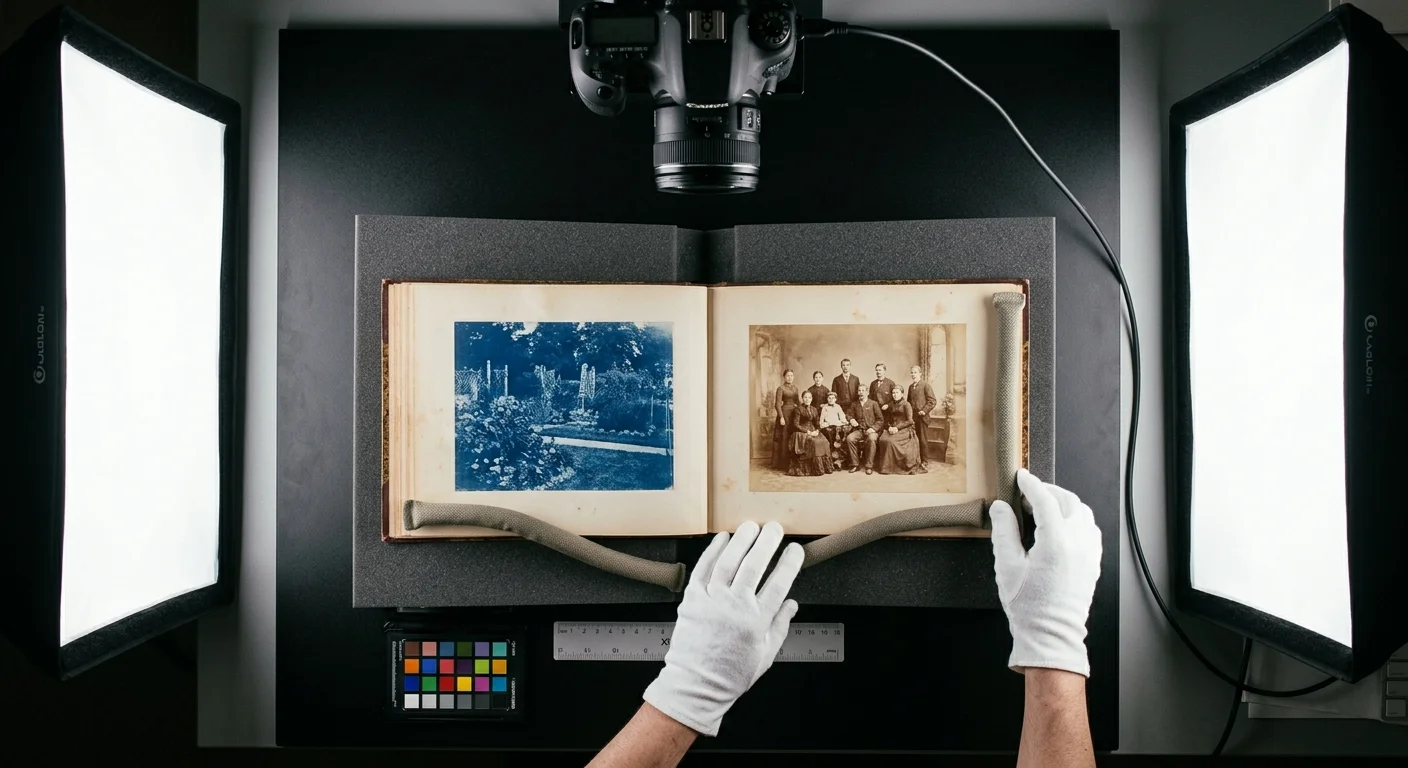
Capture 19th-century mixed-media albums using an overhead digital camera and cool 5000K LED copy lights to avoid UV and infrared heat degradation.
Mount a digital camera on a copy stand directly above the open album. Illuminate the page using two daylight-balanced 5000K LED copy lights angled at 45 degrees.
Set your camera to ISO 100, an aperture of f/8, and a shutter speed of 1/125 second to capture crisp detail without thermal stress. Save your digital masters as uncompressed 16-bit TIFF files for long-term genealogical preservation.
Proper environmental control and safe housing materials will keep your family’s 1890s albums legible. For broader institutional preservation guidelines, consult the Library of Congress Preservation resources.
Frequently Asked Questions
Can bleached cyanotypes be restored once exposed to buffered paper?
No, you cannot chemically reverse Prussian blue bleaching once alkaline hydrolysis converts the ferric ferrocyanide into ferric hydroxide. You can, however, halt active decay immediately by transferring the print into an unbuffered 100% cotton rag enclosure.
Why did 19th-century photographers mix cyanotypes and albumen prints in one album?
Professional photographers sold albumen cabinet cards for formal portraits, while amateur family members used inexpensive cyanotype paper kits to print casual snapshots at home. Families naturally pasted both print types into the same keepsake albums.
Does passing the Photographic Activity Test (PAT) guarantee an envelope is safe for cyanotypes?
No, the standard ISO 18916 PAT only measures reactions that fade silver images or stain gelatin binders. It does not measure alkaline hydrolysis, meaning buffered papers that pass the PAT can still bleach cyanotypes.
Can I use plastic sandwich bags to store loose cyanotype snapshots?
Never use household sandwich bags for antique photo storage. Grocery bags contain polyethylene blends with slip agents and plasticizers that degrade into acidic oils, which will permanently damage both the image and the paper support.
Disclaimer: This article is for informational purposes only. When handling valuable or irreplaceable photographs, consider consulting a professional conservator. Always test preservation methods on non-valuable items first.