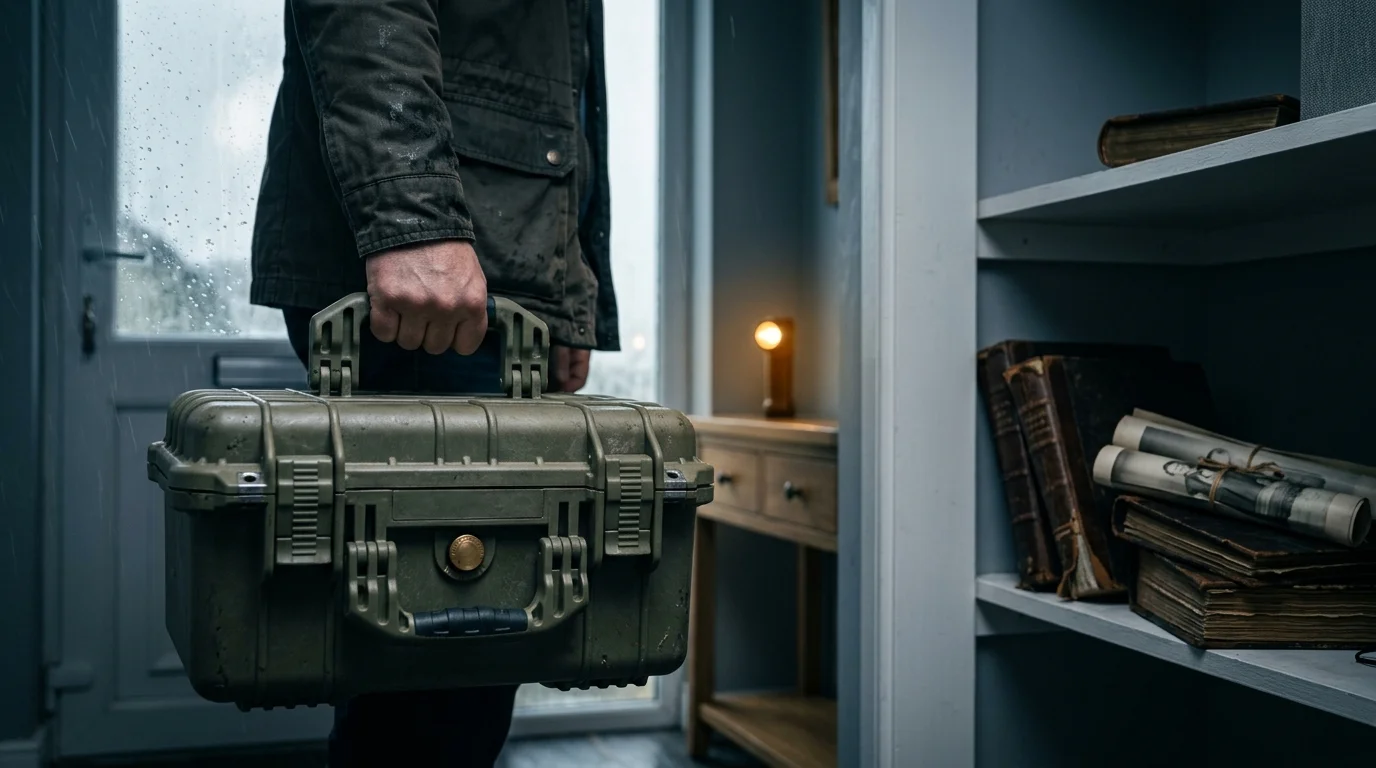
When hurricane storm surge threatens your coastal home, grabbing your family albums requires an evacuation system that survives deep floodwaters and sudden climate shifts. A submersible hard case keeps external water out during a rapid fifteen-minute departure.
Most flood guides overlook that sealing warm, humid coastal air inside an airtight box creates devastating condensation the moment you load it into an air-conditioned vehicle. You must balance ingress protection with precise desiccant math to stop internal moisture damage.
This guide shows you how to size cases, inspect gaskets, and calculate exact silica gel loads so your irreplaceable photographic prints survive the drive inland.
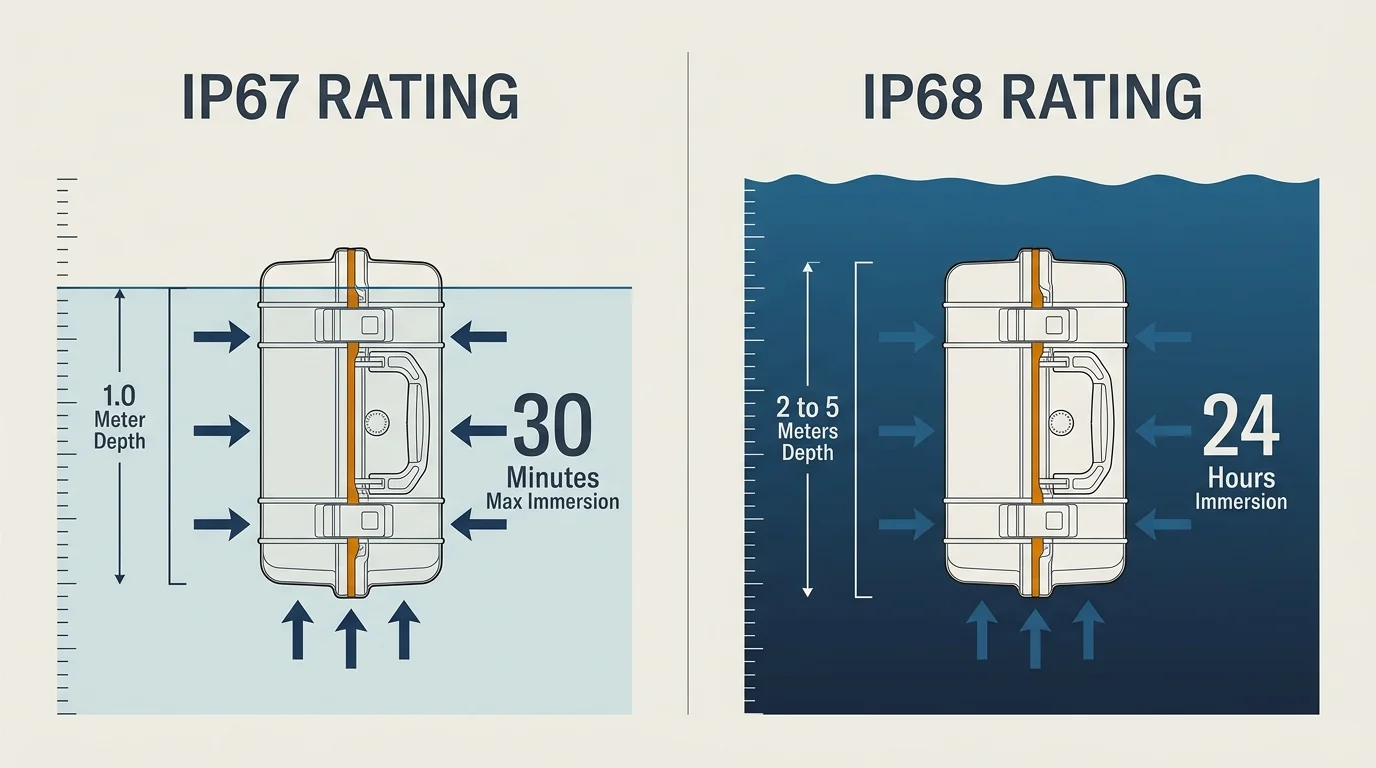
IP67 vs. IP68 Submersion Standards for Floodwaters
Ingress protection ratings define how well an equipment enclosure repels environmental hazards under standard testing protocols. The International Electrotechnical Commission outlines these specific benchmarks under international standard IEC 60529.
The first digit describes solid particle protection on a scale from zero to six. A rating of six certifies that the enclosure is dust-tight, blocking fine sand, silt, and wind-driven debris completely.
The second digit defines liquid ingress protection. Understanding this number determines whether your family photo archives survive immersion during sudden coastal flash flooding or mandatory boat evacuations.
An IP67 rating ensures total protection against dust and certifies survival during liquid submersion up to one meter for thirty minutes. This benchmark provides adequate protection if you wade through standing water during a flash flood.
In contrast, an IP68 rating certifies continuous immersion beyond one meter under manufacturer-specified depths and durations. Manufacturers often engineer IP68 enclosures to withstand depths of two to five meters for twenty-four hours.
For rapid evacuation scenarios along coastal flood zones, an IP67 rating meets your core survival requirements. Your primary risk comes from torrential downpours, shallow storm surge, and accidental drops into standing water.
Investing in an IP68 case gives you an added safety buffer if floodwaters sweep cargo downstream. However, proper latching and clean gasket maintenance matter far more than theoretical depth ceilings.
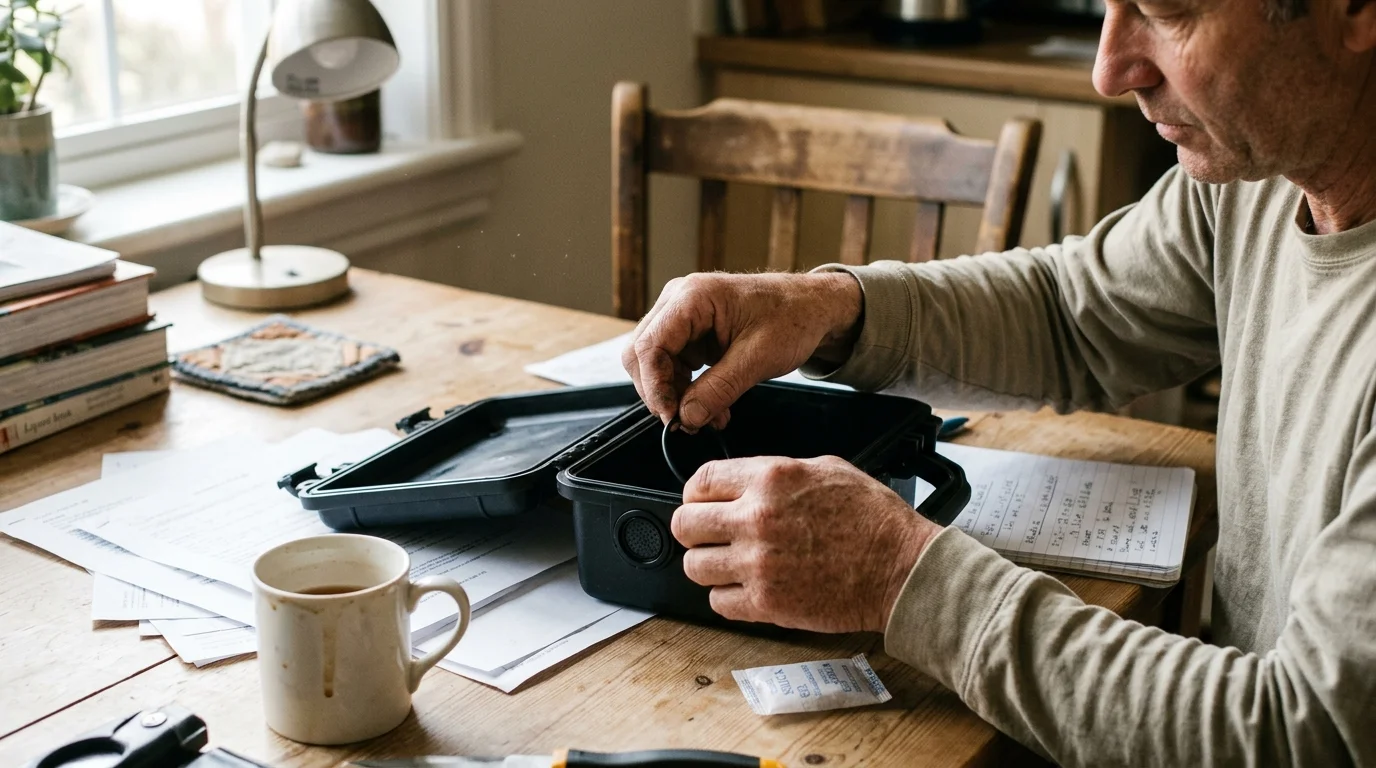
Gasket Integrity: EPDM O-Rings and Hydrophobic Purge Valves
Watertight hard cases depend entirely on the mechanical compression of an elastomeric perimeter seal. Most manufacturers mold these O-rings from ethylene propylene diene monomer (EPDM) or high-grade closed-cell neoprene rubber.
The case lid features a tongue-and-groove channel that grips the elastomeric gasket when you engage the latches. This design converts mechanical clamp pressure into a uniform water barrier along the entire perimeter.
Over time, extreme summer heat inside coastal garages degrades untreated elastomeric polymers. You must regularly inspect your gasket for dry rot, permanent compression set, flattening, and fine micro-cracks.
Salt crystals, beach sand, and stray pet hairs will compromise this barrier within seconds. Wipe the O-ring channel clean with a lint-free microfiber cloth before every hurricane season.
Submersible cases also integrate an automatic pressure equalization valve. Rapid atmospheric pressure drops caused by approaching hurricanes can create severe vacuum lock that seals standard containers completely shut.
The equalization valve solves this problem using an expanded polytetrafluoroethylene (ePTFE) hydrophobic membrane. This membrane allows microscopic air molecules to equalize internal and external pressure while blocking liquid water droplets.
Because the ePTFE membrane permits air exchange, water vapor slowly moves through the valve over extended storage periods. You cannot treat a submersible case as a multi-year passive humidity vault without active sorbent monitoring.
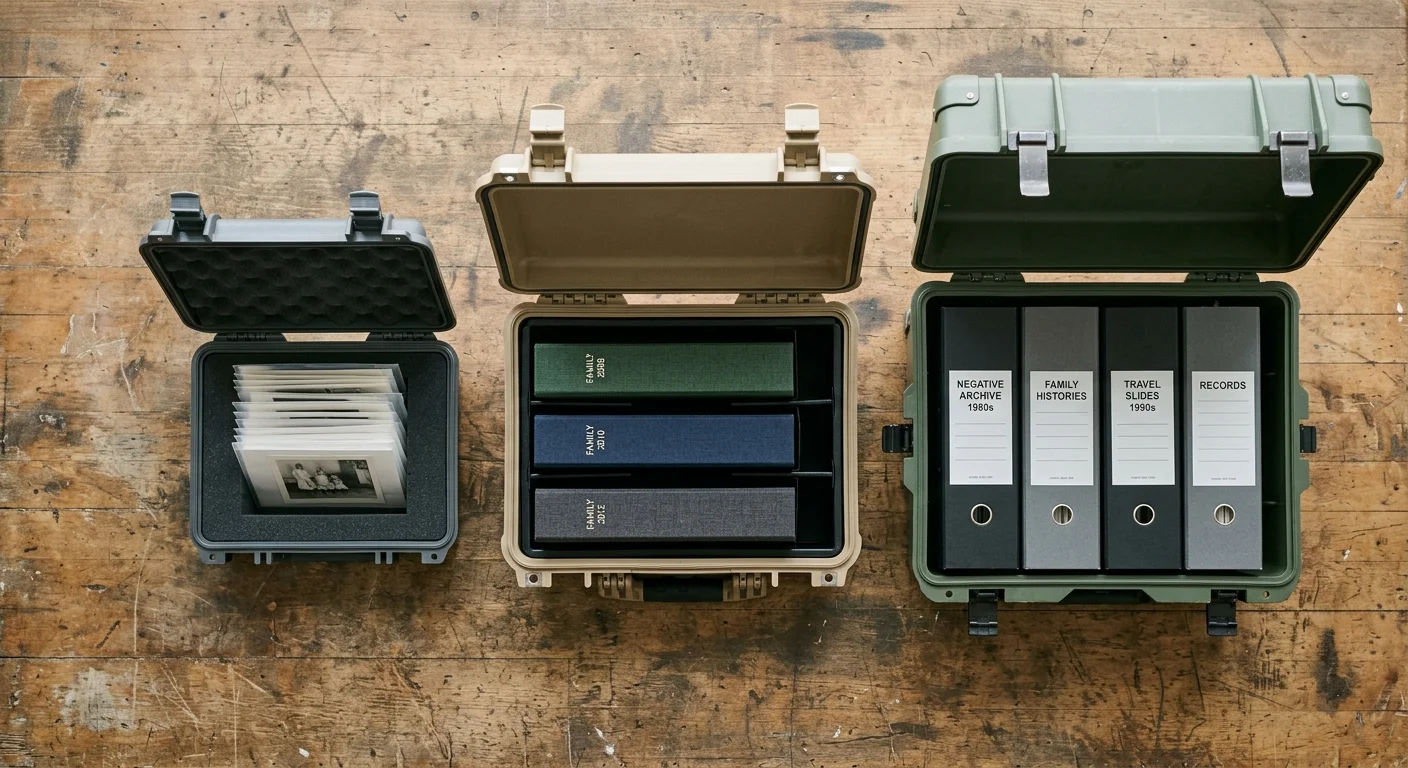
Hard Case Benchmarks: Pelican, Nanuk, and Apache Sizing
Choosing the right evacuation case requires balancing interior packing volume against total carry weight. You must be able to lift your packed case into a high-clearance truck bed within seconds.
The table below compares four leading submersible cases suitable for rapid archival photo evacuation. Each model accommodates standard archival binders and phase boxes while maintaining certified water ingress protection.
| Case Model | Ingress Rating | Interior Volume | Empty Weight | Base Desiccant Need | Approximate Retail Price |
|---|---|---|---|---|---|
| Pelican 1510 Protector | IP67 (IEC 60529) | 0.96 cu ft | 11.99 lbs | 1.15 Units (35g) | $240 – $280 |
| Pelican Air 1535 | IP67 (IEC 60529) | 0.95 cu ft | 8.69 lbs | 1.14 Units (35g) | $260 – $310 |
| Nanuk 935 Wheeled | IP67 (IEC 60529) | 0.91 cu ft | 10.70 lbs | 1.09 Units (33g) | $250 – $290 |
| Harbor Freight Apache 4800 | IP67 (IEC 60529) | 0.91 cu ft | 10.45 lbs | 1.09 Units (33g) | $60 – $75 |
The Pelican 1510 Protector remains a benchmark for durability with its structural copolymer polypropylene shell. However, its twelve-pound empty weight limits how many heavy leather-bound albums you can safely carry.
The Pelican Air 1535 reduces that physical burden by utilizing a proprietary HPX resin blend. This model cuts empty weight by roughly twenty-seven percent without sacrificing IP67 water submersion protection.
Nanuk cases feature patented PowerClaw latching systems that use compressive force to prevent accidental popping during rough transport. Their polycarbonate construction provides exceptional impact resistance during chaotic evacuations.
The Apache 4800 provides an accessible entry point for flood preparedness on a tighter budget. While it meets IP67 standards, its plastic latches require firmer manual engagement to guarantee an airtight seal.
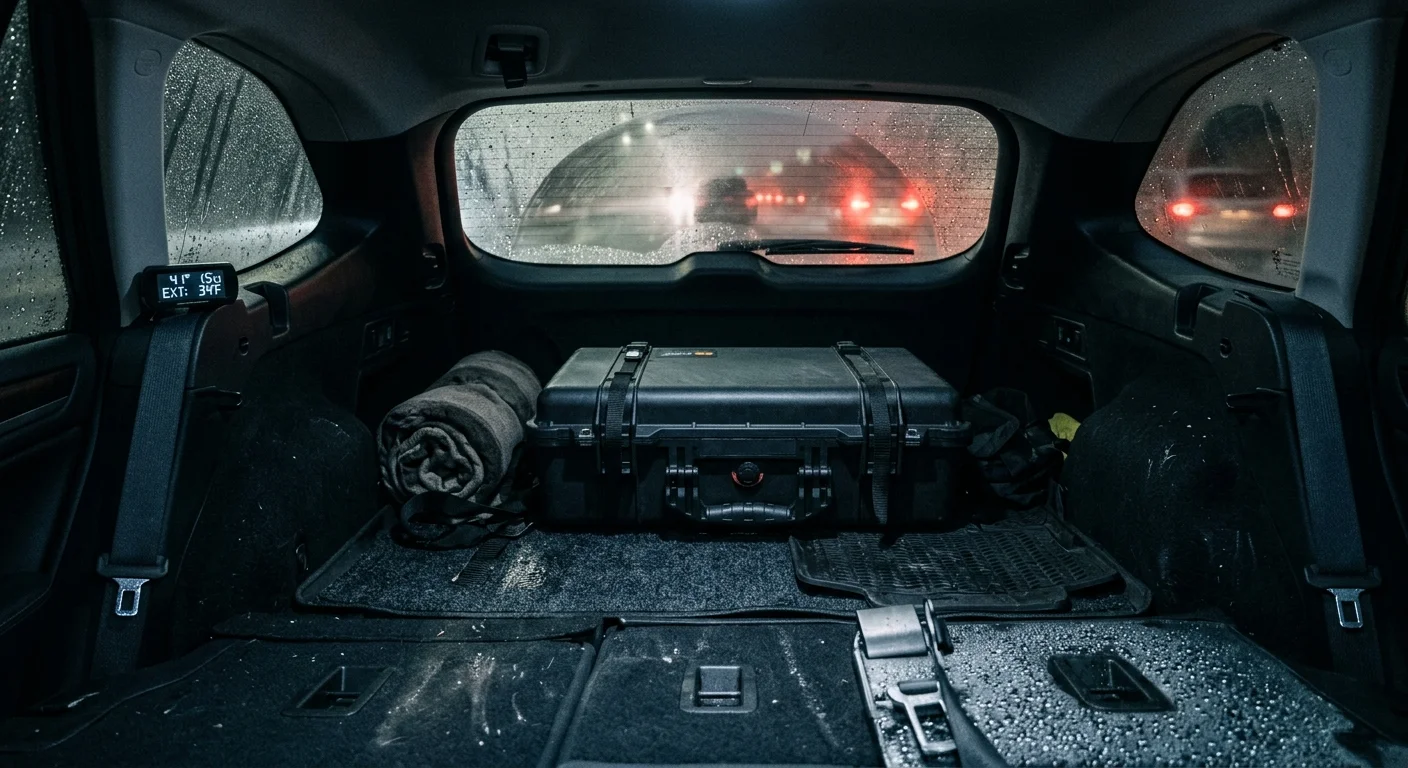
The Condensation Threat in Cold Evacuation Vehicles
Sealing your prints inside an airtight box solves flood risks but introduces a hidden thermodynamic hazard. When you trap warm, moisture-laden coastal air, you create a sealed environmental microclimate.
Consider an August evacuation along the Atlantic or Gulf Coast. The outdoor air inside your staging room might sit at 85 degrees Fahrenheit with 75 percent relative humidity.
At those ambient conditions, the dew point is approximately 76 degrees Fahrenheit. When you transfer the sealed case into an evacuation vehicle running air conditioning at 68 degrees, the case shell cools rapidly.
As the interior wall temperatures drop below the 76-degree dew point, airborne moisture condenses into liquid water. That liquid condenses directly on the coldest surfaces, including your photographic emulsion layers.
Rapid chilling of an unconditioned, sealed enclosure forces ambient water vapor beyond saturation. The resulting liquid condensation destroys gelatin emulsions through localized hydrolysis and page adhesion.
According to the Library of Congress Preservation Guidelines, photographic prints require a stable relative humidity between 30 and 50 percent. Moisture levels exceeding 60 percent spark rapid mold outbreaks within forty-eight hours.
High humidity also causes binder softening, which makes historic gelatin prints stick to adjacent sleeves or album pages. Running proper desiccant math eliminates this moisture spike entirely.
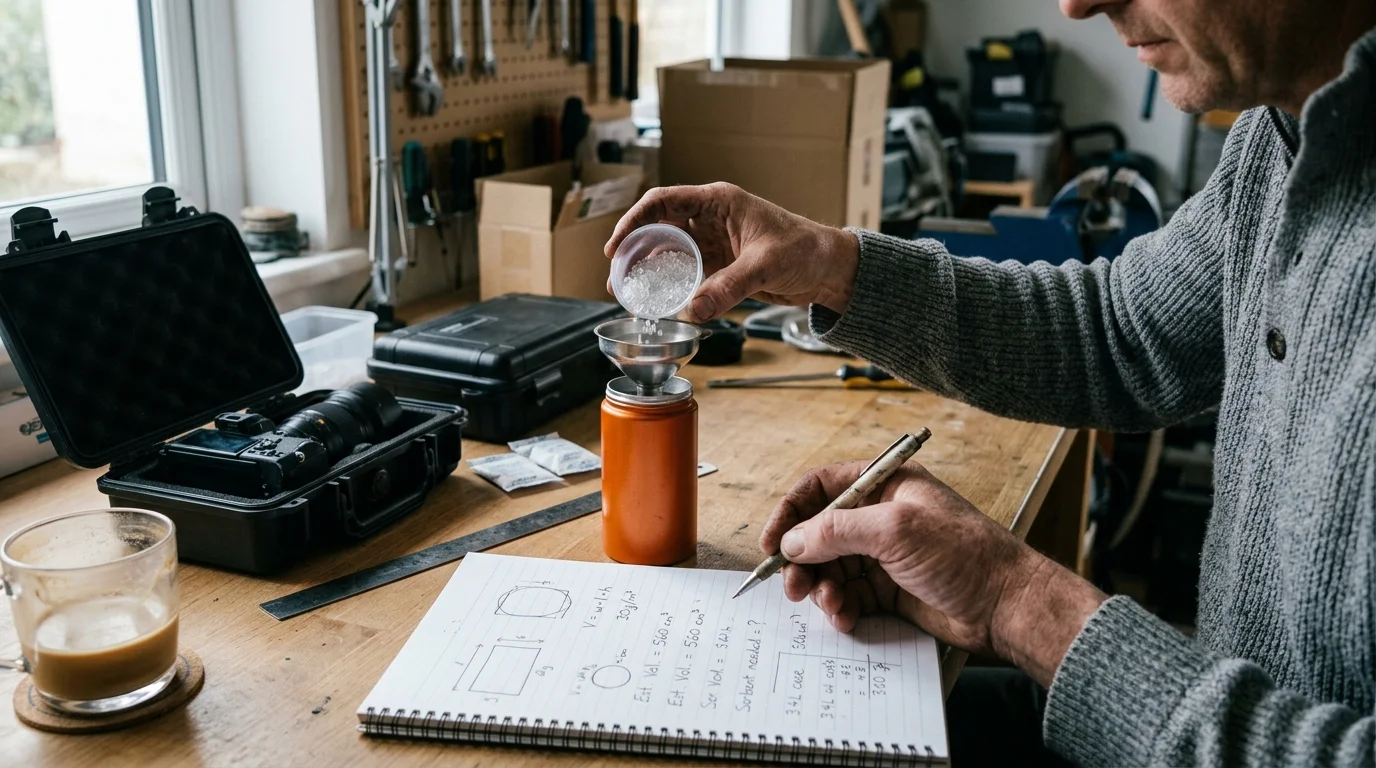
Desiccant Math: Calculating Exact Sorbent Volume
Military standard MIL-D-3464E standardizes desiccant performance for moisture-proof barrier packaging. Under this specification, one Desiccant Unit adsorbs at least three grams of water vapor at 20 percent relative humidity.
That same unit adsorbs six grams of water vapor at 40 percent relative humidity at 77 degrees Fahrenheit. In practical terms, one unit equals roughly 28 grams of silica gel or 33 grams of bentonite clay.
To calculate baseline desiccant needs, standard engineering protocol requires 1.2 Desiccant Units per cubic foot of interior case volume. This baseline formula accounts only for the empty air volume inside the box.
Cardboard mountings, cotton paper, and album bindings act as hygroscopic sponges that hold ambient water vapor. You must allocate approximately five grams of active silica gel for every 100 grams of paper cargo.
Let us work through a concrete evacuation scenario using a Pelican 1510 case holding three vintage photo albums. The case volume measures 0.96 cubic feet, and the three albums weigh 1,500 grams total.
First, calculate the volume requirement: multiply 0.96 cubic feet by 1.2 units per cubic foot. This yields 1.15 units, which translates to 32.2 grams of active silica gel.
Next, calculate the paper moisture compensation load for the albums. Divide 1,500 grams by 100 and multiply by 5 grams, which requires 75 grams of active silica gel.
Now sum both figures: 32.2 grams plus 75 grams equals 107.2 grams of total silica gel. This requires approximately 3.8 MIL-D-3464E units to prevent condensation inside your cold car.
Always round up to four full units, or roughly 115 to 120 grams of silica gel. Use non-dusting Tyvek packets or aluminum canisters with orange-to-green indicating beads rather than toxic cobalt-chloride blue beads.
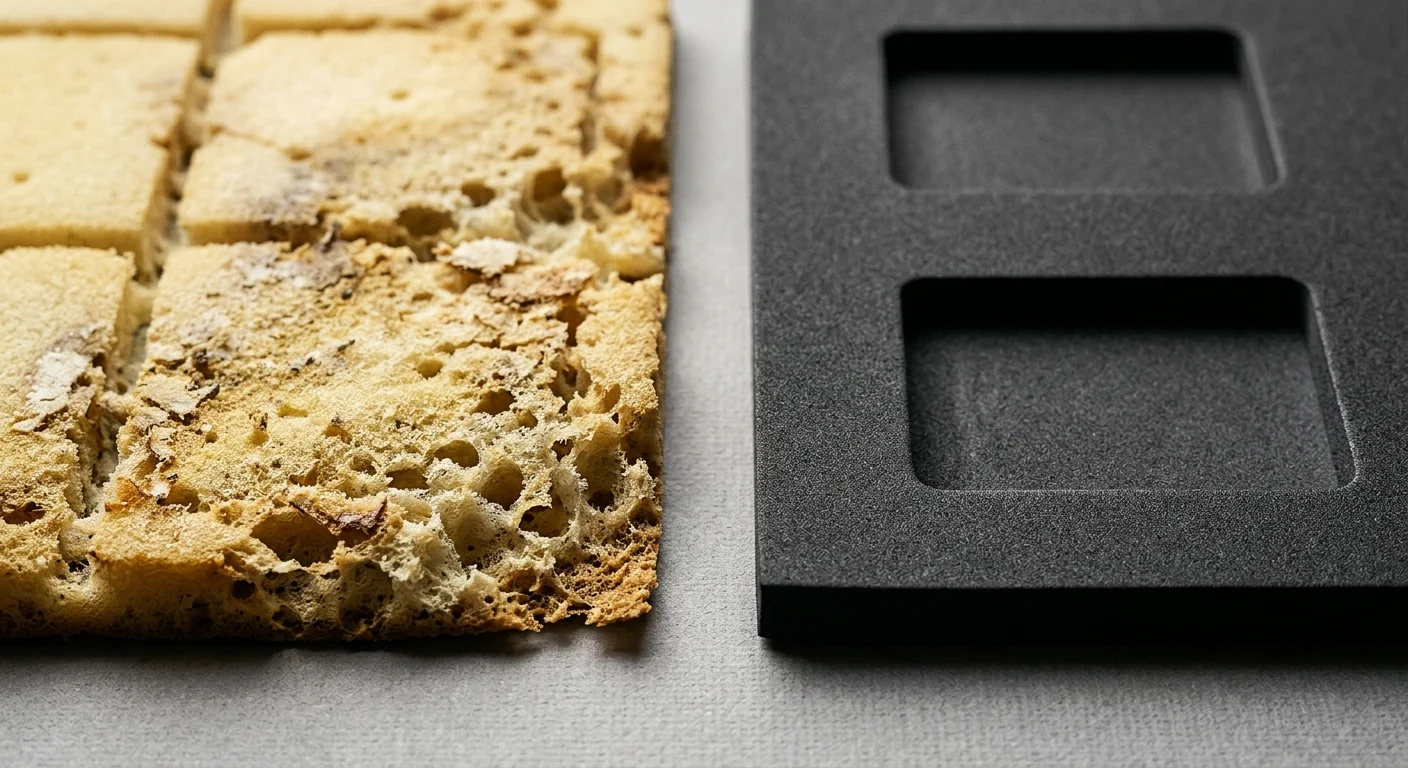
Foam Chemistry: Replacing Off-Gassing Polyurethane with Plastazote
Most hard cases ship with standard Pick N Pluck polyurethane foam inserts to cushion delicate equipment. While effective for mechanical shock protection, polyurethane foam severely threatens photographic prints over time.
Polyurethane breaks down through ambient hydrolysis in warm, humid coastal air, releasing acidic volatile organic compounds. Over time, the foam crumbles into sticky chemical residue that bonds permanently to historical photographic emulsions.
Guidelines from the American Institute for Conservation emphasize using inert storage enclosures that pass the Photographic Activity Test (ISO 18916). Standard ester and ether polyurethane foams fail this test.
Never allow standard polyurethane foam to contact photographic prints during storage or transit. Chemically inert, closed-cell polyethylene foam remains the proven archival standard for mechanical cushioning.
You should replace stock foam with closed-cell, cross-linked polyethylene foam, such as Plastazote LD45 or Kaizen polyethylene foam. Polyethylene is chemically inert, water-impermeable, and physically rigid enough to support heavy photo albums.
Plastazote will not off-gas harmful peroxides or organic acids that cause silver image fading and yellowing. Furthermore, its closed-cell structure prevents the foam from absorbing ambient moisture during high-humidity packing events.
You can carve custom cavities in closed-cell polyethylene using an Olfa snap blade knife. Carving precise channels keeps your archival photo boxes from shifting during abrupt vehicle braking or rough transport.
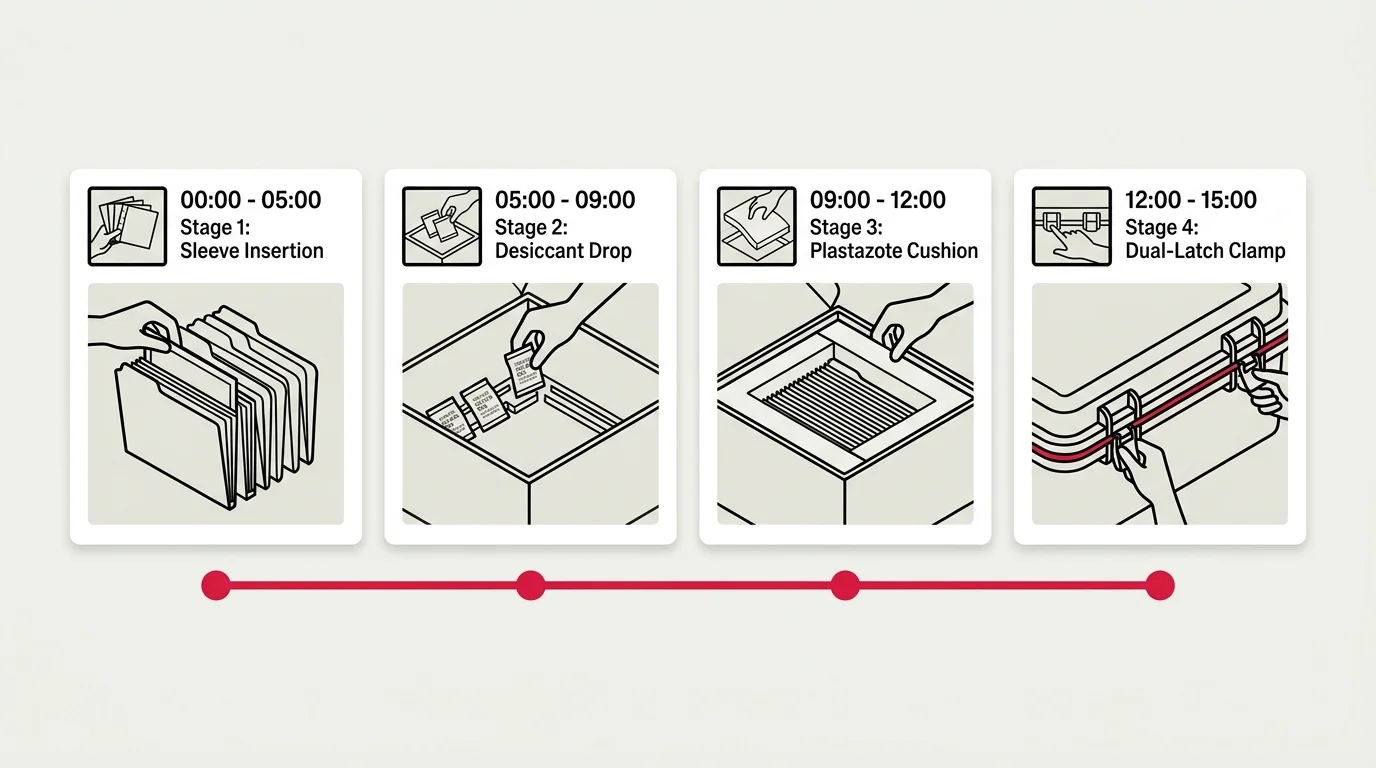
The 15-Minute Grab-and-Go Packing Workflow
A successful evacuation requires pre-staging your collection long before hurricane warnings flash on television screens. Store your photographs inside acid-free, buffered phase boxes on an upper shelf year-round.
When local authorities issue an evacuation directive, follow this structured fifteen-minute countdown to pack and secure your records safely.
- Minutes 0–3: Inspect the case perimeter and O-ring channel for debris.
- Minutes 4–7: Transfer boxed photo archives into the custom-cut Plastazote cavities.
- Minutes 8–10: Add conditioned desiccant units and a calibrated humidity card.
- Minutes 11–13: Compress the lid and secure the primary latching mechanisms.
- Minutes 14–15: Stow the sealed case flat inside the passenger cabin.
In minutes zero through three, unlatch your case and wipe the EPDM gasket with a clean microfiber cloth. Verify that no grit, dust, or hair interrupts the seal channel.
In minutes four through seven, slide your acid-free archival storage boxes directly into the custom-cut Plastazote cavities. The foam should brace the boxes snugly to prevent movement without crushing the box walls.
In minutes eight through ten, insert your calculated desiccant packets into the dedicated perimeter slots. Place a calibrated cobalt-free humidity indicator card directly on top of the albums.
In minutes eleven through thirteen, press down firmly on the lid to compress the perimeter gasket evenly. Snap each primary latch closed, listening for the distinctive mechanical click of full engagement.
In minutes fourteen and fifteen, carry the case to your vehicle and secure it flat on the floorboard. Avoid placing the sealed case in direct sunlight on rear parcel shelves.
Frequently Asked Questions
Can I use standard Ziploc bags inside a hard case for extra protection?
Standard grocery store food bags use thin low-density polyethylene that permits slow moisture transmission over time. Use heavy four-mil archival polyester (Melinex) sleeves or heat-sealed Marvelseal pouches for secondary barrier protection instead.
How often should I replace or recharge the desiccant inside my case?
Inspect your desiccant indicator beads every sixty days and immediately before hurricane season begins. When the orange beads turn dark green, bake the packets in an oven at 240 degrees Fahrenheit for two hours.
Will the automatic pressure purge valve let water in if the case is submerged?
No, the hydrophobic ePTFE membrane prevents liquid water droplets from penetrating the case under normal flood conditions. Its microscopic pore structure permits air molecule exchange while resisting water pressure up to IP67 depth limits.
What should I do if my case is exposed to saltwater during evacuation?
Rinse the exterior of the case thoroughly with fresh tap water before unlatching the lid. Saltwater residue can corrode stainless steel hinge pins and deposit abrasive mineral crystals inside the elastomeric gasket channel.
Disclaimer: This article is for informational purposes only. When handling valuable or irreplaceable photographs, consider consulting a professional conservator. Always test preservation methods on non-valuable items first.