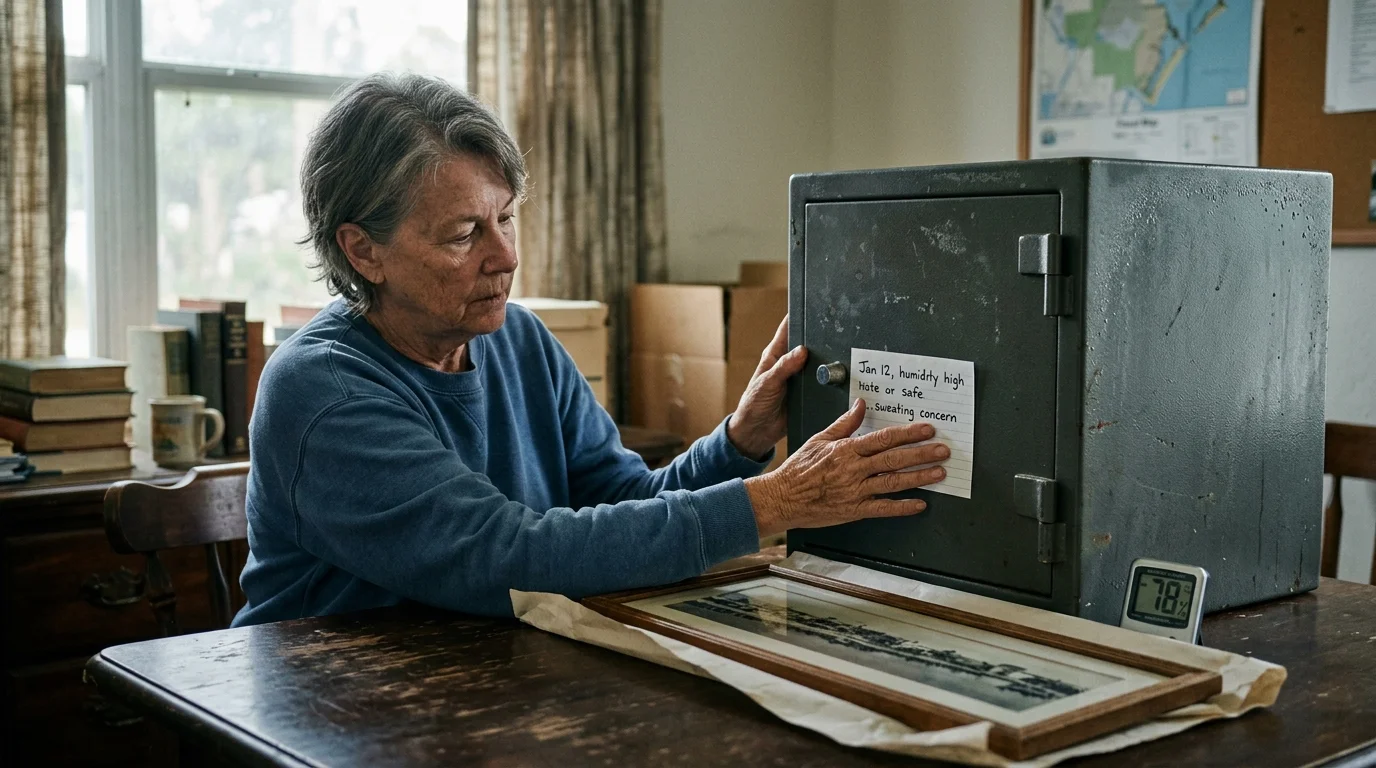
Living in a coastal evacuation zone forces you to prepare for both catastrophic storm surges and secondary electrical fires. Standard fireproof safes actively destroy rolled panoramic photographs by sweating trapped moisture into their airtight interiors.
UL Class 350 fire safes release chemically bound water vapor during heat events, and their insulated walls create condensation traps during ambient humidity shifts. This microclimate turns your safe into an incubator for irreversible mold blooms.
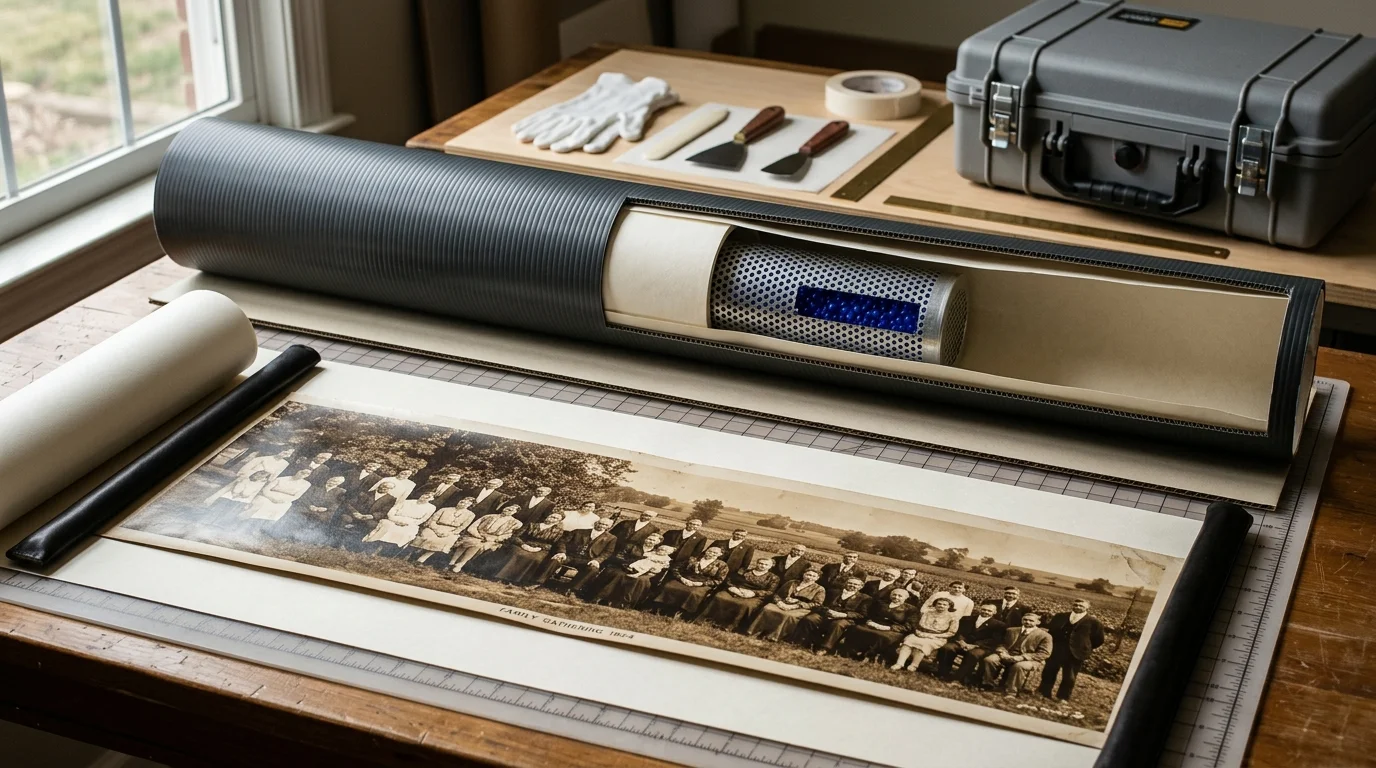
You can prevent safe sweating by deploying an engineered microclimate tube built from fluted archival polypropylene and calibrated silica gel cassettes. This guide provides an actionable blueprint to protect your panoramic heirlooms from both floodwaters and interior condensation.
The Physics of Safe Sweating in Class 350 Fire Safes
Manufacturers design Underwriters Laboratories (UL) Class 350 fire safes to keep paper records below 350 degrees Fahrenheit during a blaze. They achieve this thermal protection by casting hydrated gypsum or Portland concrete between double steel walls.
These casting compounds contain water molecules chemically bound inside crystalline structures. When intense heat strikes the safe exterior, the bound water converts into steam, absorbing heat energy and venting vapor into the safe interior to cool it.
The problem emerges when you place delicate photographs inside these insulated chambers. While ordinary paper survives high humidity, photographic silver gelatin emulsions disintegrate when exposed to steam.
You do not need a structural fire to trigger moisture release inside a fireproof safe. High ambient humidity in coastal zones naturally migrates inside every time you open the safe door.
Once you close the door, the thick rubber perimeter gasket seals that moist air inside an airtight enclosure. A sudden drop in external room temperature then chills the outer steel shell faster than the insulated core.
This temperature differential pushes the internal air past its dew point. Condensation forms along the interior walls, runs down the seams, and pools at the bottom of the safe—a destructive phenomenon known as safe sweating.
Why Oversized Panoramic Prints Are Uniquely Vulnerable
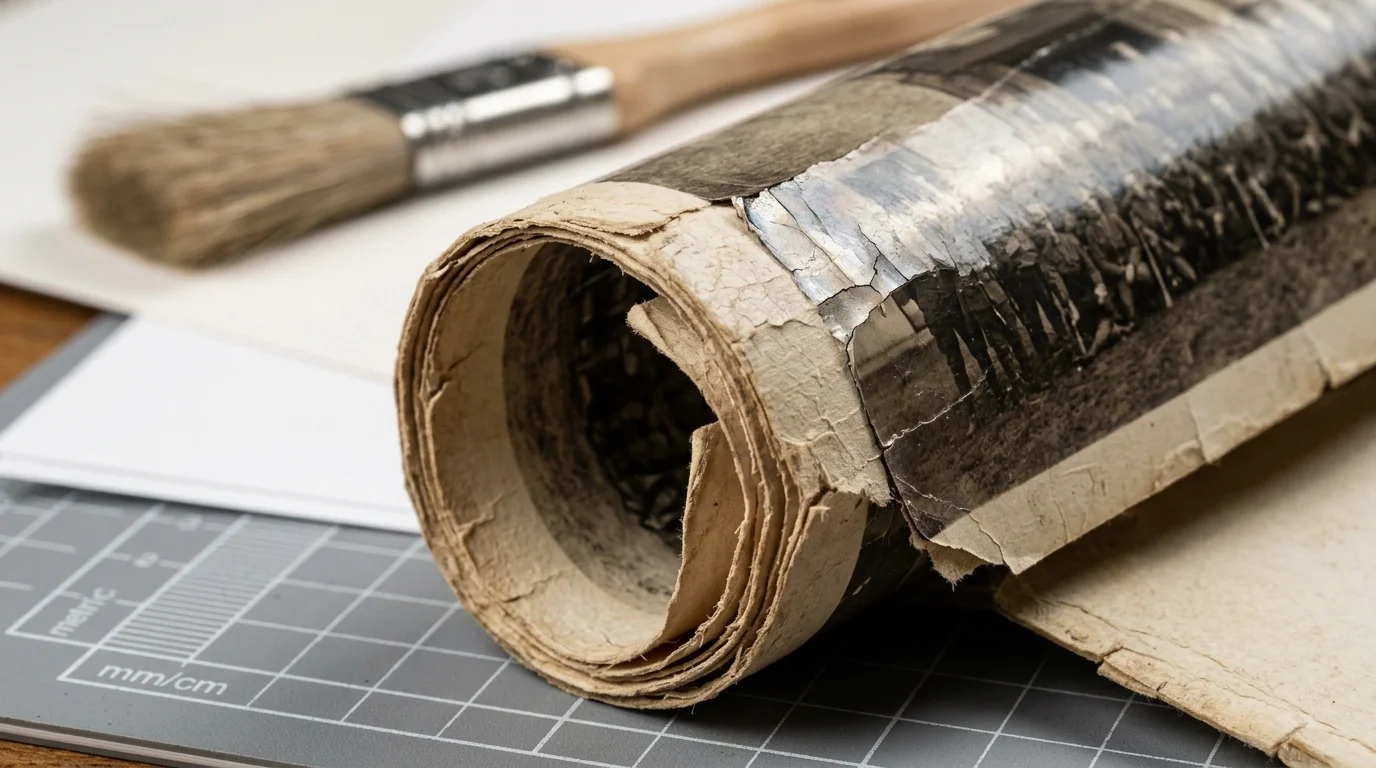
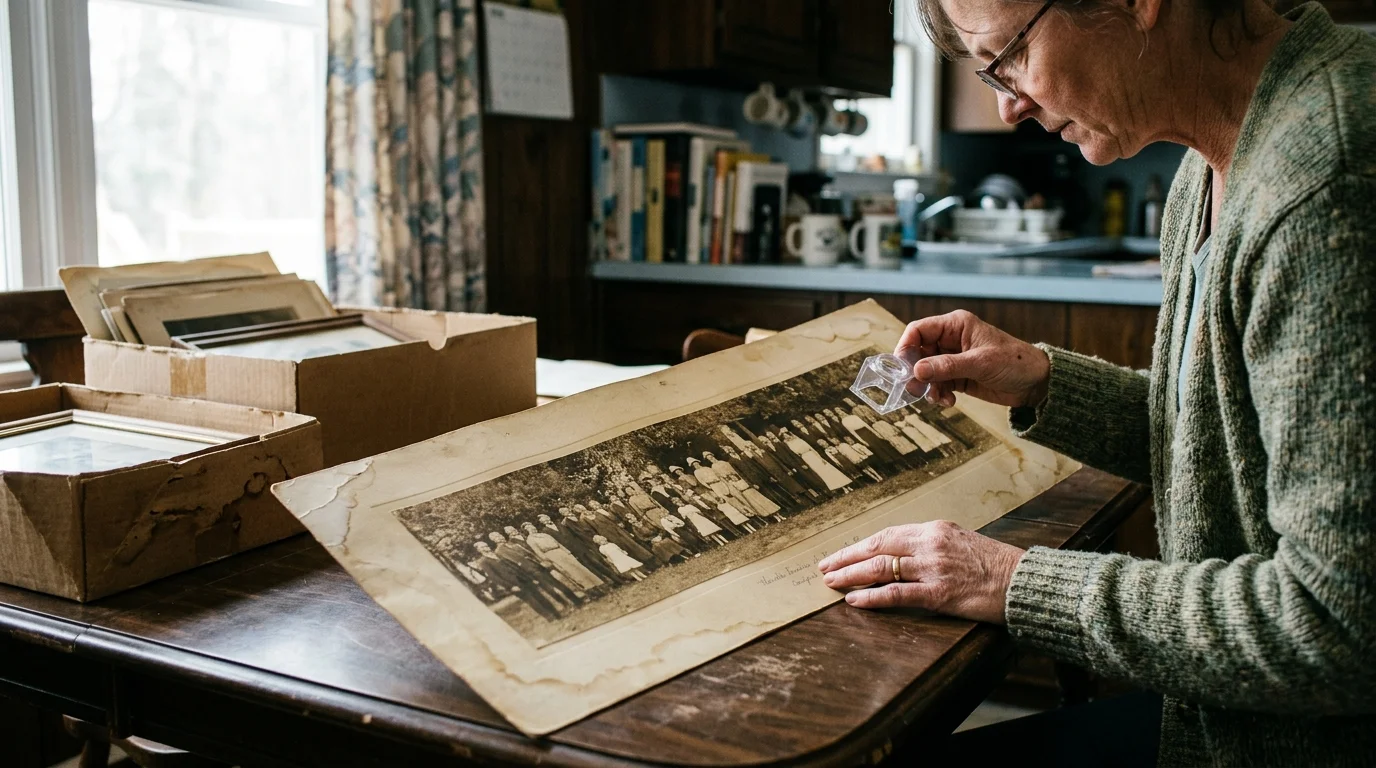
Panoramic family photographs produced between 1890 and 1955—such as military battalion portraits and family reunion prints—rely on thick gelatin emulsion layers. These organic animal protein binders are intensely hygroscopic.
When relative humidity rises inside a dark, sealed container, the gelatin absorbs water vapor and swells. This softens the binder and lowers its glass transition temperature, making the image surface tacky and adhesive.
The Image Permanence Institute identifies sustained relative humidity levels above 65 percent as the critical danger zone for mold germination. In a sweating safe, relative humidity routinely reaches 85 to 95 percent within hours.
Gelatin emulsions soften rapidly above 65 percent relative humidity, fusing adjacent image layers together into an irreversible solid block.
Because panoramic photographs span lengths between 24 and 72 inches, homeowners almost always store them tightly rolled. When soft gelatin rolls press against adjacent paper backing, the layers undergo ferrotyping.
Ferrotyping occurs when the softened emulsion bonds chemically and mechanically to the adjoining paper fibers. Once the container dries out, the roll hardens into an intractable, solid tube that tears apart during unrolling.
Standard glassine sleeves exacerbate this disaster. Under elevated humidity, glassine paper degrades, becomes acidic, and permanently welds to the photograph face.
Dew Point and Humidity Calculations: A Worked Safe Scenario
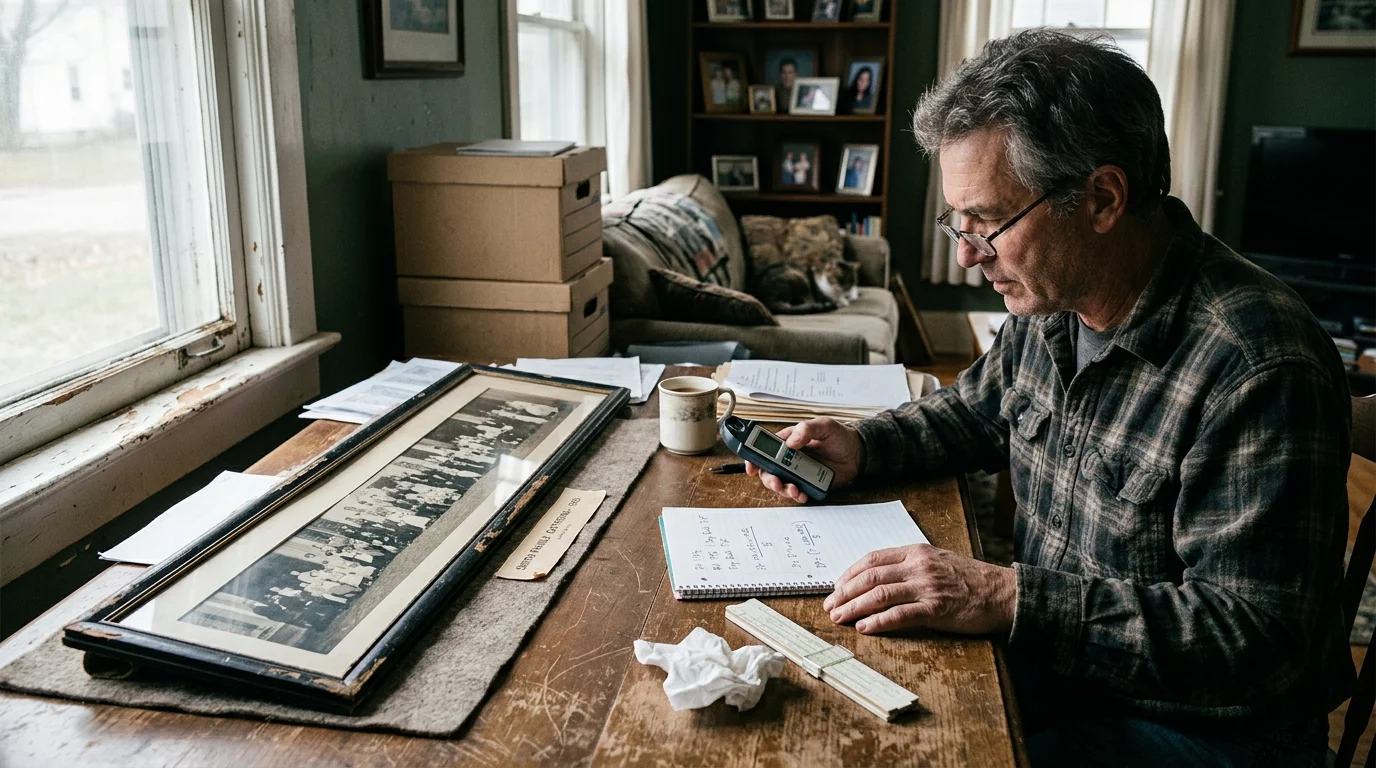
Consider a standard residential fire-and-water chest, such as a 1.2 cubic foot (0.034 cubic meter) SentrySafe SFW123. The safe sits in an elevated home within an active hurricane warning zone.
Prior to a storm, power fails and your home interior rises to 82 degrees Fahrenheit (27.8 degrees Celsius) with an ambient relative humidity of 75 percent. When you seal your panoramic photograph inside the safe, you trap that exact air mass.
At 82 degrees Fahrenheit and 75 percent relative humidity, absolute humidity equals 20.3 grams of water vapor per cubic meter of air. Your 0.034 cubic meter safe contains 0.69 grams of airborne water vapor.
Using psychrometric formulas, air at 82 degrees Fahrenheit with 75 percent relative humidity reaches its dew point at exactly 73.2 degrees Fahrenheit (22.9 degrees Celsius). Any temperature drop below that threshold forces water out of vapor state into liquid.
Storm surge floodwaters enter the lower level of your home at 64 degrees Fahrenheit (17.8 degrees Celsius), surrounding the safe base. The cold water cools the conductive steel casing down to 64 degrees Fahrenheit in under twenty minutes.
Because 64 degrees Fahrenheit sits 9.2 degrees below the 73.2-degree dew point, the air can only sustain 14.5 grams of vapor per cubic meter. The remaining 5.8 grams per cubic meter condenses instantly as liquid water on the safe walls.
To eliminate this condensation risk, you must buffer the interior air to an equilibrium relative humidity of 35 percent. Air at 82 degrees Fahrenheit and 35 percent relative humidity has a dew point of only 51.5 degrees Fahrenheit.
Because 51.5 degrees Fahrenheit rests well below the 64-degree floodwater temperature, condensation cannot form. Achieving this safety buffer requires 45 grams of conditioned silica gel cassettes placed directly inside your secondary enclosure.
Blueprint: Building a Moisture-Buffering Archival Coroplast Tube
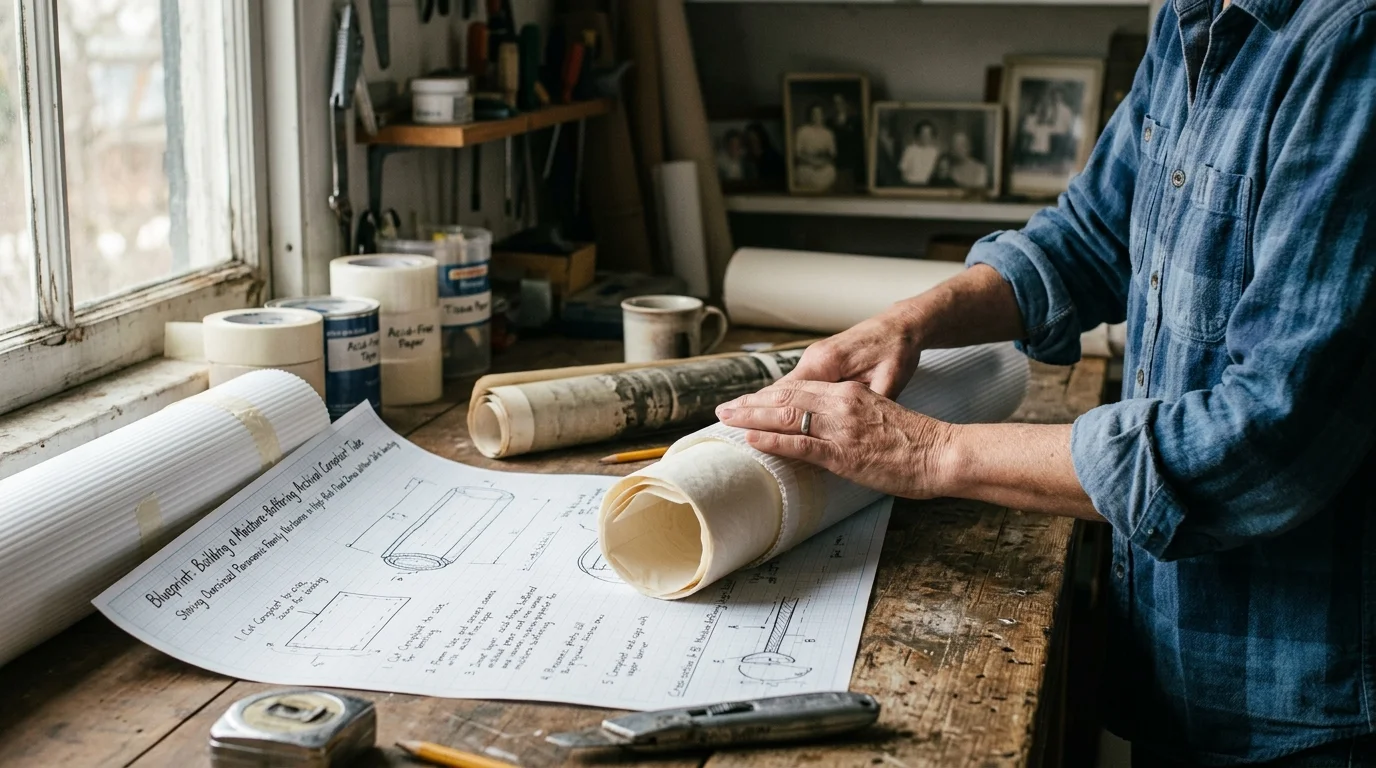
Standard circular PVC pipes from hardware stores continuously off-gas plasticizers and hydrochloric acid. You must construct a custom archival conduit using acid-free fluted polypropylene, commonly known as archival Coroplast.
Fluted archival Coroplast provides structural rigidity against crushing while creating insulating channels that slow thermal transfer. Polypropylene is chemically inert, water-impervious, and certified safe by the Photographic Activity Test (ISO 18916).
Begin by cutting a sheet of 4mm archival Coroplast to your panoramic print width plus four inches of total end clearance. If your panoramic print measures 36 inches long, cut the sheet to 40 inches in width.
Calculate your tube perimeter using a triangular profile rather than a circle. Triangular profiles never roll off evacuation tables and exhibit higher resistance to external vertical compressive loads.
For a five-inch internal diameter clearance, score two parallel fold lines along the board flutes at five-inch intervals. Leave a final two-inch flap to serve as an adhesive bonding tab.
Fold the scored board into an equilateral triangular sleeve. Secure the exterior seam using 3M 845 Book Repair Tape or archival high-density polyethylene welding tape, ensuring no adhesive contacts the interior cavity.
Cut two triangular end caps from matching Coroplast. Line the interior face of each end cap with a perforated Tyvek pocket designed to hold your desiccant cassettes.
Insert a calibrated 50-gram Art-Sorb or conditioned silica gel cassette into each end pocket. These cassettes continuously absorb stray moisture, holding your internal environment at a constant 35 to 40 percent relative humidity.
Enclose the completed Coroplast triangular tube inside a sleeve of Marvelseal 360 barrier film. Marvelseal consists of nylon, aluminum foil, and polyethylene layers that block vapor transmission completely.
Use a household iron set to medium heat (300 degrees Fahrenheit) to heat-seal three edges of the Marvelseal envelope. Leave one end open for print insertion, ready for final sealing when storm alerts trigger.
Conservation Rolling Protocol: Diameters, Interleaving, and Emulsion Facing
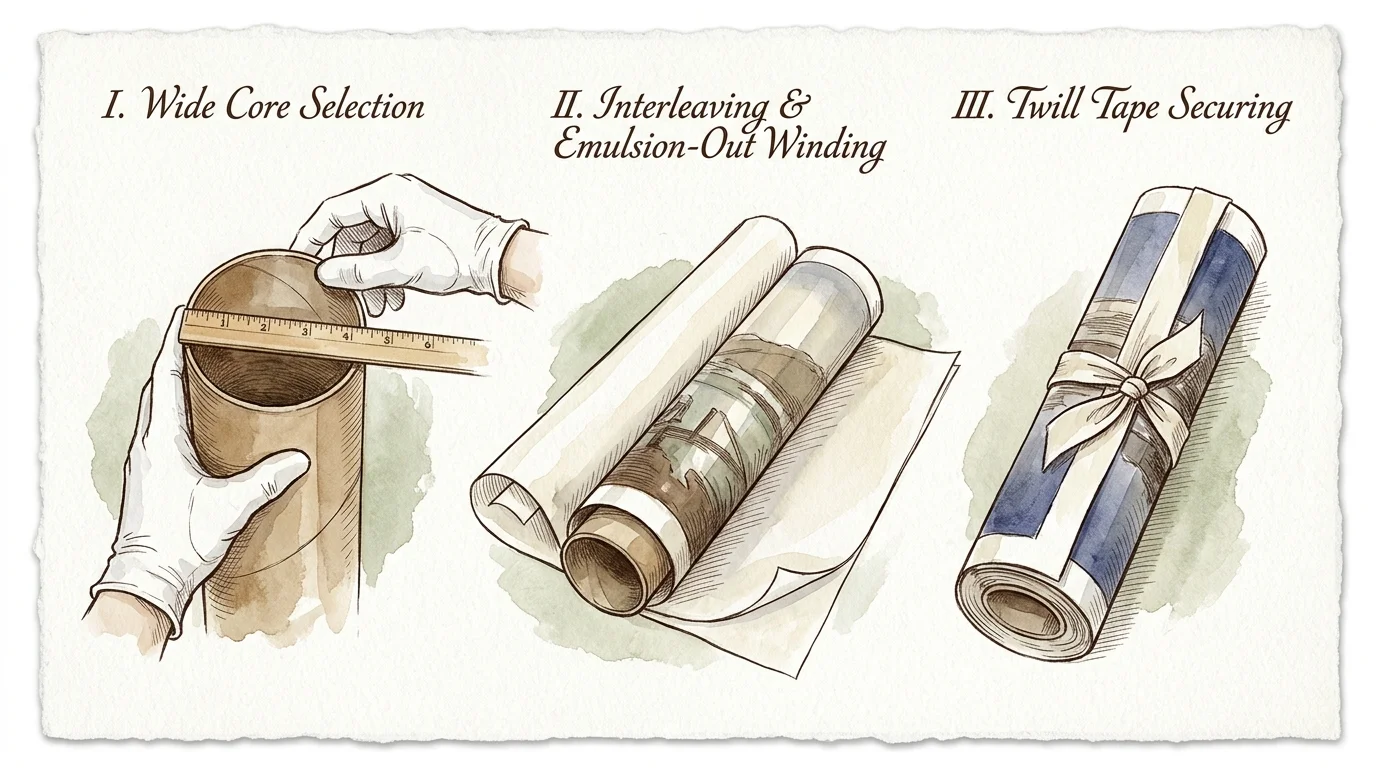
The Library of Congress Preservation Directorate recommends rolling panoramic photographs around archival support tubes of at least three to four inches in diameter. Rolling prints tighter than three inches introduces micro-fractures into aged emulsion binders.
Select an inner core made from acid-free, lignin-free buffered paperboard with an exterior diameter of four inches. Never roll a panoramic photograph around itself without a rigid inner core to absorb mechanical pressure.
Always roll your panoramic photograph with the image emulsion facing outward. While counterintuitive, outward rolling places the delicate gelatin emulsion under mild tension rather than internal compression.
When you roll a print with the emulsion facing inward, the binder compresses and buckles against itself, forming perpendicular wrinkles. Outward rolling prevents delamination and makes the print flatten smoothly when unrolled on conservation weights.
Lay a continuous sheet of unbuffered high-density polyester film (Melinex 516) or acid-free Renaissance tissue across your clean preparation table. Ensure the interleaving extends two inches beyond the photograph margins on all four sides.
Place your panoramic heirloom face up on top of the interleaving tissue. Position the four-inch archival core at one edge and begin rolling both layers slowly across the table.
Maintain light, uniform finger tension across the entire core width. Avoid pulling the ends unevenly, which introduces diagonal telescoping and creases the paper edges.
Fasten the rolled assembly with two strips of half-inch unbleached cotton twill tape. Tie loose slipknots around the circumference, leaving enough slack to slide a pencil underneath the tape without catching.
Never apply rubber bands, vinyl electrical tape, or standard drafting tape directly to the roll. Rubber bands degrade into sticky sulfur-rich residues that permanently stain photographic paper.
Dual-Barrier Floodproofing: Heavy-Gauge Gasket Enclosures
No single residential fire safe provides complete security against prolonged flood submersion. Fire safes rely on intumescent door seals that expand under extreme heat, but these seals remain porous under cold hydrostatic pressure.
To ensure total survival, you must implement a box-within-a-box storage methodology. This approach isolates moisture defense from thermal fire protection.
Your primary defense is the heat-sealed Marvelseal 360 envelope containing your silica-buffered Coroplast triangle tube. This hermetic envelope completely isolates the panoramic heirloom from liquid water and humidity transfers.
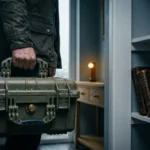
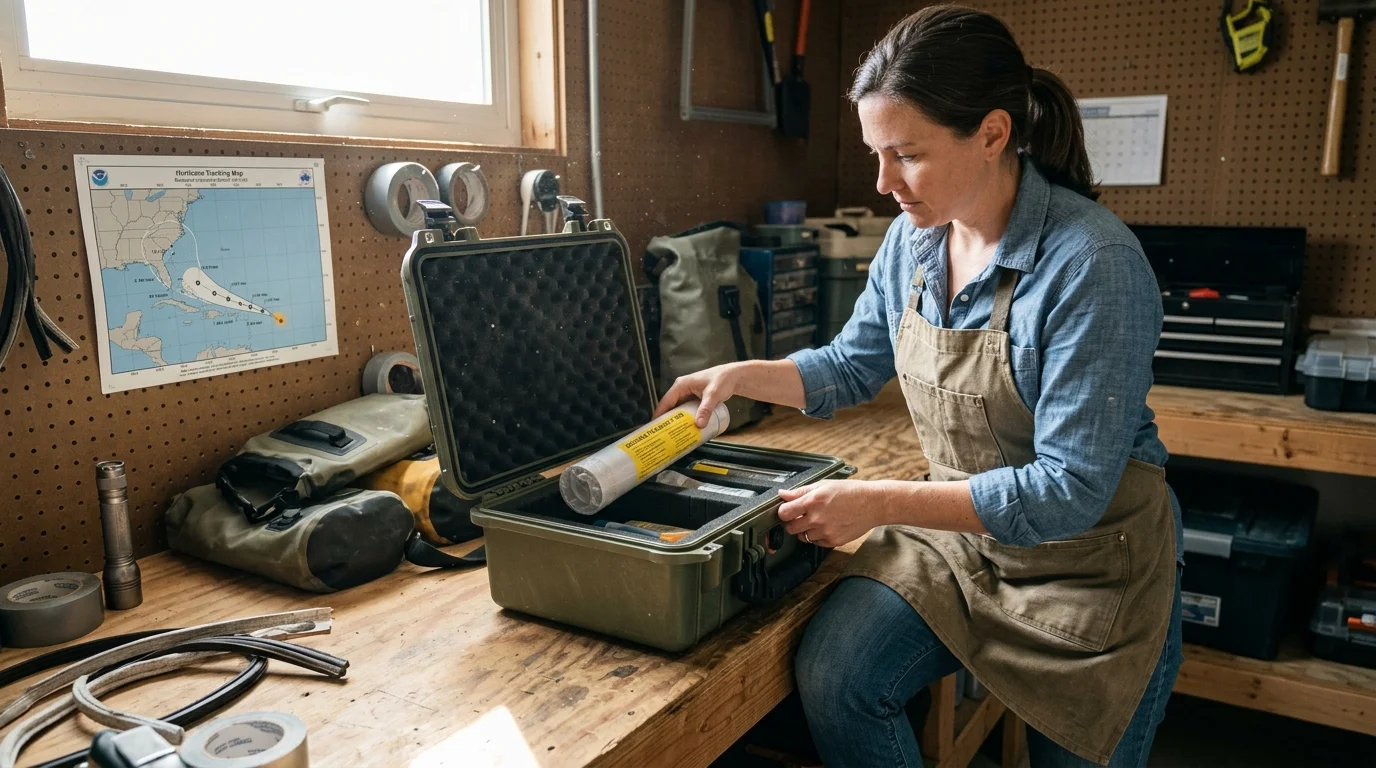
Place this sealed envelope inside an IP67-rated waterproof equipment case, such as a Pelican 1510 or Nanuk 935 hard case. These structural polymer cases feature continuous ethylene propylene diene monomer (EPDM) gaskets that withstand total submersion.
Inspect the EPDM rubber gasket every six months. Wipe away stray sand grains and treat the rubber with food-grade silicone lubricant to prevent micro-cracking and compression setting.
Store this gasketed hard case inside your elevated fire safe or securely strapped to an upper structural shelf. Keep the entire package anchored at least two feet above your property base flood elevation (BFE).
If you must leave the case inside a ground-floor fire safe, place five pounds of activated clay desiccant bags in the safe base. This sacrificial desiccant captures ambient safe sweating before moisture reaches your inner containers.
Comparison: Storage Methods for Flood and Fire Risk
Selecting storage equipment requires balancing submersion endurance against thermal survival. The following matrix details measurable performance parameters across standard residential storage methods.
| Storage System | Water Submersion Rating | Thermal Limit | Internal RH Spike Risk | Unit Cost Range |
|---|---|---|---|---|
| Unmodified UL Class 350 Fire Safe | IPX4 (Splash resistant only) | 350°F interior for 60 min | Severe (RH peaks above 90%) | $250 – $450 |
| Pelican 1510 IP67 Hard Case | IP67 (Submerged 1m for 30 min) | Deflects heat up to 160°F | Low (Maintains stable 40% RH) | $200 – $280 |
| Marvelseal 360 Heat-Sealed Tube | Hermetic (Indefinite submersion) | Deforms at 275°F | Zero (Hermetically isolated) | $35 – $60 |
| Buffered Tube Inside Fire/Water Safe | IP68 Certified Dual-Barrier | 350°F interior for 120 min | Negligible (Buffered under 45% RH) | $485 – $790 |
As the table illustrates, an unmodified fire safe leaves your photos vulnerable to catastrophic humidity spikes during power outages. Combining an inner hermetic envelope with an insulated outer chest gives you complete environmental defense.
The dual-barrier configuration provides full floodproofing alongside verified UL thermal resistance. This dual-layer strategy ensures that your family heirlooms survive both storm surges and the structural fires that frequently follow hurricanes.
The 15-Minute Hurricane Evacuation Protocol for Rolled Heirlooms
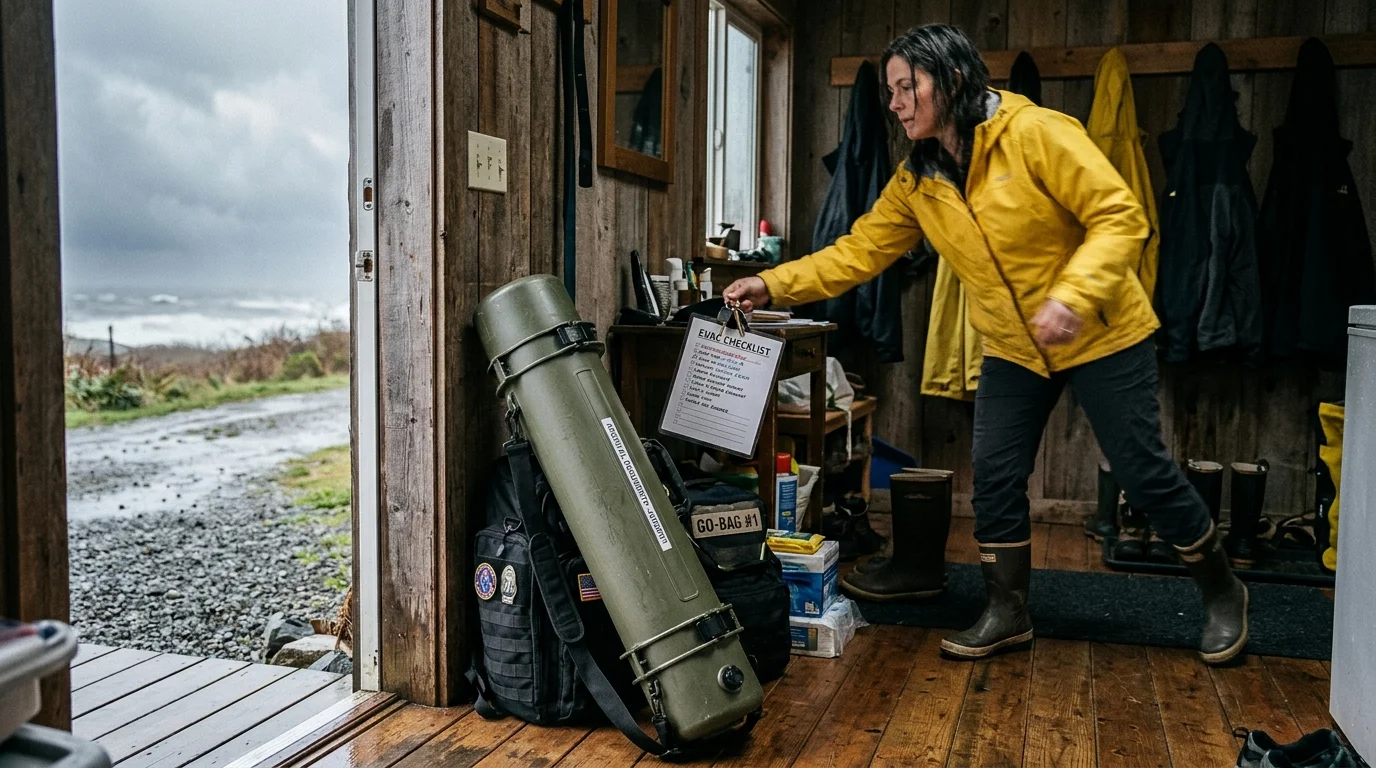
When an emergency evacuation order sounds, you cannot waste time looking for tape or measuring desiccant. Keep your heirlooms staged in a grab-and-go state using this standardized checklist.
Start by checking the reversible relative humidity indicator card visible through your clear container window. If the 50 percent circle shows pink, drop a fresh desiccant packet into the outer pocket immediately.
Slide your pre-rolled Coroplast triangular tube into its Marvelseal 360 barrier envelope. Fold the open foil end three times and clamp it shut using heavy-duty spring clips or an impulse heat-sealer.
Transfer the sealed barrier sleeve directly into your gasketed IP67 hard case. Fasten all latch clamps until you hear the mechanical locking click on both ends.
Check the pressure release valve on your transport case. Ensure the valve knob is turned completely clockwise to the closed position to maintain watertight integrity under hydrostatic pressure.
Pack a digital backup alongside your physical print. Store a duplicate high-resolution master scan (minimum 600 DPI TIFF format) on a sealed USB flash drive in the case lid organizer.
If you must evacuate without the large hard case, remove the Marvelseal envelope and pack it horizontally into your vehicle. Keep the tube flat on top of your luggage, away from direct sunlight and hot trunk metal.
For additional salvage protocols if floodwaters reach your collection, reference the disaster recovery field manuals published by the American Institute for Conservation. Their emergency response guides provide verified chemical wash protocols for submerged gelatin prints.
Frequently Asked Questions
Why do fireproof safes sweat when it floods outside?
Fireproof safes sweat when cooler external floodwaters chill the safe exterior while the humid interior air drops below its dew point. This causes rapid condensation to pool against the interior walls and documents.
Should I roll my panoramic photo emulsion facing inward or outward?
Roll your panoramic photograph with the emulsion facing outward. Outward rolling places the delicate gelatin layer under gentle tension rather than compression, preventing buckling, cracking, and surface adhesion.
What core diameter should I use for a 36-inch yard-long panoramic photo?
Use an archival core with an outer diameter of at least 3 inches, though 4 inches is ideal. Tighter cores under 3 inches cause severe mechanical stress and cracking in aged photo emulsions.
Can I use standard hardware store PVC pipe to store panoramic photos?
Never use standard plumbing PVC pipe for photographic storage. PVC continuously off-gasses hydrochloric acid and plasticizers that discolor silver gelatin prints and permanently degrade paper fibers.
Disclaimer: This article is for informational purposes only. When handling valuable or irreplaceable photographs, consider consulting a professional conservator. Always test preservation methods on non-valuable items first.