When adopting a seven-year-old child from foster care, traditional chronological photo albums fail. Empty infant sections or abrupt jumps from birth certificates to toddler years directly trigger abandonment trauma and identity distress.
Trauma-informed lifebook architecture resolves missing early photos by substituting contextual cultural, geographic, and institutional artifacts to anchor personal history without exposing chronological voids.
This guide provides an actionable framework to build an archival, modular lifebook that honors your child’s biological roots while establishing safety in your permanent home.

The Clinical Foundation: Why Chronological Gaps Trigger Abandonment Anxiety
Data from the Adoption and Foster Care Analysis and Reporting System (AFCARS) shows the median age of children in foster care is approximately seven years old. Over 108,000 children await adoption, spending an average of 33 to 36 months waiting for permanency.
Pediatrician Dr. Vera Fahlberg established that coherent developmental narratives anchor fragmented identities. When an older child encounters missing years in an album, their nervous system interprets those voids as personal erasure.
A child needs to know where they have been in order to understand where they are going. A lifebook bridges the painful chasms of placement transitions by turning fragmented memories into an integrated life history.
Blank spaces do not read as neutral absences to a seven-year-old child. Instead, unaddressed chronological voids trigger acute abandonment panic, reinforcing internal beliefs that their forgotten infancy holds shameful secrets.
A standard baby book relies on unbroken continuity from nursery to kindergarten. Designing a photo album for adopted child needs requires you to discard linear assumptions entirely.
Child Welfare Information Gateway guidelines mandate that lifebooks remain the sole personal property of the foster child. When you build this album, you create portable personal identity that your child owns and controls.
Your goal is narrative continuity rather than chronological perfection. By systematically acknowledging early transitions, you dismantle trauma responses before legal adoption finalization takes place.
The Trauma-Informed Narrative Architecture: Structural Blueprints for Age Seven
At age seven, children grasp chronological time but struggle with complex emotional causality. They require explicit visual markers that distinguish their previous placements from their permanent home.
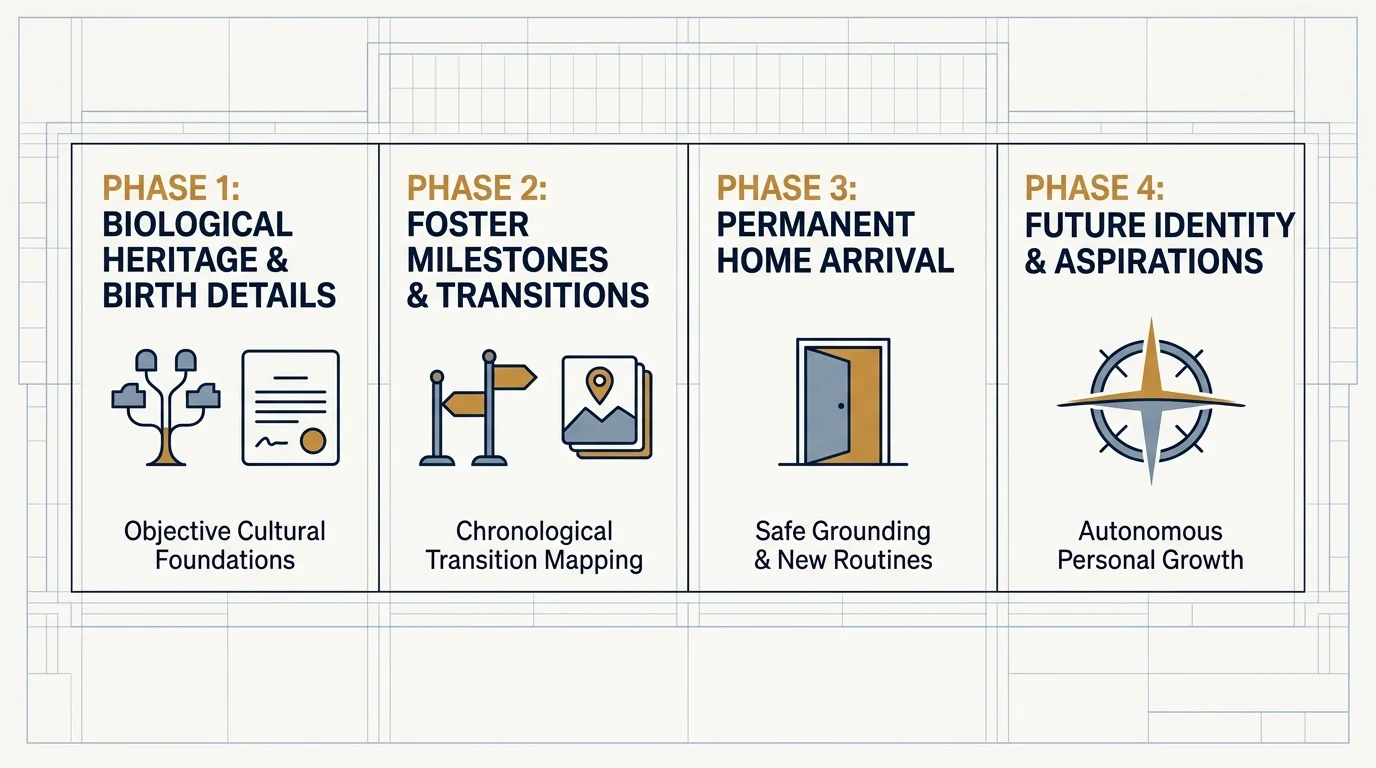
You should implement a modular four-phase adoption lifebook template. This structure organizes history thematically rather than strictly by calendar year, eliminating conspicuous empty pages.
Phase One documents birth details, biological heritage, and ancestral culture using neutral, objective language. Phase Two chronicles early community context, residences, and developmental milestones before child welfare intervention.
Phase Three details the child welfare transition, honoring foster caregivers, caseworkers, school achievements, and court dates. Phase Four establishes your permanent home arrival, adoption finalization milestones, and present family life.
Never assemble this narrative inside a commercially bound, static photobook. Bound books permanently lock page order, preventing your child from setting aside distressing images as their attachment progresses.
A modular album gives older children psychological agency over their personal history. Your child can remove, rearrange, or temporarily hide emotionally challenging pages without destroying the album spine.
This architecture transforms a passive photo album into an interactive therapeutic tool. Your child actively decides which memories to display and which memories to protect in storage.
Bridging the Infancy Void: Contextual Archival Artifacts to Replace Missing Photos
Most children adopted at age seven from foster care arrive without newborn portraits or infant milestone snapshots. Never leave blank, empty plastic sleeves where baby pictures normally appear.
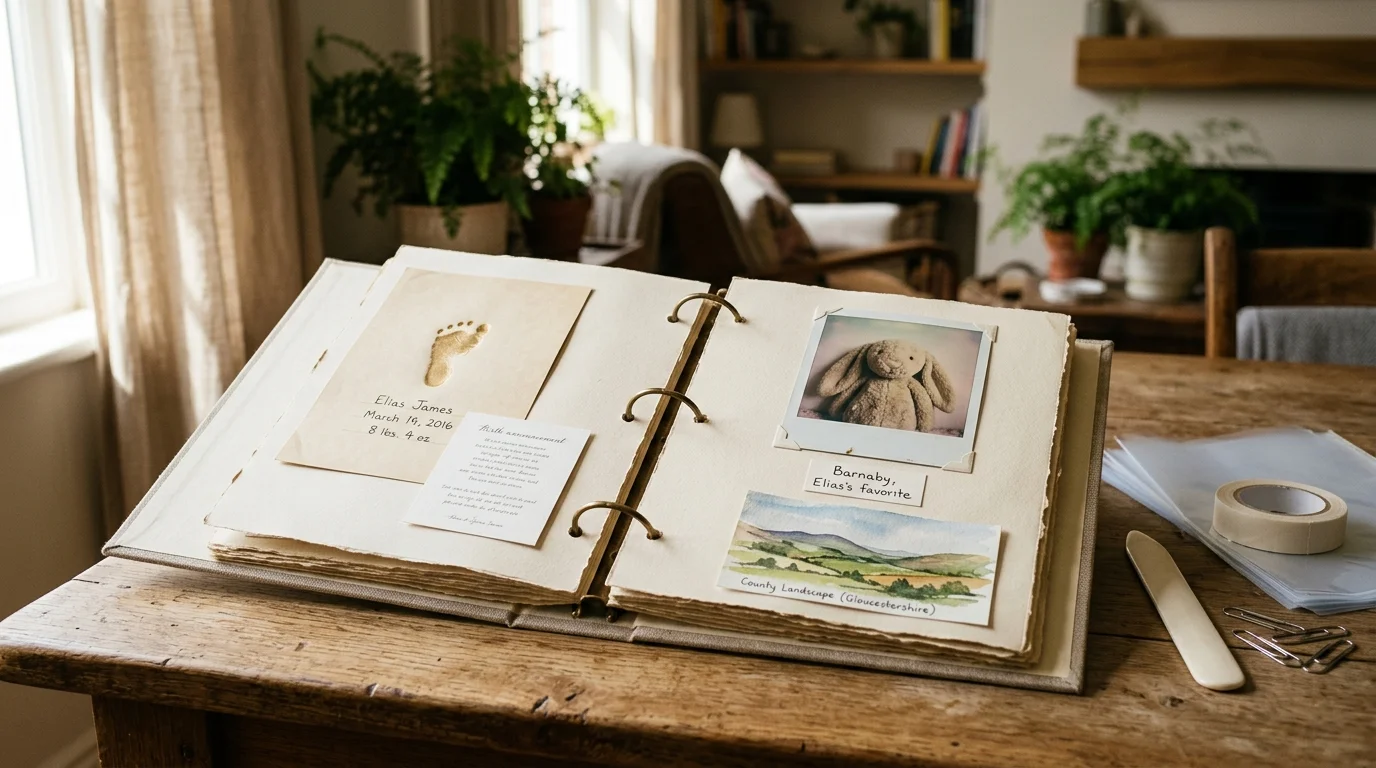
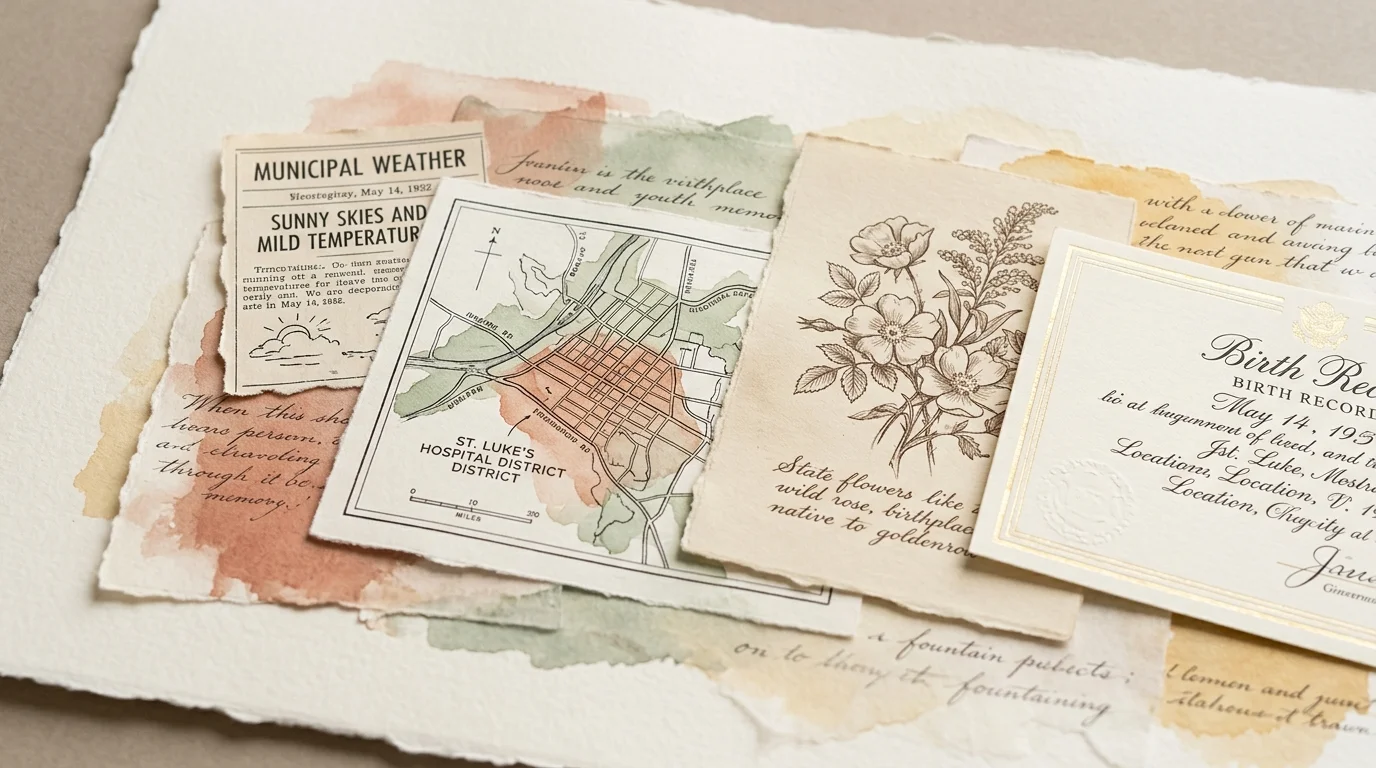
Fill these developmental gaps with external historical artifacts from your child’s birth date and birth town. Contextual artifacts confirm your child existed, mattered, and occupied real space from the day of their birth.
You can gather birth hospital exterior photos, historical weather records, and local front-page newspaper headlines from that exact week. These documents anchor the child’s arrival within broader historical reality.
Consider this worked scenario involving Marcus, who entered foster care at age four and finalized his adoption at age seven. Marcus arrived with zero infant photographs and 34 months of placement records across three different foster homes.
His parents purchased an archival reprint of the morning newspaper from his birthdate (October 14, 2017) for $12.00. They paired it with a printed satellite map of his birth city, Cleveland, Ohio, costing $0.00.
Next, they scanned a single damaged immunization card on a flatbed scanner at 600 DPI, printing a clean duplicate on 4×6-inch archival matte cardstock for $0.45. The entire asset collection process took 90 minutes.
They mounted these artifacts alongside a hand-written archival card: “On October 14, 2017, the sun rose over Cleveland at 7:34 AM, and Marcus was born weighing seven pounds.”
This layout bridged a two-year photographic void using tangible historical evidence. Marcus learned his story began on a real morning in a real community, banishing the anxiety caused by empty pages.
Apply this contextual approach to missing toddler years as well. Incorporate vintage grocery logos, transit maps, school playground photos, and community landmarks to rebuild their visual timeline.
Material Specifications: Archival Preservation Standards for Portable History
Foster care lifebooks endure extensive tactile handling, frequent moves, and deep emotional revisitation. You must construct your child’s album using museum-grade preservation materials that withstand heavy friction.
The National Archives Preservation guidelines specify acid-free and lignin-free paper enclosures for historical records. Acidic construction paper degrades rapidly, yellowing and transferring acid to adjacent photographic prints within five years.
Select cardstock certified between pH 7.5 and 8.5 with an alkaline reserve. Heavyweight 80-pound cover stock prevents page warping and resists tearing around binder ring punch-holes.
Avoid commercial polyvinyl chloride (PVC) sleeves completely. PVC releases hydrochloric acid gas and volatile plasticizers, which chemically fuse to photographic emulsions and cause irreversible yellowing.
Verify that every plastic sleeve passes the Photographic Activity Test (ISO 18916), managed by the Image Permanence Institute. PAT-compliant enclosures ensure your adhesives and plastics do not react chemically with sensitive silver gelatin or inkjet emulsions.
The international preservation standard ISO 18902 establishes strict material standards for photo albums. Use only archival polypropylene, polyethylene, or untreated archival polyester (such as Melinex 516).
| Enclosure Material | Chemical Stability & PAT Status | Tensile Durability & Tear Resistance | Optical Clarity Rating | Estimated Cost (Pack of 50) |
|---|---|---|---|---|
| Polyvinyl Chloride (PVC / Vinyl) | Fails PAT; releases hydrochloric acid; degrades photo emulsion | Moderate; degrades and cracks after 2–4 years | Clear initially, degrades to milky yellow haze | $8.00 – $14.00 |
| Heavyweight Polypropylene | Passes ISO 18916 PAT; chemically inert; zero acid off-gassing | High; flexible welded seams resist repeated child handling | Semi-clear matte or polished non-glare finish | $16.00 – $28.00 |
| Archival Polyester (Melinex / Mylar D) | Passes ISO 18916 PAT; maximum inertness; museum benchmark | Extremely high; rigid film prevents physical paper bending | Exceptional; 99% light transmission with high gloss | $45.00 – $75.00 |
For a seven-year-old child’s daily lifebook, PAT-tested heavyweight polypropylene represents the practical sweet spot. It provides certified chemical safety alongside flexible tear resistance at an accessible price point.
Step-by-Step Production Workflow: Building the Modular D-Ring Lifebook
Mastering how to make a foster care life book requires an organized, progressive fabrication workflow. Dividing production into distinct phases prevents emotional burnout and ensures physical longevity.
First, digitize all existing biological photographs, court documents, and childhood artwork. Scan every paper item on a flatbed scanner at 600 DPI, saving uncompressed TIFF master files to local external storage.
Never mount original, irreplaceable biological photos directly into a child’s active lifebook. Store delicate originals in archival boxes, mounting high-resolution duplicate prints into the album for daily tactile interaction.
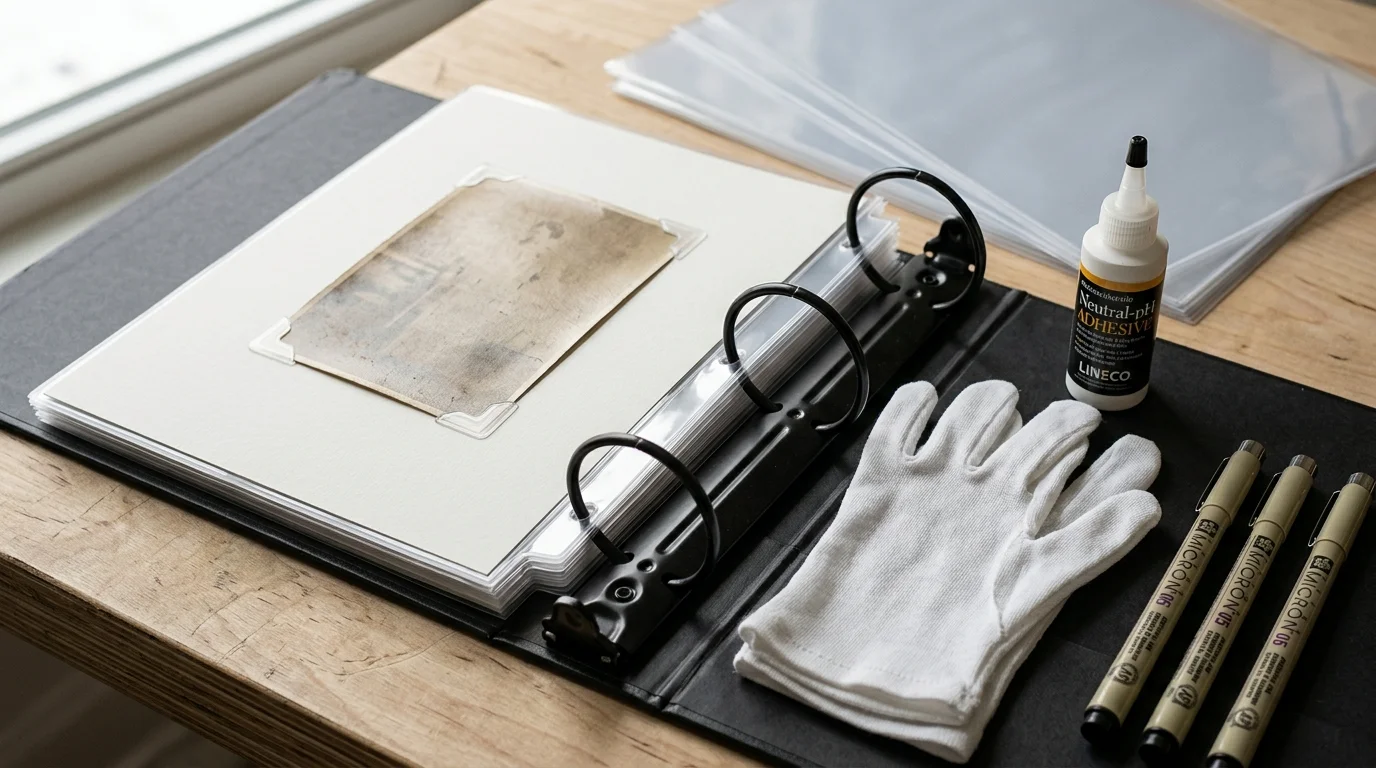
Second, purchase an archival 1.5-inch D-ring album equipped with an integrated box slipcase. Products like Gaylord Archival or Lineco album binders shield page edges from dust, light, and drops.
Third, cut 80-pound buffered acid-free cardstock down to 8.5×11 inches. Mount your duplicate photo prints using archival polypropylene mounting corners or reversible acid-free starch paste strips.
Never secure photographs using rubber cement, household glue sticks, or standard cellophane tape. These consumer adhesives harbor destructive solvents that bleed through paper fibers and stain prints permanently.
Fourth, write all captions using a lightfast, archival pigment pen such as the Sakura Pigma Micron 05. Archival pigment ink dries waterproof instantly, resisting accidental beverage spills or fingerprint moisture.
Fifth, slide each completed page into a PAT-tested polypropylene protector. Snap the pages into the D-ring mechanism, inserting three blank protective sleeves between sections for future additions.
Sixth, establish an off-site digital redundancy strategy. Scan the assembled lifebook pages every six months, maintaining duplicate cloud backups to protect your child against structural loss or domestic accidents.
Navigating Dual Heritage: Balancing Biological Roots and New Beginnings
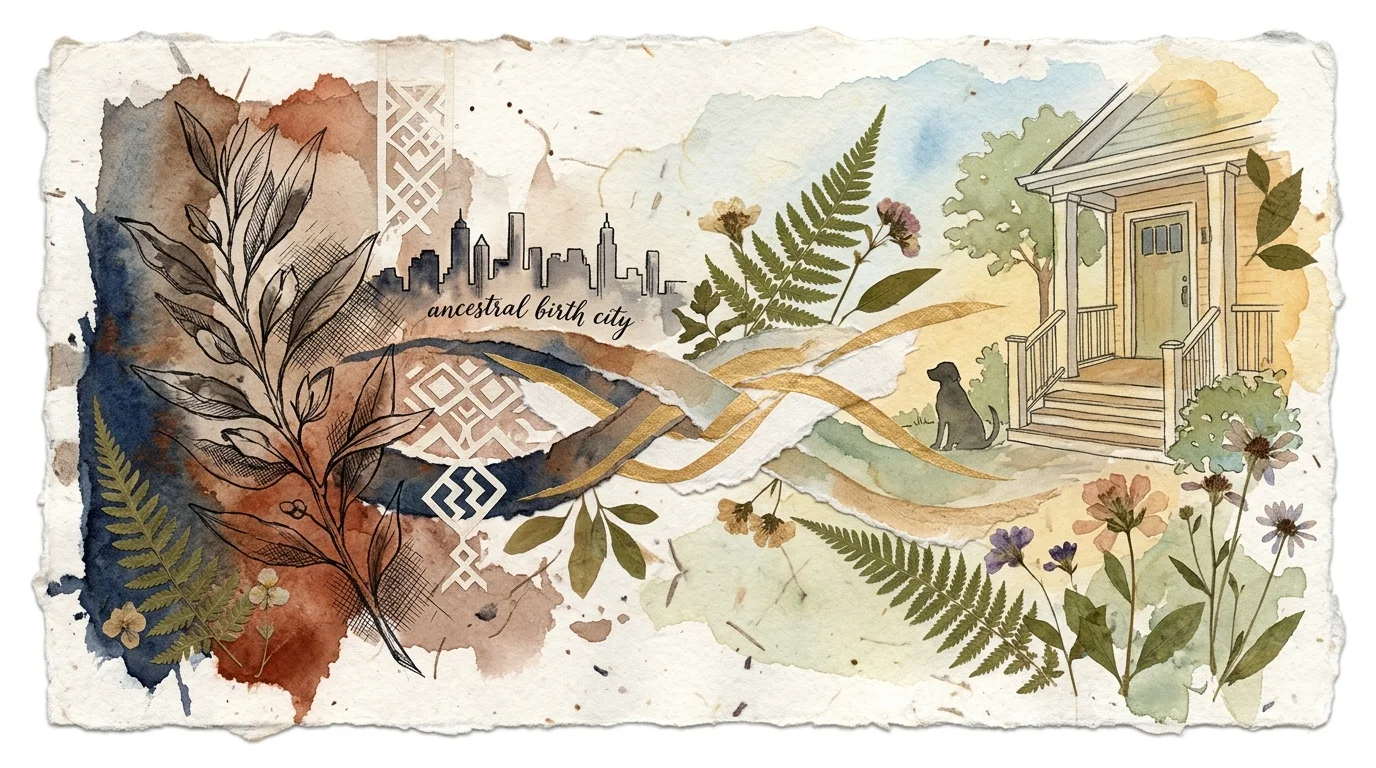
An adopted seven-year-old lives within two genealogical streams at the same time. Trauma-informed architecture honors biological lineage and adoptive family integration without creating a competitive loyalty conflict.
Never excise or redact birth family members from the lifebook, even when termination of parental rights followed severe neglect. Erasing biological figures creates secrecy, driving the child to internalize intense feelings of shame.
Describe complex legal transitions with simple, compassionate honesty. Use clear declarative phrasing: “Marcus’s birth parents loved him deeply, but they could not provide the safe medical care and daily shelter he needed.”
Design visual family trees that illustrate dual root networks feeding into a single central trunk. This visual metaphor shows that joining an adoptive family expands their community without erasing their biological heritage.
Consult the preservation resources available through the Library of Congress Preservation office when mounting delicate handwritten letters from birth relatives. Protecting original handwriting preserves authentic emotional connections that become vital during adolescence.
Balance page real estate equitably throughout the binder. Devote equal visual care to birth culture customs, foster family relationships, and present-day adoption celebrations.
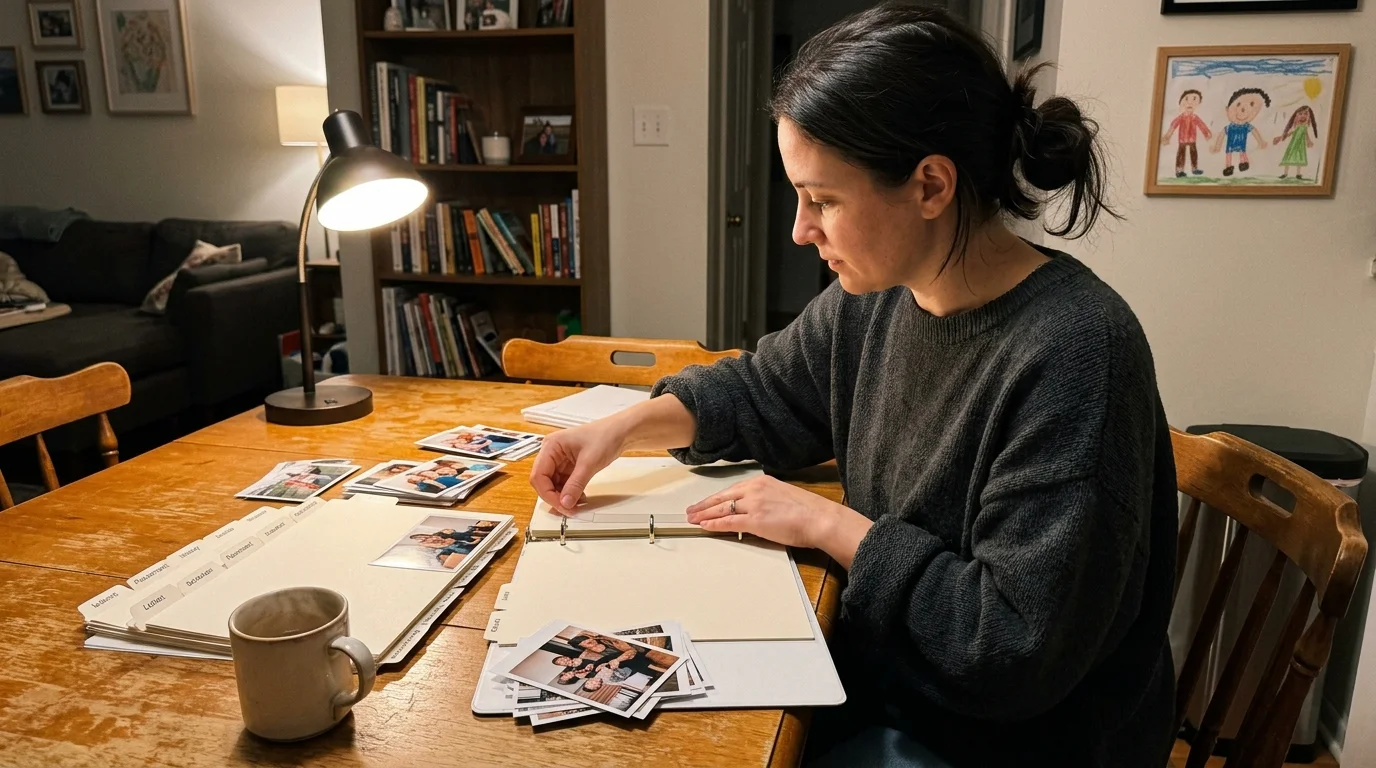
Read the lifebook alongside your child during relaxed, low-stakes quiet hours. Let your seven-year-old control page turning, deciding when to linger on biological memories and when to close the album.
Frequently Asked Questions
What should I do if my child rips or damages a lifebook page during an emotional meltdown?
Expect emotional dysregulation around lifebooks and maintain duplicate prints of every asset. Never punish the child; calmly place the damaged page in a repair folder, reassuring them that their history remains completely safe and repairable.
How do I document a difficult foster placement where neglect or abuse occurred?
Document the placement chronologically using neutral, safe imagery such as the town library or school exterior. State simple facts: “You lived in Dallas from September 2021 to June 2022, attended Parkview Elementary, and worked hard in second grade.”
Can I make a digital photobook instead of a physical binder?
Digital photobooks lack the modularity essential for trauma recovery. A seven-year-old requires the physical autonomy to remove, reorder, or temporarily store activating pages, which permanently printed books prevent.
Where can I find birth date newspapers and weather records for missing timeline years?
Local public libraries provide free digital microfilm access to regional newspapers by publication date. You can retrieve historical meteorological archives and local weather statistics through the National Centers for Environmental Information online database.
Disclaimer: This article is for informational purposes only. When handling valuable or irreplaceable photographs, consider consulting a professional conservator. Always test preservation methods on non-valuable items first.