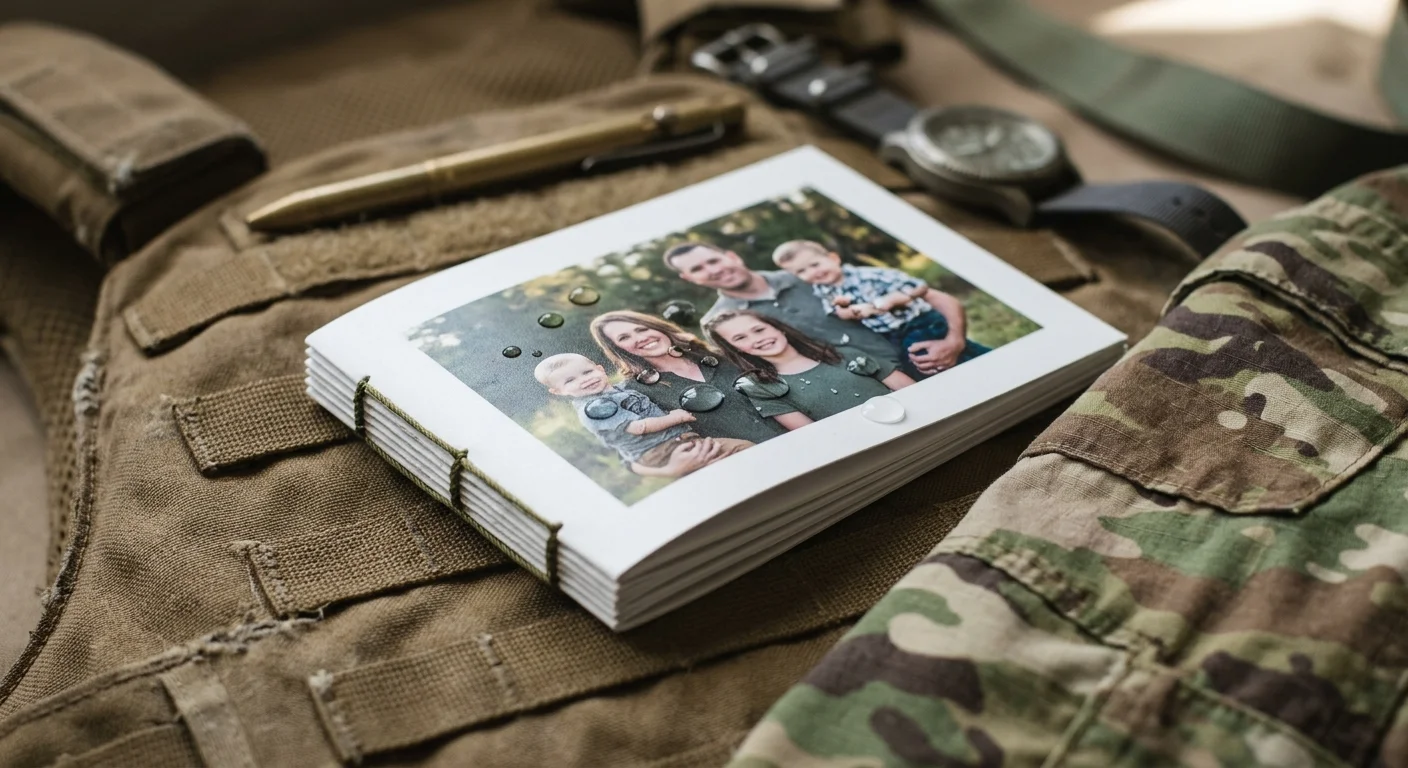
Military deployments subject personal keepsakes to scorching heat, corrosive body sweat, and punishing field laundering cycles. Standard photographic paper softens into fragile pulp within weeks when carried inside a hot combat uniform pocket.
You can build a durable mini album for military deployment that withstands extreme duty by printing directly onto tearproof synthetic paper. Unlike laminated photos that trap sweat and inevitably peel at the edges, synthetic sheets form an unyielding, waterproof bond.
This guide details how to construct a pocket-sized brag book using micro-porous synthetic substrates and rot-proof thread. You will give your deployed spouse a resilient family heirloom designed to survive the harshest operational environments intact.
Combat Uniform Pocket Constraints and Stress Factors
Active-duty service members carry personal items under demanding physical conditions. Body armor vests and load-bearing equipment press gear tightly against their combat uniforms.
The standard Army Combat Uniform (ACU) and Marine Corps Combat Utility Uniform (MCCUU) feature zippered or hook-and-loop upper sleeve pockets. These pockets measure roughly 5.5 inches wide by 6.5 inches tall.
Internal space shrinks dramatically when your spouse secures tourniquets, pens, or field notebooks in the same compartment. A bulky or stiff object causes pressure points against the arm or shoulder.
Body heat routinely drives pocket temperatures past 105 degrees Fahrenheit in forward operating locations. High ambient humidity combines with intense physical exertion to produce heavy, saline perspiration.
Human sweat contains sodium chloride, lactic acid, and urea. This chemical mixture acts as a mild solvent against traditional cellulose fiber and emulsion coatings.
Standard resin-coated photo paper absorbs this saline moisture along its cut edges. The core swells, splits open, and curls within days.
Many well-meaning families attempt to protect precious photographs by sealing them inside plastic laminating pouches. This approach consistently fails in austere tactical settings.
Body heat softens the thermal adhesive inside the lamination film. Continuous friction and body movement shear the sealed plastic margins away from the enclosed print.
Once moisture breaches the plastic margin, capillary action draws liquid sweat across the photograph face. The trapped moisture cannot evaporate through the plastic, causing fast ink bleeding and rapid bacterial mold growth.
To eliminate this failure point, you must build a monolithic album. A single, non-laminated synthetic sheet eliminates interior air pockets, adhesives, and seams entirely.
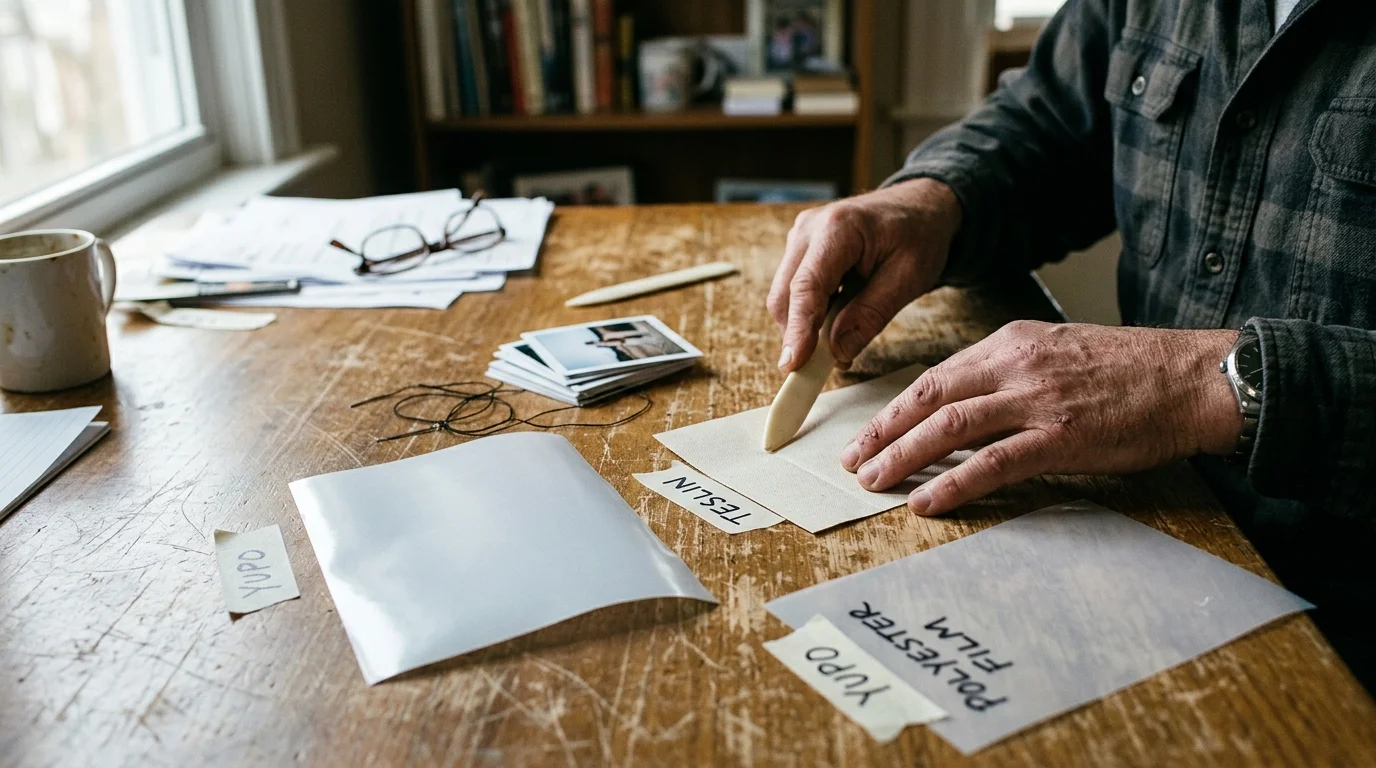
Synthetic Substrates: Teslin vs. Yupo vs. Polyester Film
Synthetic paper looks and handles like premium pulp paper, but it consists entirely of extruded plastic polymers. These materials will not tear, absorb water, or soften under continuous moisture exposure.
The three most common synthetic substrates offer distinct mechanical and thermal properties. Understanding these differences ensures you select the correct material for your printing setup.
PPG Teslin is a single-layer polyolefin material filled with precipitated silica. The silica creates microscopic pores across the surface that absorb inks and dry toner deeply into the matrix.
Because Teslin is microporous, it forms a mechanical bond with printers. It tolerates heat up to 356 degrees Fahrenheit, making it safe for both inkjet and laser printing equipment.
Yupo consists of polypropylene extruded with calcium carbonate under biaxial orientation. It produces an ultra-smooth, bright white, non-porous finish with exceptional tensile durability.
Because Yupo has no pores, aqueous inks cannot penetrate its surface. Standard dye and basic pigment inks will pool, smear, and fail to dry without specialized drying equipment.
Polyester films, such as KernowPrint, use a biaxially oriented polyethylene terephthalate (PET) base. These sheets feature high thermal stability and withstand high-speed laser fuser units without shrinking.
Scientific testing by the Image Permanence Institute confirms that high-stability synthetic polymers resist hydrolytic degradation far better than conventional cellulose papers in humid storage environments.
| Substrate Brand and Grade | Polymer Base Composition | Sheet Thickness (Mils) | Waterproof Mechanism | Maximum Temperature Threshold | Primary Print Compatibility |
|---|---|---|---|---|---|
| PPG Teslin SP1000 | Silica-Filled Polyolefin | 10.0 mil (176 gsm) | Micro-porous absorption matrix | 356°F (180°C) | Pigment Inkjet and Color Laser |
| Yupo Ultra Synthetic FEU-250 | Biaxially Oriented Polypropylene | 9.8 mil (250 gsm) | Non-porous solid extrusion | 266°F (130°C) | Laser Toners and UV Curable |
| KernowPrint Pro Lite PET | Coated Polyethylene Terephthalate | 8.0 mil (275 gsm) | Impervious polymer core | 428°F (220°C) | Dry Toner Laser Printers |
| Standard RC Photo Paper (Control) | Cellulose with Polyethylene Coatings | 10.4 mil (260 gsm) | None (Pulp core absorbs water) | 180°F (82°C) | Dye and Pigment Inkjet Only |
For home printing, Teslin SP1000 provides the most forgiving balance of flexibility, ink acceptance, and chemical durability. It bends easily without creasing permanently, allowing comfortable carry against the body.
KernowPrint PET is the preferred choice if you use an office laser printer. Its higher melting point prevents curling around hot fuser rollers inside commercial copy machines.
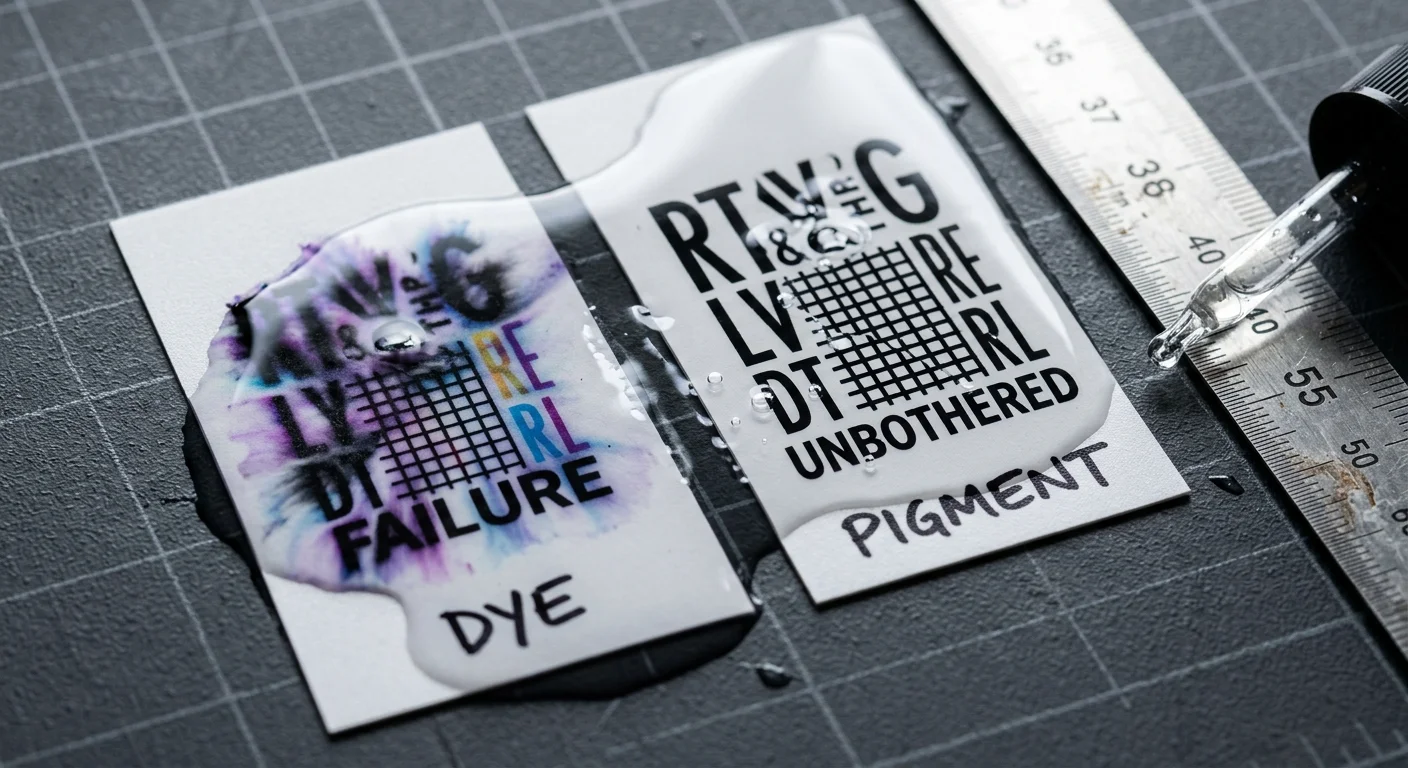
Ink Chemistry: Pigment Formulations vs. Dry Laser Toners
Selecting waterproof paper solves only half the problem. If your printing medium dissolves in water, the photographs will wipe off under the first wave of sweat.
Standard desktop inkjet printers use dye-based inks. Dye molecules dissolve in water, which allows them to flow freely through tiny printhead nozzles.
When exposed to sweat or rain, dye inks re-liquefy immediately. The colors migrate across the sheet, destroying facial details and rendering the photograph unreadable.
Pigment inks rely on microscopic particles of solid mineral or organic color suspended inside a carrier liquid. Once printed, the liquid evaporates and leaves behind solid particles.
Resin-encapsulated pigment inks lock inside the silica pores of synthetic sheets. Once fully cured, water and salt solutions cannot dissolve or dislodge the color particles.
Research preserved by the Library of Congress Preservation Directorate emphasizes that pigment-based colorants provide superior lightfastness and environmental resistance compared to water-soluble dyes.
Desktop printers using Epson UltraChrome or Canon LUCIA pigment inks produce museum-grade durability on Teslin. Check your printer specifications to verify all ink cartridges contain true pigment formulations.
Laser printers take a completely different chemical approach. They use fine dry toner composed of carbon black, colored pigments, and ground polyester resin.
The laser fuser unit heats the toner to over 300 degrees Fahrenheit under mechanical pressure. This process melts the resin directly into the surface fibers of the synthetic paper.
The resulting laser image becomes a permanent layer of plastic fused to the synthetic base. The print will not run, smear, or bleed when submerged in salt water.
Ensure your laser printer driver uses the “Heavy Media” or “Labels” setting when feeding synthetic paper. This slows the paper feed rate, providing sufficient thermal dwell time for a complete melt.
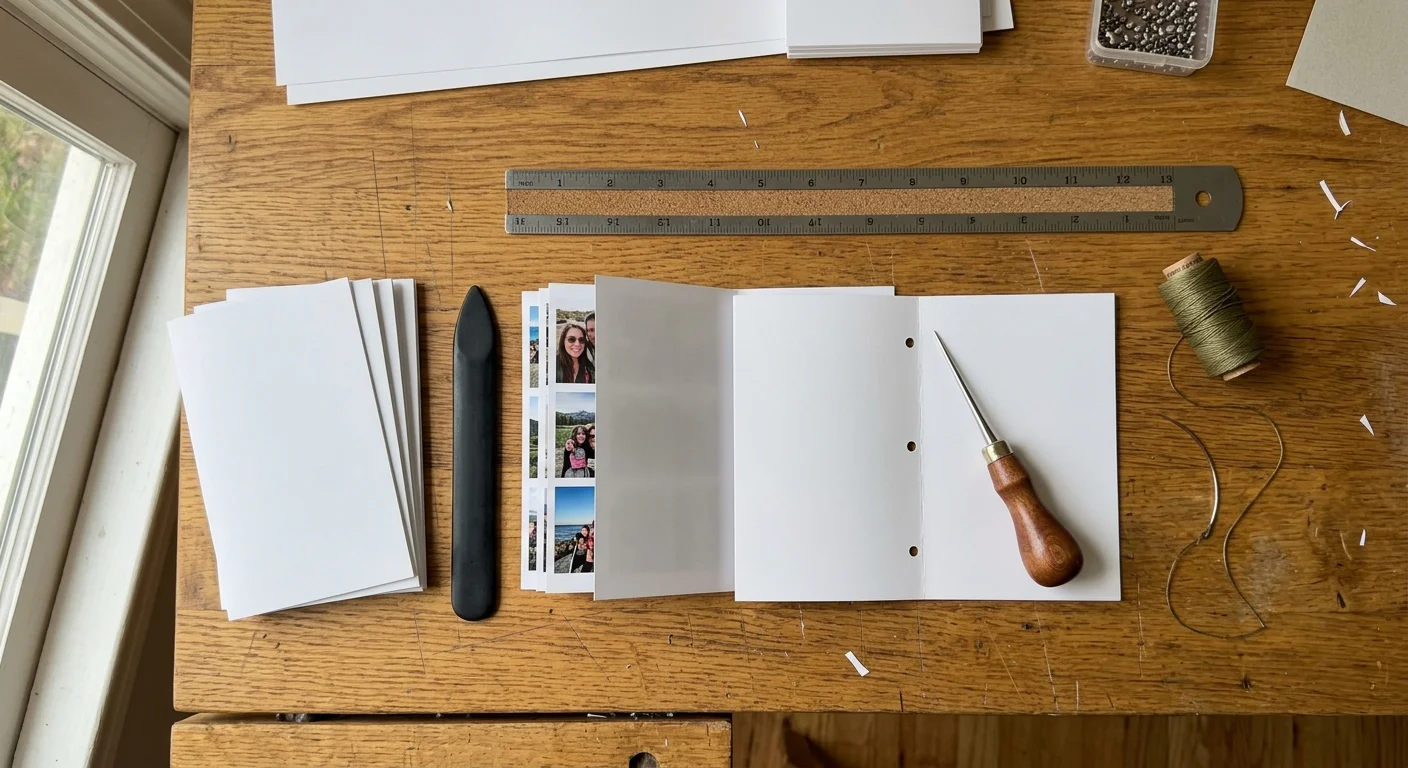
Worked Example: Step-by-Step Build of a 3.5×5-Inch Field Album
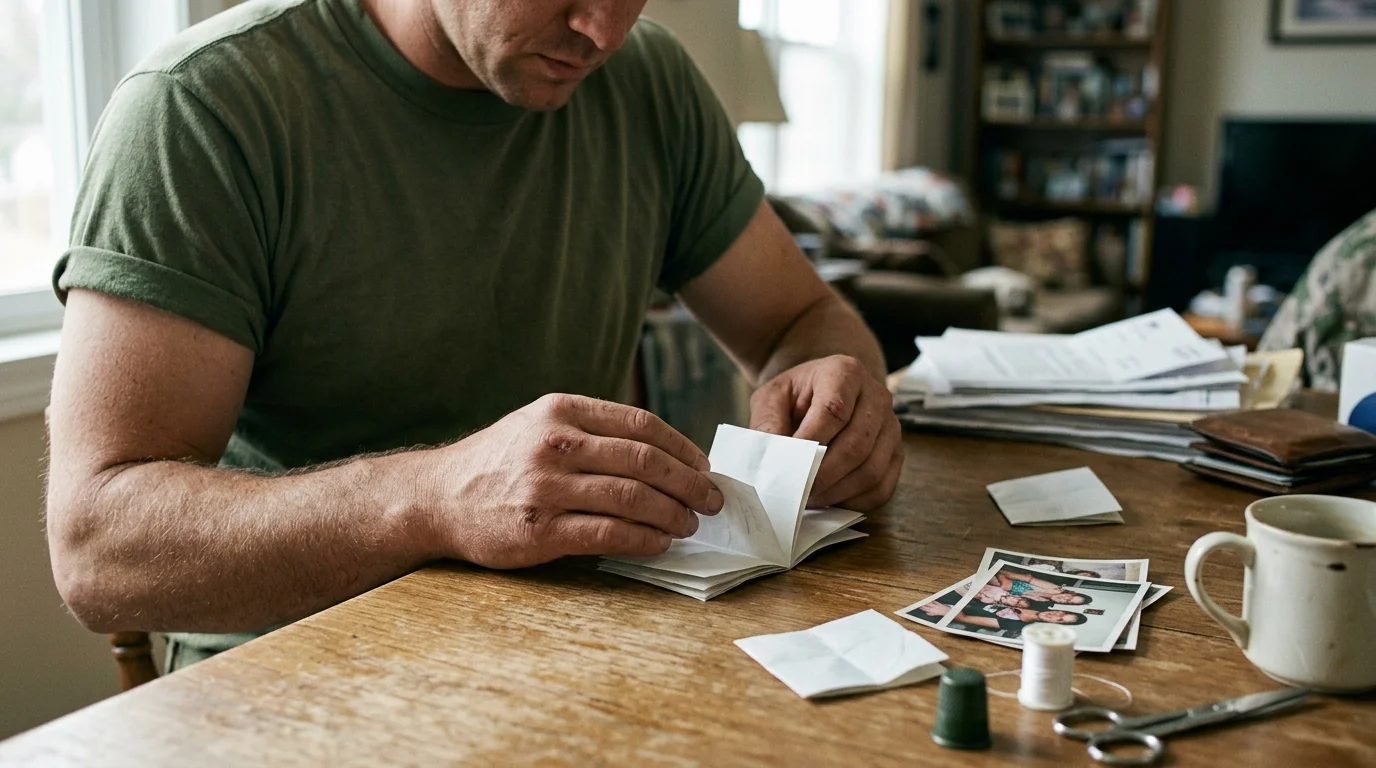
This worked example outlines the exact specifications, costs, and tools required to build a 12-page deployment brag book. Follow these measurements precisely to ensure proper pocket clearance.
We designed this project for standard upper sleeve pockets on current combat uniforms. The finished album measures exactly 3.5 inches wide by 5.0 inches tall.
The required supplies and expenses include:
- 3 sheets of 8.5×11-inch 10-mil Teslin SP1000 paper: $4.50
- 36 inches of Tex 70 bonded polyester sewing thread: $0.20
- 1 heavy-duty size 18 hand-sewing needle: $0.40
- 1 craft knife and metal safety ruler: $6.00 (one-time purchase)
- 1 bone folder or plastic burnishing tool: $3.50 (one-time purchase)
Total expendable material cost per album equals $5.10. Total active construction time takes approximately 45 minutes from printing to final trimming.
Begin by arranging your photographs into a layout software program. Create three landscape documents measuring 7.0 inches wide by 5.0 inches tall.
Each 7.0×5.0-inch folio folds down the middle to yield two facing pages measuring 3.5×5.0 inches. Place two photographs side by side on each folio face, leaving a 0.35-inch inner margin for the fold.
Print the folios double-sided using your pigment inkjet or laser printer. If using an inkjet, allow the sheets to dry flat for 30 minutes to ensure complete moisture evaporation from the pores.
Place the printed sheets on a self-healing cutting mat. Align your metal ruler with the crop marks and trim the perimeter using a fresh craft blade.
Score each 7.0×5.0-inch folio down the vertical center line at exactly 3.5 inches. Use your bone folder and light downward pressure to indent the synthetic sheet without cutting it.
Fold each sheet along the scored groove. Press the crease firmly with the flat edge of the bone folder to create a sharp, flat fold line.
Nest the three folded folios inside one another to create a compact, 12-page booklet signature. Inspect the spine to confirm all page edges align flush.
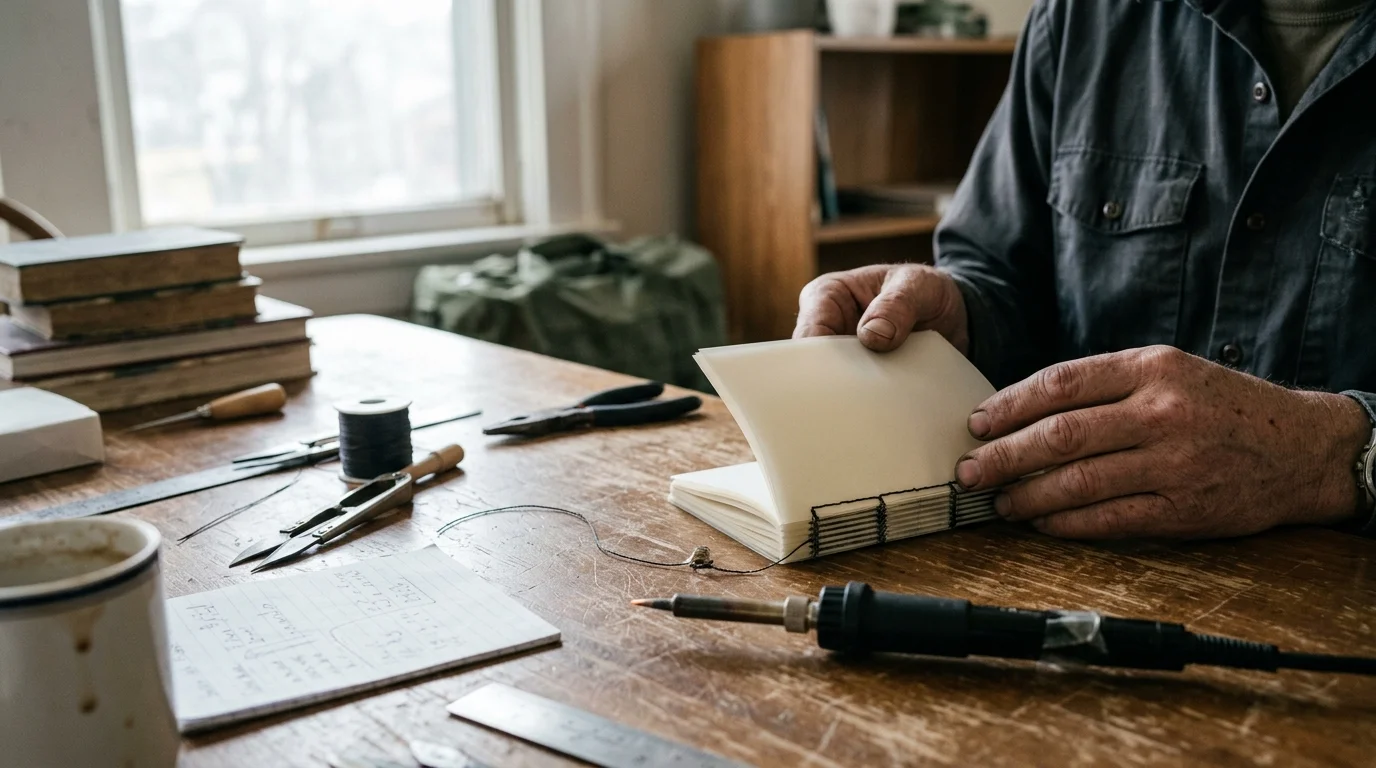
Rot-Proof Binding Techniques: Thread, Wire, and Thermal Fusing
Standard bookbinding supplies will fail quickly when exposed to deployment conditions. Natural materials like cotton sewing thread absorb perspiration, invite fungus, and rot away within months.
Standard steel staples present another point of failure. Perspiration corrodes zinc plating, leaving rust stains across your photos before the staple snaps under mechanical flex.
To ensure field survival, use only synthetic or marine-grade binding fasteners. Bonded polyester thread, polytetrafluoroethylene (PTFE) thread, or marine-grade Monel staples resist all organic decay.
Mechanical fasteners in combat gear must resist both galvanic corrosion and fungal digestion; using synthetic monofilament or marine alloys ensures the structural integrity matches the substrate.
Bonded polyester thread graded Tex 70 (also sold as V-69) provides exceptional tensile strength. Marine sailmakers use this exact thread to assemble sails exposed to constant salt spray and ultraviolet radiation.
To sew your mini album, use a traditional three-hole pamphlet stitch. Open your nested folios flat with the interior pages facing upward.
Measure and mark three piercing stations along the center crease. Place Station 1 at the exact center (2.5 inches from either end), Station 2 at 0.75 inches from the top edge, and Station 3 at 0.75 inches from the bottom edge.
Pierce through all three sheets at these marks using your size 18 needle or a bookbinding awl. Keep your piercing tool perpendicular to ensure straight holes through the spine.
Thread your needle with a 24-inch length of Tex 70 bonded polyester thread. Do not tie a knot at the end of the thread.
Pass the needle through the center hole (Station 1) from the outside spine into the inside center fold. Leave a 3-inch tail of thread hanging loose on the outside spine.
Bring the needle out through the top hole (Station 2) to the outside spine. Pull the thread taut along the inner crease.
Carry the needle down the length of the spine and push it inward through the bottom hole (Station 3). Pull the stitch firm so the thread lies flat against the exterior spine.
Bring the needle back out through the center hole (Station 1) to the outside. Position your exit point on the opposite side of the long spine loop from your starting tail.
Pull both thread ends tight, ensuring the interior stitches lay completely flat against the paper crease. Tie the two ends together using a firm square knot over the long exterior loop.
Trim the thread ends to 0.25 inches. Lightly melt the cut ends using the tip of a lighter flame to fuse the polyester fibers and prevent unravelling.
Finish the album by trimming all four outer corners with a 5-millimeter radius corner punch. Rounded corners prevent the pages from catching, bending, or tearing inside nylon uniform pockets.
Field Maintenance and Decontamination in Combat Theaters
Combat environments expose pocket gear to fine dust, sand, fuel vapors, and insect repellent. A deployed service member needs straightforward maintenance protocols to keep the album legible.
Fine sand and dust particles can wedge between the pages over time. If left unattended, this abrasive grit can scratch the printed image surface during movement.
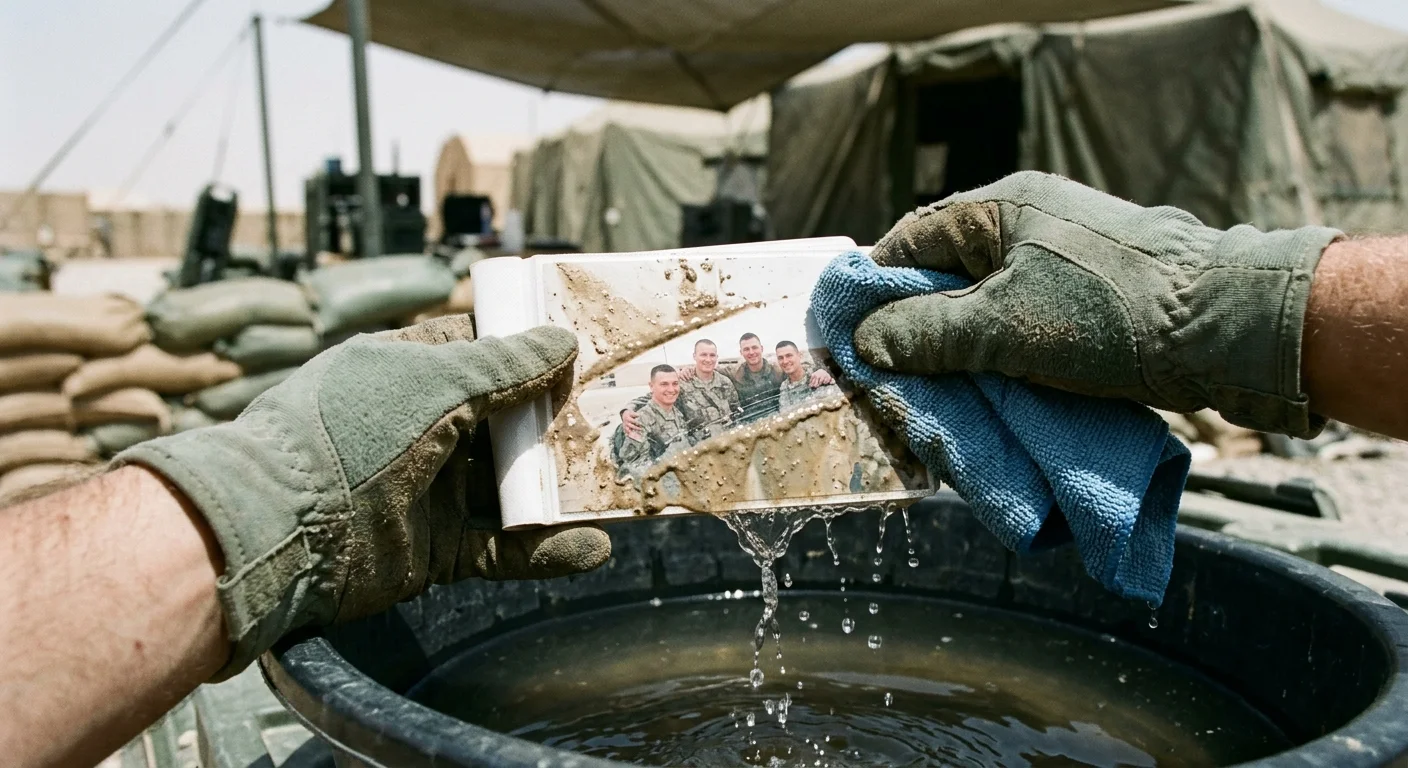
Your spouse can safely wash a synthetic field album under cold running tap water or using water from a canteen. The synthetic paper and pigment inks will not soften or dissolve during rinsing.
For oily residue or dried mud, add a single drop of mild dish soap or hand soap to the pages. Gently wipe the surface using bare fingers or a microfiber cloth, then rinse thoroughly.
Never scrub the pages using abrasive scrub pads, stiff field brushes, or industrial solvents. Abrasives will scratch the fused toner layer or scrape away the silica coating on Teslin sheets.
After rinsing, shake the album vigorously to shed standing water droplets. Prop the booklet upright with the pages fanned open in a shaded, well-ventilated spot to dry.
Chemical insect repellents present the single greatest danger to synthetic photo albums. Military-issued bug repellent contains high concentrations of DEET (diethyltoluamide).
DEET acts as an aggressive plasticizer and solvent against many synthetic polymers. It will quickly dissolve polypropylene papers like Yupo, turning the printed image into a sticky residue.
Silica-filled Teslin and coated polyester sheets exhibit higher resistance to chemical exposure than polypropylene. However, service members should still avoid touching the album pages with DEET-coated hands.
If the album is accidentally left in a uniform pocket during base laundry, it will survive the standard wash cycle intact. The bonded polyester thread and synthetic sheets will hold together through wash temperatures up to 140 degrees Fahrenheit.
Frequently Asked Questions
Can I use a standard home inkjet printer to print photos on tearproof paper?
You can use an inkjet printer only if it utilizes pigment-based inks and you select microporous synthetic paper like Teslin. Standard dye-based inkjet inks dissolve when exposed to moisture and sweat.
Why is synthetic paper superior to plastic lamination for deployment use?
Lamination leaves exposed edges that separate under body heat and mechanical friction. Once sweat penetrates the seam, capillary action traps moisture inside, while monolithic synthetic paper has no layers to delaminate.
Will insect repellent like DEET ruin my mini photo book?
DEET will melt polypropylene papers like Yupo upon contact. Silica-filled polyolefin like Teslin and coated polyester films like KernowPrint offer significantly higher chemical resistance against accidental repellent contact.
What dimensions best fit modern tactical and combat uniform pockets?
A finished trim size of 3.5 inches by 5.0 inches fits comfortably inside standard shoulder sleeve pockets and chest pockets beneath body armor without creasing or restricting movement.
Disclaimer: This article is for informational purposes only. When handling valuable or irreplaceable photographs, consider consulting a professional conservator. Always test preservation methods on non-valuable items first.