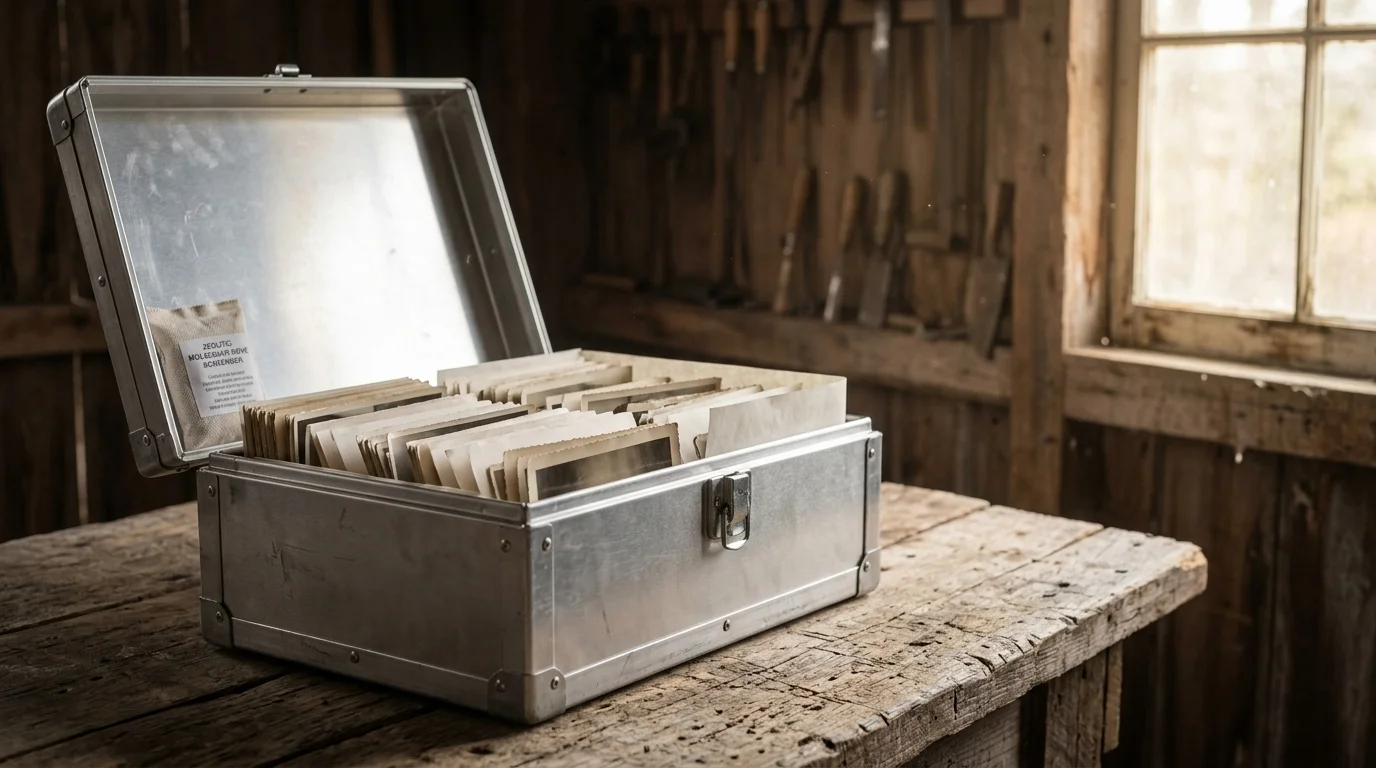
Storing historic silver gelatin prints and barn blueprints in an unheated outbuilding requires total defense against field mice and pack rats. Standard metal boxes stop sharp teeth but introduce chemical vapors that can yellow your photo emulsions within months.
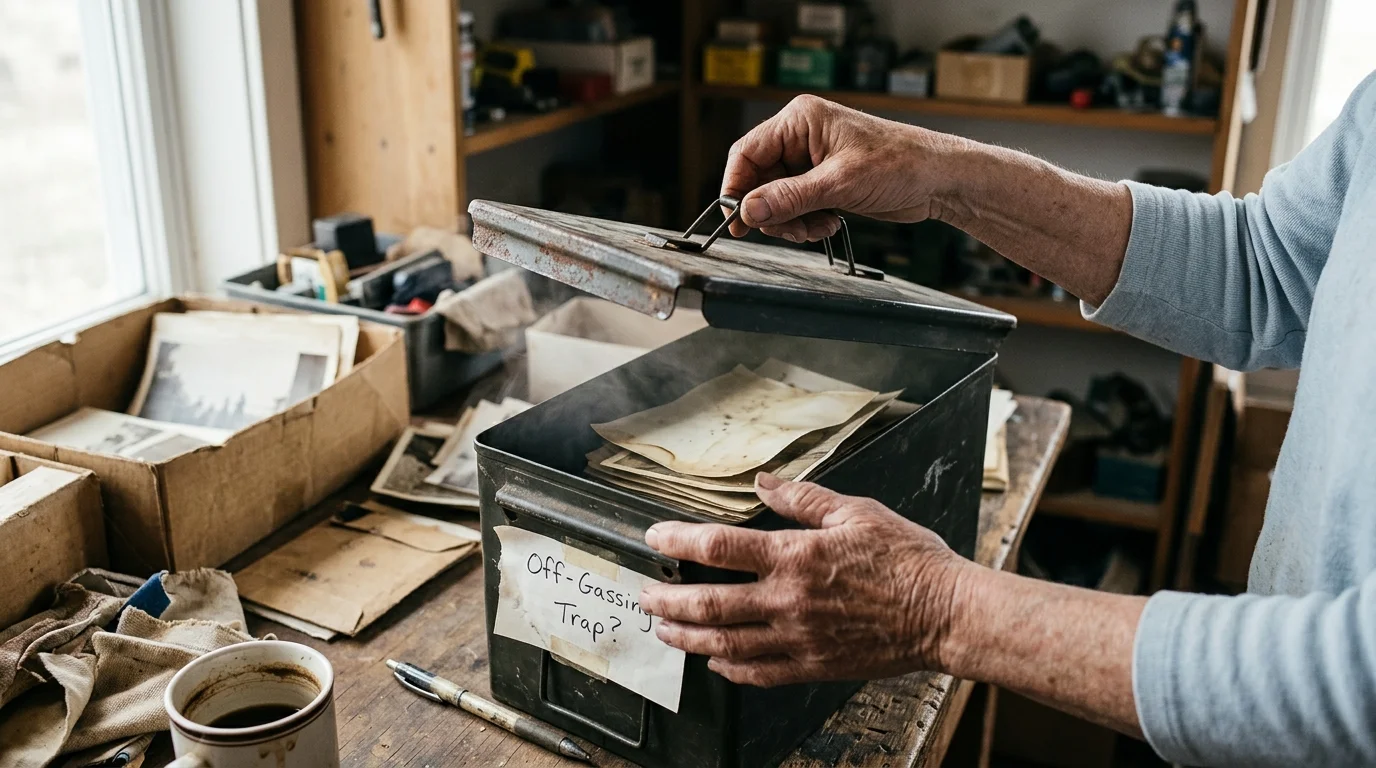
Standard metal enclosures prevent physical gnawing, but sealing photos in airtight raw or coated metal creates an acidic, volatile off-gassing trap that destroys photographic silver faster than rodents.
By pairing 20-gauge steel or anodized aluminum with buffered molecular sieves, you stop rural pests without sacrificing archival stability.
The Threat of Rural Rodents to Outbuilding Archives
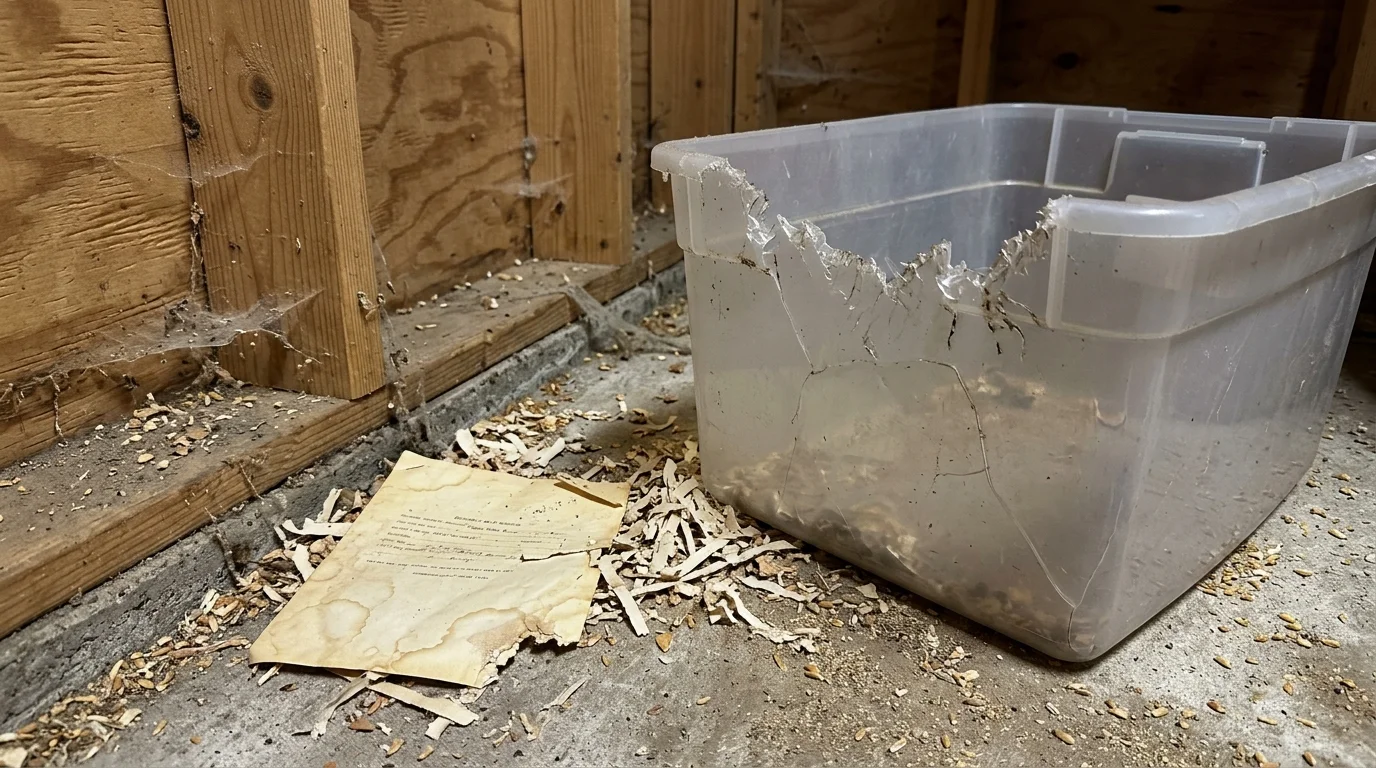
Deer mice and Norway rats exert biting pressures exceeding 20,000 pounds per square inch at their incisor tips. They can chew through plastic storage tubs and standard cardboard boxes in a single evening.
Rodents target paper collections to harvest soft cellulose fibers for nest construction. They shred century-old fiber prints and architectural linen tracings into nesting fluff within days of finding an unsealed cache.
Beyond structural tearing, rodent nesting introduces corrosive biological fluids into your storage space. Rodent urine deposits urea and uric acid, which dissolve photographic gelatin emulsions and leave permanent brown rings.
Standard polypropylene utility bins yield quickly once a mouse catches an edge with its teeth. If you store unmanaged family records in a tack room or barn office, physical exclusion is non-negotiable.
Only rigid metal containers can physically halt continuous rural rodent pressure. However, choosing the wrong metal container introduces a silent chemical threat to your photographs.
Gnaw-Proof Metal Selection: Gauges and Coatings
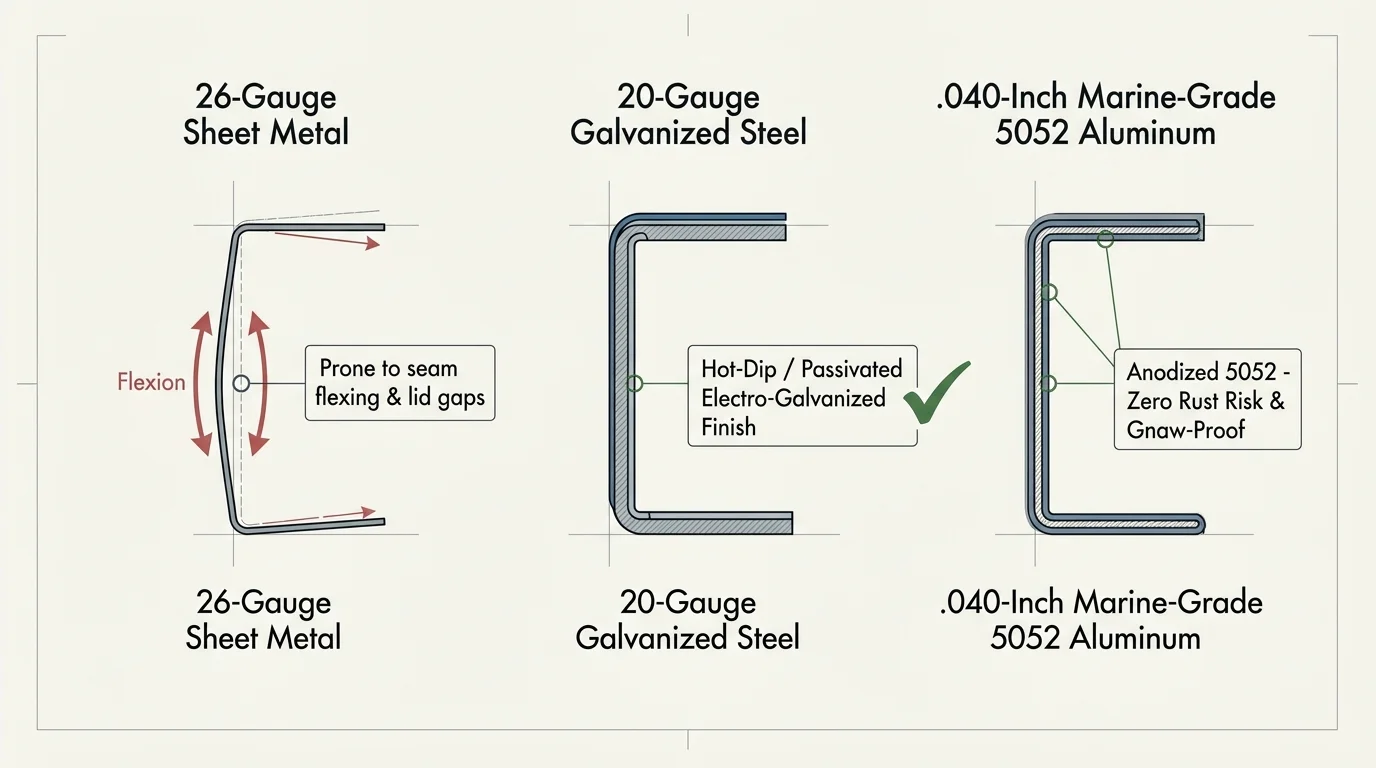
Rodents cannot establish purchase on a flat metal surface thicker than 26-gauge sheet metal. However, thin metal flexes easily, creating perimeter lid gaps that mice exploit.
You must select 20-gauge galvanized steel or .040-inch marine-grade 5052 aluminum to guarantee structural rigidity. These gauges prevent rodents from prying seams apart or chewing through latched corners.
Galvanized steel uses a protective zinc coating to block rust in humid agricultural outbuildings. Ensure you choose hot-dip galvanized or passivated electro-galvanized finishes to prevent crumbly white zinc oxidation.
Industrial aluminum enclosures offer lighter weight and zero rust risk in unconditioned outbuildings. Anodized 5052 aluminum forms an inert oxide layer that resists both animal teeth and ambient moisture.
Avoid consumer toolboxes finished with cheap oil-based alkyd enamels. These commercial coatings continuously emit volatile chemicals that degrade photographic binders over time.
Inspect the closure mechanisms on prospective metal storage containers. Ensure your box features heavy-duty toggle draw latches that compress a gasket uniformly along every side.
The Off-Gassing Trap Inside Sealed Metal Containers
Sealing historic paper and film inside an airtight metal enclosure creates an unintentional chemical pressure cooker. Lignin in old paper blueprints naturally degrades, shedding volatile formic and acetic acids.
In an airtight box, these trapped acidic vapors bounce off impermeable metal walls. They concentrate around your photos, sharply accelerating chemical decay.
Photographic emulsions contain finely divided metallic silver that reacts aggressively with volatile organic compounds. According to research from the Image Permanence Institute, pollutant gases trigger redox reactions that convert metallic silver into yellow silver ions.
This reaction causes silver mirroring, localized yellowing, and image density loss across historical prints. A sealed raw metal box can ruin prints faster than open air exposure.
Factory coatings on budget utility boxes present an equal chemical danger to your prints. Inexpensive paints off-gas formaldehyde, solvents, and plasticizers for many years after application.
Sealed enclosures demand active pollution scavengers. Without molecular sieves to absorb volatile organic acids, trapped photographic prints deteriorate at an accelerated rate.
To safely isolate photographic prints from metal walls and trapped vapors, you must install an active buffering system inside the container.
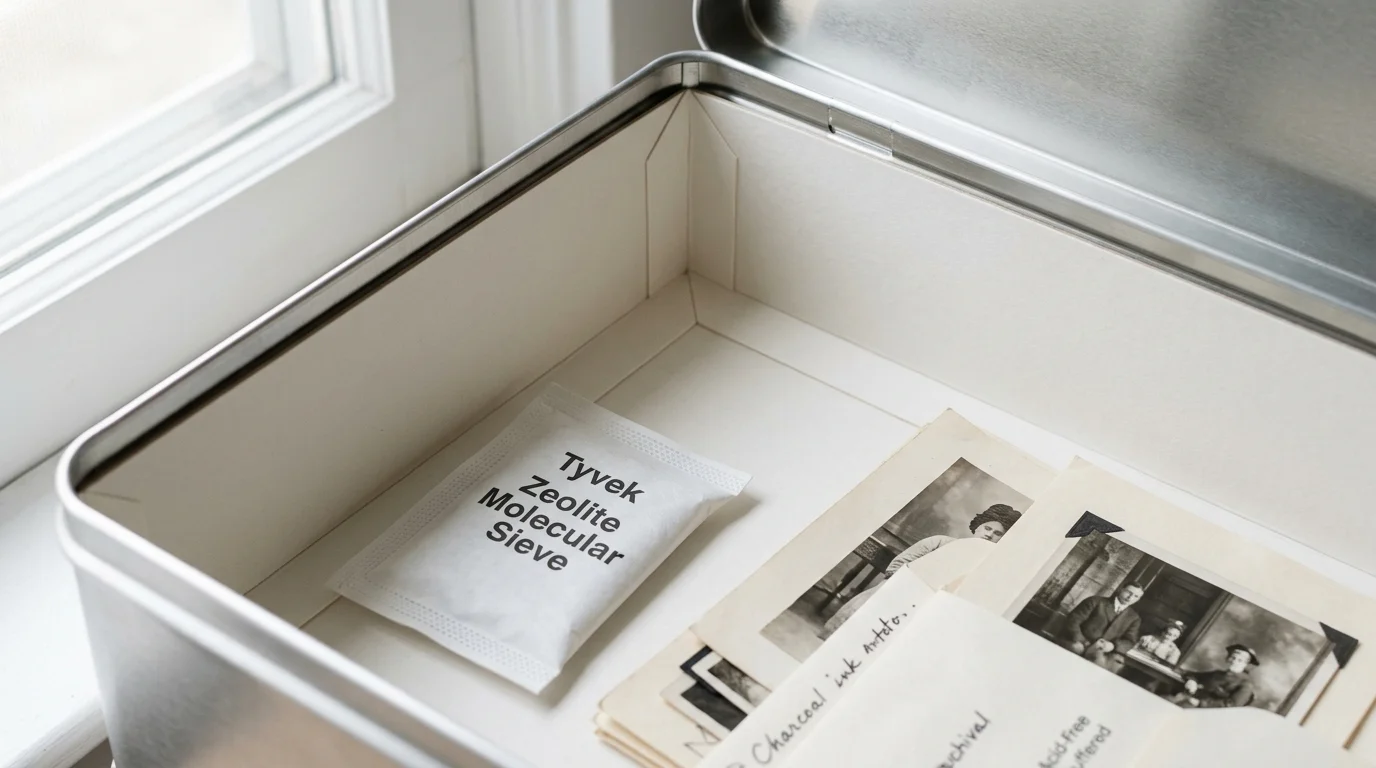
Archival Lining Systems: Molecular Sieves and MicroChamber Liners
You can counteract chemical buildup by lining your metal container with active molecular traps. MicroChamber board utilizes pure cotton rag pulp infused with activated carbon and synthetic zeolites.
The National Archives Preservation guidelines highlight molecular sieves for trapping airborne pollutants in enclosed micro-environments. These specialty boards absorb both internal off-gassing and external atmospheric pollutants.
Calcium carbonate buffering in archival board provides an alkaline reserve of 2 to 3 percent. This reserve neutralizes acidic vapors before they can penetrate your silver gelatin photographic paper.
Synthetic zeolites feature uniform microscopic pores that capture small polar molecules, including acetic acid and sulfur dioxide. Unlike simple cardboard liners, zeolites permanently trap these corrosive compounds.
Cut the barrier board to fit every interior face of the metal container. This lining prevents your documents from ever contacting raw metal or residual factory coatings.
Always differentiate between buffered and unbuffered housing materials for mixed media. While silver gelatin prints thrive in buffered environments, cyanotypes and certain blueprint dyes require unbuffered neutral liners to prevent pigment fading.
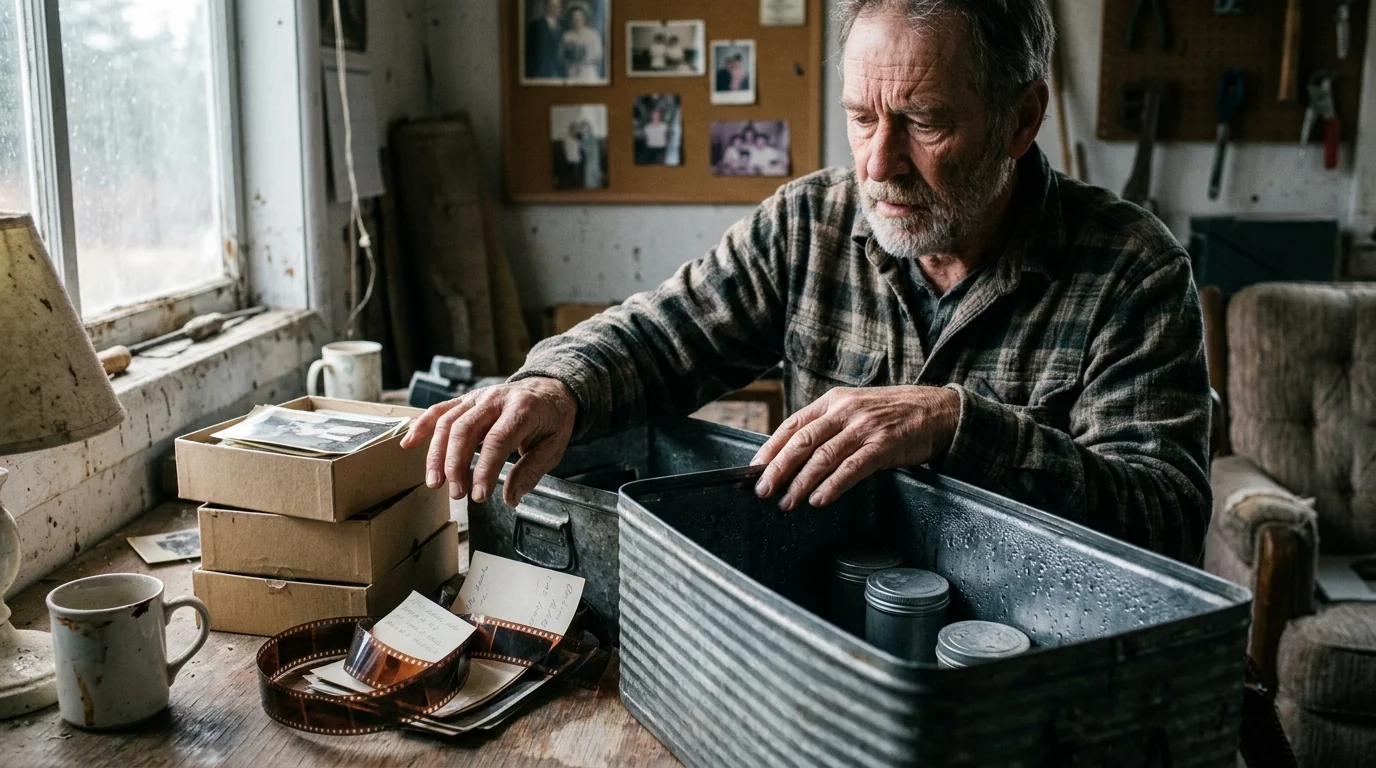
Managing Temperature Swings and Condensation in Metal
Rural outbuildings experience severe daily temperature fluctuations that shock stored documents. Because metal conducts thermal energy rapidly, internal temperatures rise and fall in direct alignment with outside weather.
When an outbuilding cools rapidly at dusk, internal air hits its dew point against the metal walls. Moisture condenses on the cold metal lid and drips onto paper items below.
Moisture management requires pre-conditioned silica gel to stabilize the interior microclimate. Silica cassettes buffer relative humidity between 30% and 40%, preventing both emulsion dehydration and mold outbreaks.
As detailed by the Library of Congress Preservation team, controlled relative humidity remains critical for stopping gelatin deterioration. Maintaining this humidity baseline prevents the chemical reactions that fuel acidic hydrolysis.
To dampen severe temperature swings, place your metal box inside a secondary insulated enclosure. A surplus heavy-duty wooden chest or insulated cooler slows internal temperature shifts significantly.
This box-within-a-box strategy provides thermal inertia. The outer shell softens sharp temperature spikes, while the inner metal box repels rodent attacks and controls internal vapors.
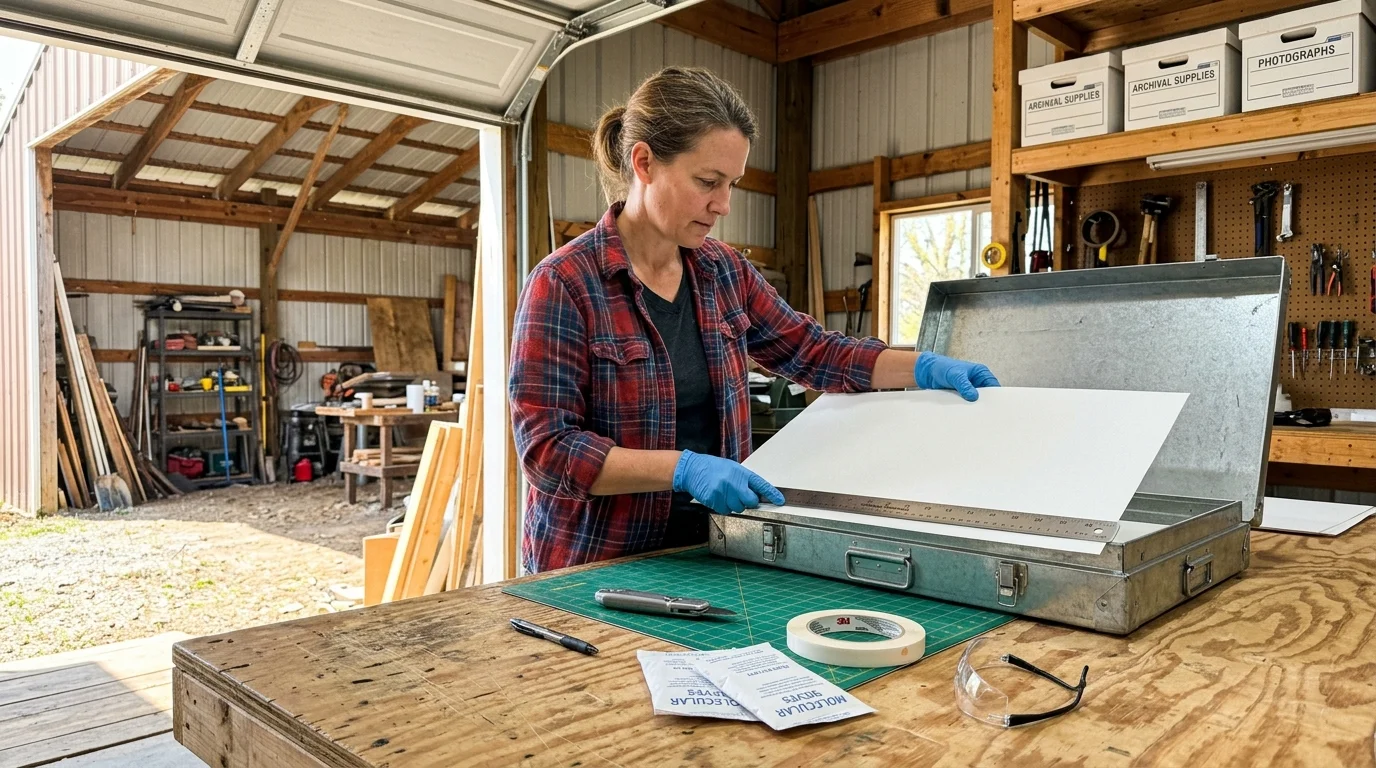
Worked Example: Building a Rodent-Proof Archival Enclosure
Consider an archive consisting of 12 historical 8×10-inch silver prints and 4 folded barn blueprints measuring 24×36 inches. Storing these in an unconditioned equipment shed demands a completely sealed, retrofitted metal container.
Start with a 20-gauge galvanized steel utility case measuring 24 by 16 by 10 inches, costing approximately $74.00. Confirm the case features closed-cell EPDM perimeter gaskets and heavy-duty toggle draw latches.
Wipe down all interior metal surfaces using a lint-free cloth and 99% pure isopropyl alcohol. Allow the metal enclosure to air dry outdoors under shade for 48 hours to clear volatile fabrication residues.
Purchase four sheets of 100-point MicroChamber board at $38.50 total. Measure and cut panels to line the bottom, four interior walls, and inside lid using an archival bone folder and utility knife.
Secure the liner boards against the metal using archival acrylic double-sided adhesive tape (such as 3M 415). Never use standard rubber-based carpet tape or household spray adhesives, which off-gas sulfur compounds.
Place individual 8×10 silver gelatin prints into 3-mil archival polyester (Melinex 516) L-sleeves, costing $22.00 for a 25-pack. The clear polyester protects image faces from mechanical scuffing during handling.
Store the blueprints inside unbuffered 100% cotton rag paper folders, totaling $18.00. Cyanotypes and traditional blueprint formulations require unbuffered storage to prevent alkaline hydrolysis of their Prussian blue pigments.
Insert one 500-gram aluminum cassette of Art-Sorb silica gel calibrated to 40% relative humidity, priced at $46.00. Fasten the cassette to an interior side wall using archival linen tape or mechanical brackets.
Add a cobalt-free humidity indicator card visible immediately upon opening the lid. This setup totals $198.50 and secures your family farm history against both rodents and chemical deterioration.
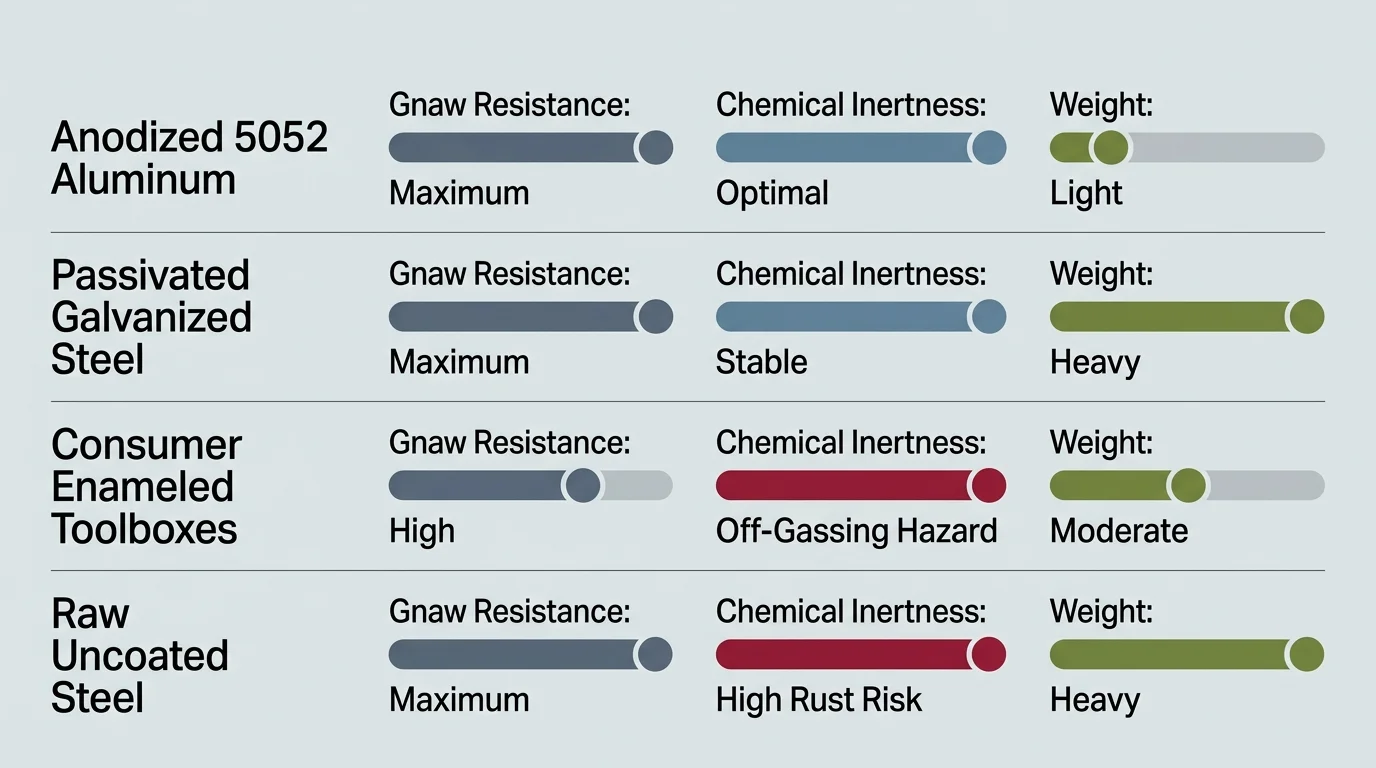
Material Comparison: Metal Types and Archival Safety
Selecting the correct enclosure requires balancing gnaw resistance, chemical inertness, and structural sealing capabilities. Review the measurable attributes below before purchasing materials for an outbuilding archive.
| Enclosure Substrate | Minimum Gauge | Rodent Gnaw Resistance | Chemical Off-Gassing Risk | Archival Remediation Required |
|---|---|---|---|---|
| Galvanized Carbon Steel | 20-Gauge (0.0359″) | Impervious to mice and rats | Low to Moderate (zinc oxidation) | Full MicroChamber interior lining |
| Anodized 5052 Aluminum | 18-Gauge (.040″) | Impervious to mice and rats | Extremely Low (inert oxide layer) | Thin archival barrier card lining |
| Powder-Coated Steel Locker | 18-Gauge (0.0478″) | Impervious to gnawing | Moderate (cured polymer resins) | Full molecular sieve barrier board |
| Vintage Tinplate Steel | 30-Gauge (0.0120″) | Vulnerable at seams and corners | High (solder fluxes and rust) | Not recommended for archival storage |
As the table shows, 20-gauge galvanized steel offers the strongest blend of gnaw protection and mechanical rigidity. However, it requires a complete interior liner to block direct contact with zinc oxides.
Anodized aluminum provides the lowest chemical off-gassing risk because its inert electrochemical surface does not release VOCs. Its higher initial purchase cost pays dividends in reduced chemical monitoring.
Vintage tinplate containers present critical failure points along their crimped sheet seams. Rodents chew easily through thin 30-gauge metal, and unlined tinplate quickly rusts in unheated farm structures.
Inspection Protocols for Outbuilding Storage
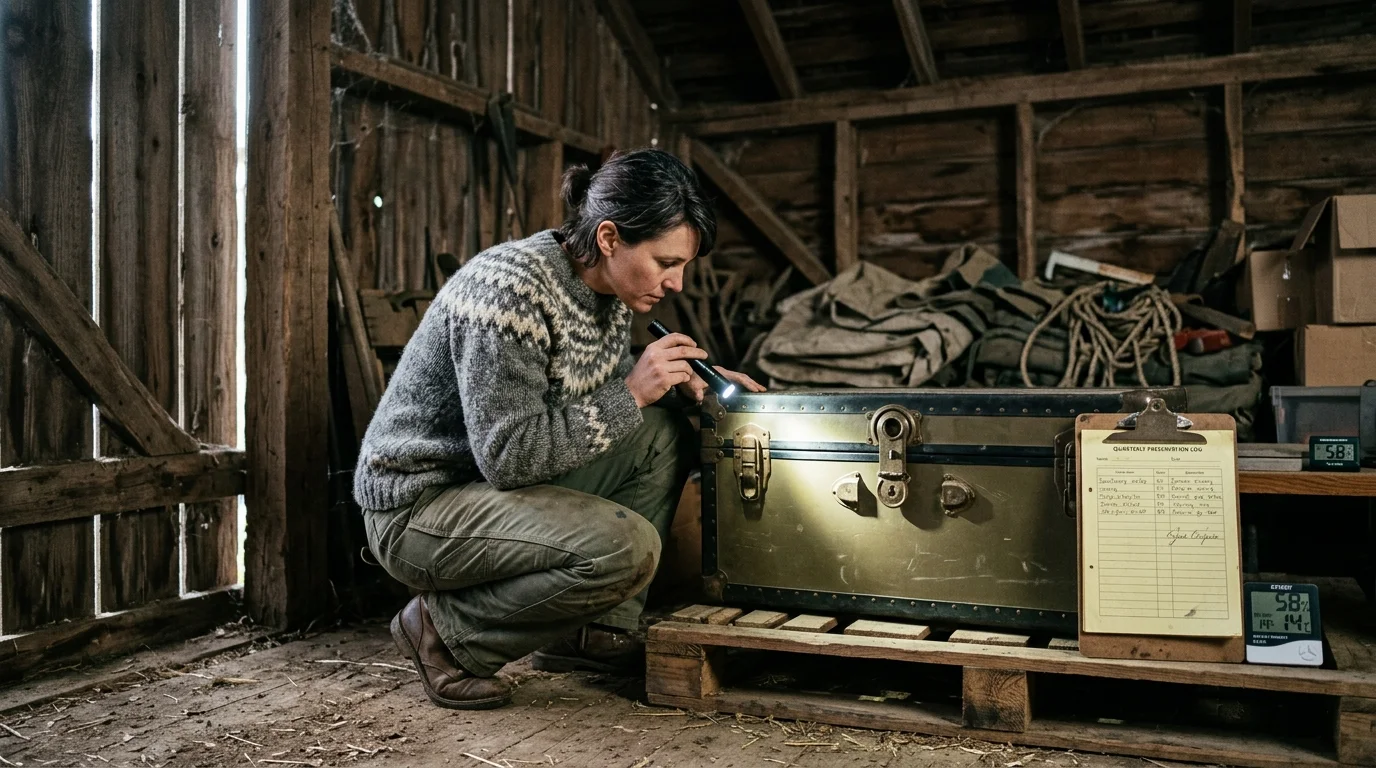
Maintaining an outbuilding archive requires disciplined seasonal inspection rather than passive neglect. Inspect your metal enclosures twice each year, scheduled during mid-spring and late autumn.
Check the exterior gasket seal for signs of dry rot, cracking, or rodent tooth testing. Replace damaged EPDM rubber gaskets immediately to keep mice and insects from entering.
Inspect the internal cobalt-free humidity card without leaving the container open for extended periods. If the indicator reads above 50% relative humidity, regenerate or replace the silica gel desiccant cassette.
Archival preservation in agricultural spaces is an active commitment. Inspecting seals and monitoring desiccant levels every six months ensures mechanical barriers never become chemical traps.
Never place rodent bait traps or chemical rodenticides on top of your photo enclosure. Dying rodents can deposit bodily fluids on exterior latches, creating biological contamination risks.
Store your sealed metal containers on heavy-duty steel wire shelving positioned at least 18 inches off the ground. Elevating the container removes it from damp concrete floors and eliminates floor-level rodent pathways.
Frequently Asked Questions
Can I use military surplus ammunition cans for storing photos in an outbuilding?
Surplus steel ammo cans block rodents effectively, but their interior olive-drab paint emits volatile compounds. You must strip or completely line the interior with MicroChamber board and replace aged rubber lid gaskets with archival EPDM foam.
Why must barn blueprints use unbuffered paper while silver gelatin prints use buffered paper?
Traditional blueprints contain Prussian blue pigments that chemically break down in alkaline environments. Silver gelatin prints benefit from calcium carbonate buffering to neutralize acids, but blueprints require unbuffered, neutral-pH enclosures to prevent color loss.
How do I know if my metal container is actively off-gassing?
A sharp, vinegary, or sweet chemical smell upon opening the enclosure indicates dangerous off-gassing. You can also detect off-gassing visually if silver prints show iridescent silver mirroring along their outer borders.
How often should I regenerate silica gel desiccants in an unheated barn?
Check your desiccant every six months using a cobalt-free humidity indicator card. In humid rural climates, desiccants typically require heating in an oven to bake out captured moisture once or twice per year.
Disclaimer: This article is for informational purposes only. When handling valuable or irreplaceable photographs, consider consulting a professional conservator. Always test preservation methods on non-valuable items first.