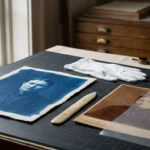
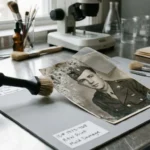
You may have discovered them in a heavy wooden crate or a forgotten shoebox in the attic—thick, cold rectangles of glass that reveal ghostly images when held up to the light. These glass plate negatives represent a pivotal era in photographic history, spanning from the mid-19th century to the early 20th century. Unlike modern film, these objects are both incredibly durable and heartbreakingly fragile. The glass itself can survive for centuries, yet a single accidental drop or a humid summer can destroy the image forever.
Because of their high historical value, you may also want to photograph your family heirlooms for insurance documentation before placing them into long-term storage.
Preserving these treasures requires a shift in your mindset. You are no longer just a family historian; you are a steward of a physical artifact that combines chemistry, geology, and light. To protect your collection, you must understand how to handle the glass without causing fractures, how to select archival housing that prevents chemical decay, and how to create an environment that halts the march of time. This guide provides the technical roadmap you need to stabilize and store your glass plate negatives for future generations.